I’ve completed the proofreading and the book PDF is available for download.
I also linked it from the books page.
I exhausted myself beyond all limits with this and my brain refuses to do any more work at this point so, see you when I recover because I’m done.
E-book version is available on Amazon Kindle .
The third reading of the text is complete and now the pdf file is the version 1.0, and it's going into print.
Second layer of proofreading has just been completed and the resulting pdf uploaded.
I'm now going to casually go through the whole book again and see if we missed something and then it gets published on Amazon.
update: I added some more corrections at the first part of the book, so that's uploaded as well.
I occasionally read through the article Thermodynamic Zero. Of course, everyday life goes on in parallel.
I’m interested in how someone (other than Danijel) would explain what it means to “seek the Lord” — how they would do it in their own words, or through any other kind of instruction or algorithm. (We were once taught that an “algorithm” is a description of the procedure for solving a certain task.)
Let’s adjust the quotation above to “seek out the Lord”, because many people end up remaining perpetual seekers of the Lord.
Seven years ago, I watched a movie, A Walk in the Woods, with Robert Redford and Nick Nolte. Two friends who haven’t seen each other for years set out, in their later days, on a long walk through the mountains. That implies spending several days in the open wilderness, with continuous conversations and stops to rest. Naturally, on such a long walking journey, they have a lot to say to each other.
Imagine meeting someone like that — a childhood friend — on a similar multi-day trek through nature. Suppose the conversation turns to a topic that interests him, and he asks you, “How do you seek out the Lord?” After some fifty years spent in this world, you ought to be able to say something to him. One way or another — if not you to him, then he to you. : )
„ I occasionally read through the article Thermodynamic Zero. Of course, everyday life goes on in parallel.
I’m interested in how someone (other than Danijel) would explain what it means to “seek out the Lord” — how they would do it in their own words, or through any other kind of instruction or algorithm. (We were once taught that an “algorithm” is a description of the procedure for solving a certain task.) „
So how, then, does one “seek out the Lord” and be exposed to the beneficial consequences that arise from such an act, as described in Danijel Turina’s book The Light Beyond, under the article “Thermodynamic Zero”?
It seems that the audience is not certain how to “seek out the Lord,” or does not know how to do this in practice—in real life, here in the material world—or perhaps does not wish to discuss it or expose their views on the matter publicly. Maybe there is even a fifth reason involved. Nevertheless, the problem is in sight.
OK.
To begin with, the shortest path is the one that Danijel referred to in the previous chapter as “mantric”; that is, the author of the book embedded it, and the readers were thus exposed to contact in this way. The same thing happens, for example, when you read the Bhagavad Gita.
So how can a person practice this on their own, in such a way that the results are equal to those produced by the principles described in the book?
Of course nobody is answering your challenges. Those are deeply personal spiritual matters. Stop annoying people with your bullshit.
I am continuing to refresh the pdf file of the book as new corrections are entered. It's all typos and grammar.
So, what kind of being is Satan then? Where is he originally defined, in which world?
When beings of the astral world crystallize into vajra, do they then disappear before him and before beings like him into the eternal dimension that he cannot see?
What do we now know and have? We have the material world, which Satan created with the help of a jewel from a “location” (of the astral?) dimension, a dimension above the material one. We have the astral world, from which beings occasionally advance and disappear in the direction of the dimension of the eternal world.
Satan used a jewel and, for these or those reasons or under limited circumstances, created the material world, which in a significant number of parameters carries a structural reflection of the higher worlds (but does not carry a reflection of the laws of the higher worlds—after all, this is originally unknown to Satan due to the nature of his personality, so he creates a dimension according to his own criteria?).
We have at least three worlds: eternity, the astral, and the material. The material one is some kind of hybrid, a limited astral realm with additional limitations and laws that Satan added onto the framework he pushed through using the jewel.
Satan does not have the authority to directly eliminate beings in any world. He has an interest in repetitively incarnating and turning back into the material world beings that, in one way or another, appear in the material world. Based on his beliefs, Satan may even want to totally subordinate them to himself and present himself as their creator (since he supposedly gives them the framework of the material world and expects obedience).
Is the lifespan also limited and reduced to an evolutionary line of reincarnation for lives in the astral world, as is the case in the material world?
The problem with Satan is that the dumbest fool can throw a stone into a well and then twenty wise men can't take it out, so to speak.
I wouldn't really know.
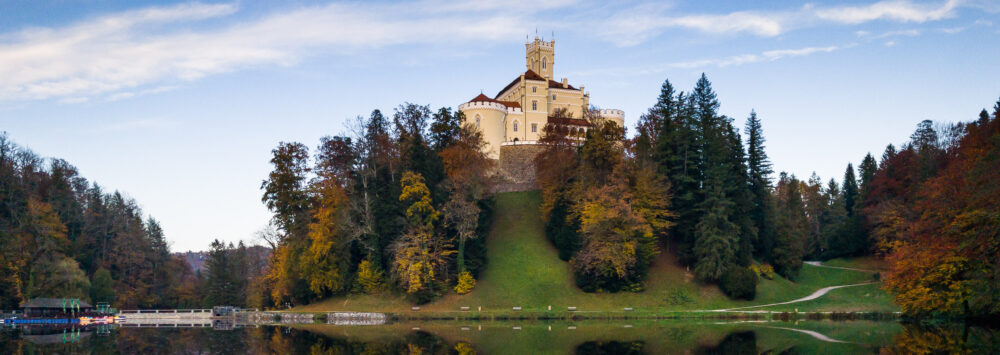
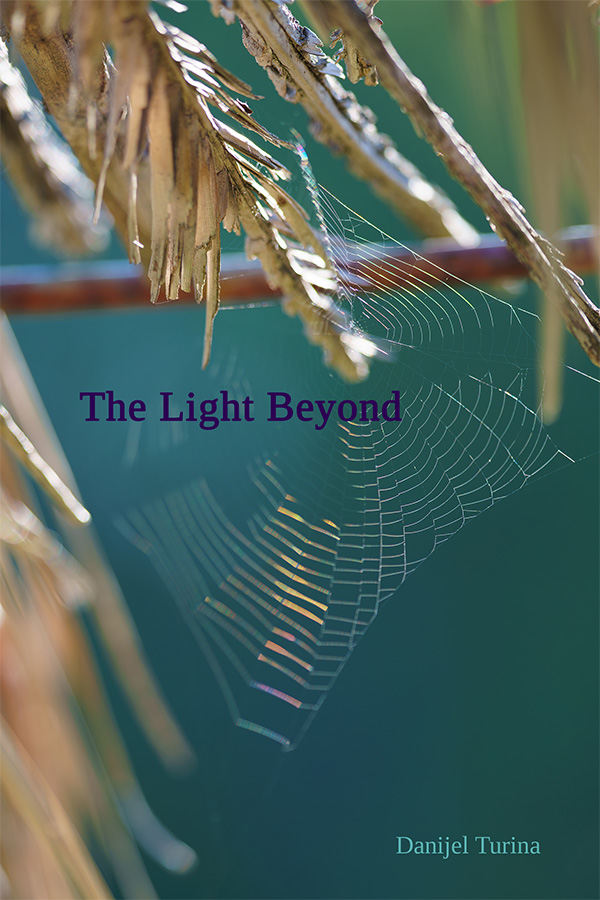
The cover is a vertical crop of a horizontal image:
https://photos.app.goo.gl/PedHJBg36XDxCe4cA
https://uploads.disquscdn.com/images/6261b1b8dedfc8c59cb3c98f3f1cd5e69a84866b3fbe78e8efdc056d677a8d9e.jpg
It's shot with Sony A7RV (61MP) and FE 135mm f/1.8 GM lens, in November 2025.
As for other equipment, I wrote the book on multiple computers, but mostly Macbook Air 15" M4. It's a relief that all the equipment worked great when I needed it, because I was at my absolute limits and I really didn't need equipment issues in addition. Fortunately, I didn't have any – with a notable exception of Gimp, which was terrible. They messed up some things in the newer versions, for instance drop shadow no longer works properly, and some things you would expect to work, like resizing a layer, don't; also, I had colour issues that couldn't be resolved. It was so unusable I gave up and started using Photoshop, which fortunately just worked as expected and I produced the cover with it, eventually. Why didn't I use Photoshop first since I already pay for it? I guess I only used Gimp for past work and I expected it to be fine, which it wasn't because they messed with it. I also never really used Photoshop. I used Corel Photo Paint, then Photoshop Express, then Gimp, and then for a really long time Lightroom only, and honestly, I miss Photo Paint because it was the most intuitive and I could get most stuff done easily with it. However, Photoshop is something I get in package with Lightroom, and it just worked. I like Gimp as an idea, since it works on all three operating systems that I use, and it should be good enough in theory, but in practice it just sucked. The Macs, both desktop and laptop, just worked. I wrote the book in LibreOffice, which also worked great – I use it because Microsoft Office gradually turned into an unintuitive shit fest over the years and after it became harder to use and with all the licensing nonsense and politically correct proofreading compared to Open/Libre office, I completely discarded it. It's an opposite example from Gimp/Photoshop – the open source version is actually better here.
I'm kind of at a point where I no longer have patience with any kind of technological bullshit, and I'm inclined to use "pay to win" methods – if some piece of hardware or software solves the problem or makes things easier for me, I'll just cash it out, so that I can focus on things that matter. Part of the reason why I was able to crank out chapters at this pace was because I didn't have to break my concentration in order to fix some IT crap. I would just open the laptop and write, and I would be done for the day before the computer was out of battery. No downtime for windows updates and similar bullshit. Just write, correct, upload. No data losses because the machine bluescreened. Also, when I needed a photo for the cover and I found one that works, I didn't have to worry about whether I'll have enough resolution if I use a vertical crop or something. I could print that thing two meters wide. Also, no bullshit issues like whether the lens is sharp enough at open aperture to use for magnifications.
I was thinking whether to remove the html version from the blog – I think I will just leave it for now; it's uncorrected, but it shows the process of making the book.
As for me, my brain is improving, from "if me give anything to do I'm powering down immediately" to "leave me alone". 🙂
"I was thinking whether to remove the html version from the blog – I think I will just leave it for now; it's uncorrected, but it shows the process of making the book."
Please leave the original, uncorrected html version as it is, so that it remains available on the blog. If there is an idea to remove it, then move it from the Articles section to another section, but keep it identical to the current html version. Both versions are useful: the PDF book and the html version in the form of separate original articles, without corrections.
Sure; it's not doing anything wrong where it is, and it's already tagged separately.
I'm fiddling with the cover, trying to find the optimal look of text on background, I had to redo the whole thing in Photoshop after having issues with color management in Gimp and so on. Also, we keep finding small errors in the text, and I'm uploading the modifications daily.