“Where did that come from?”, Lyra smiled as she carefully applied gel on Hermione’s toenails.
“I already thought about it when I read the book; I was fascinated by wandmaking because it’s just my kind of thing – very geeky, specific, precise, with lots of details to memorise, and I’m already very good at charms”, she smiled. “But then I realised that Gregorovitch was killed by Voldemort, Ollivander is very old and didn’t train a successor, and there’s probably one or two wandmakers in the world, and none of them are as good. If the craft dies, who will make the wands for our children, and their children?”, she got excited. “And I don’t actually have anything better to do. I thought about my ideas at school about what I would want to do, and it was all some stupid political activism my parents and other muggles indoctrinated me with, and I realised that it was all about fighting the world as if it were the enemy, and fighting the tradition as if it were the enemy. Sure, some traditions need to be changed, but for the most part we did that already. Also, I realised that by joining your House I became a part of tradition, and what better way to honour it than to rescue a worthy traditional craft rooted in ancient history of magic?”, she smiled.
“You’re going to be a wonderful wandmaker”, Lyra beamed. “You’re the perfect person for it. You’re careful, methodical, precise, diligent and endlessly competent. I can’t wait to see your work”.
“Thank you, sister”, Hermione blushed.
…
“Grapevine trunk wood, aged, wonderfully processed”, Mr. Ollivander observed Hermione’s work. “Rigid, unyielding. 11 inches. Material properly protected from damage by multiple layers of charms. Unicorn hair core. Fresh one, I see?”
“I found a few on our robes after we hung out with Unicorns in the Forbidden Forest”, she smiled.
“Amazing”, he whispered incredulously. “They almost never let anyone touch them. I see it’s properly bonded by sacrifice?”
“Red wine from our cellars at Château Lestrange”, she confirmed. “I extracted the magical essence as offering and infused it as you explained”.
“This is amazing work. Not just amazing for a first attempt; it’s just amazing, period. I would be proud to present this as my finest work”, he looked at the woman with pride of a master. “Have you tested it?”
“Of course”, she smiled. “Try it out”.
He waved it in complex patterns and did a few conjurations, transfigurations and a shield charm.
“It is amazingly powerful and precise”, he nodded. “This is a wand I would recommend to a professor at Hogwarts, an Auror or a professional enchanter. It is an absolute peak of our craft, my lady”, he bowed.
“I learned from the best in the world”, she bowed back. “But I found something I don’t really understand. In the chapter on curing and consecrating the wand, binding the materials together finally by sacrifice, I found a footnote, saying sacrificium iustitiae sufficebit; sacrifice of justice will suffice. What does that mean?”
“That’s a very tricky piece of lore. As you well know, we bond the core to the wood with sacrifice of essential magical substance that is sacred to the deities of the materials. If the materials have too contradictory deities, such as Hestia and Ares, or Aphrodite and Hera, it will not cure and you will get a faulty, glitchy wand. In some cases, the bonding ritual requires truly dark arts, such as if we make a wand from the materials sacred to Hades or Ares or Hecate – for instance pomegranate and thestral hair, which would require a death to bond. We would have to sacrifice a living being and magically infuse its death into the wand in order to finish it. In such cases, there is a workaround. An action sacred to the deity in question would cure the wand. For instance, falling in love would be sacred to Aphrodite, winning a battle would be sacred to Ares, and honouring the dead would be sacred to Hades. Essentially, rather than kill a being, you would have to honour the dead in a righteous way, and offering this righteous sacrifice will suffice, as the footnote says”.
“What would be the righteous sacrifice in the eyes of other deities?”, she wondered.
“To Athena, solving a strategic problem, or learning something new and valuable, increasing knowledge and useful skills. To Hera, being a faithful wife and a mother. To Zeus, being a righteous leader. To Poseidon, learning to navigate the sea by the stars and enduring a storm. To Apollo, having a pure, virtuous heart full of light, and giving knowledge and light to others, or making inspiring music. To Dionysus, maintaining a vineyard, making wine, making people joyful and lighthearted. To Hestia, maintaining the hearth in your home, being a good host, making people feel comfortable and safe in your home. To Demeter, growing crops to feed people. To Artemis, hunting down a vile creature, or protecting a young maiden in distress. You get the picture”, he smiled. “It’s somewhat tricky to do it as part of a wandmaking ritual, so I prefer sacrifice of sacred substances, such as in your case the best wine in the world, around hundred years old, sacred to Dionysus who is the patron of both grapevine and wild forest creatures such as the Unicorns. However, if you had to make a wand sacred to Hades, you would want to carry it with you to the graveyard where you would offer flowers and light a candle on the grave of a beloved deceased person, and consecrate the wand in that manner, rather than kill a living being. For Athena, you would sacrifice your best olive oil, for Poseidon you would use the finest sea salt, and so on”.
“Is there a functional difference between the two? I mean, would the wand cure the same if you offered a substance, rather than sacrifice of virtue?”
“That’s the tricky part. Sacrifice of virtue must be pure and accepted by the deity. It is a magical contract. If it is accepted, its results will be beyond anything attainable by the sacrifice of magical essences, and the magical presence of the wand will be extraordinary. But it’s so hard to do”, he sighed. “Offering a victory in battle to Ares is so much harder than offering the magical essence of human blood. Offering a newly learned skill to Athena is so much harder than offering the best olive oil”.
“I understand”, Hermione nodded. “In most cases, I will have to make the wands in a straightforward way – for instance, when twenty children who are starting school need new wands. But it’s good to know that there’s a way to make them stronger. Tell me, does it matter whether the sacrifice is done by the wandmaker or the user?”
“Ideally, it would be the user, because it would guarantee the magical bond between them and the wand. But anyone can do it, as long as they give permission to the wandmaker to use it”, he nodded.
“It’s good to know”, she nodded. “And now, may I invite you inside for refreshments?”, she smiled, as she got up from under her cherry tree.
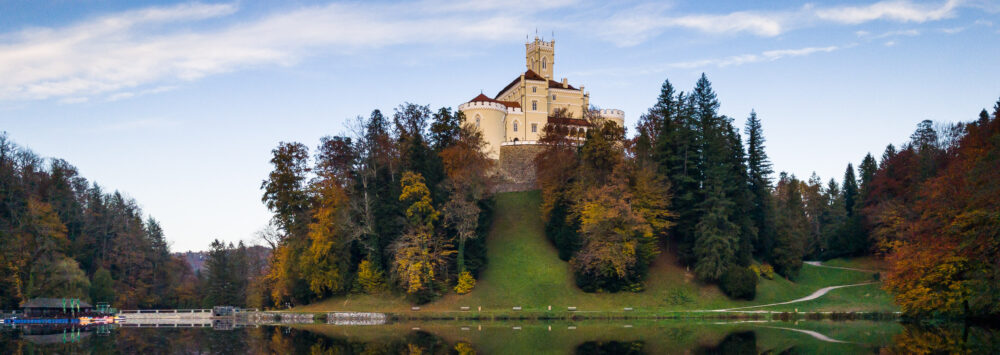
“I would be delighted, my lady”, he got up and bowed. “It’s so wonderful here, by your castle. The magic of your family that permeates it is delectable”, he sighed. “I was here once before, when its previous owner wanted a new wand. The dark magic gave me the chills. What a magnificent difference this is”, the old man smiled brightly.