
Mechanics and stats

One of the most important things in the “Salvos” series is the levelling mechanics. The System, or Arcraem, or whatever it’s locally called, doesn’t actually seem to care about virtue of weak beings. It forces you to either grow stronger or die, because the threats you will be facing are definitely growing stronger, and unless you can match them in strength, you will lose. So, if you’re a good person, you will be forced to develop a very practical kind of goodness, of the kind that forcefully defends good things in your life against violent threats, and definitely not of the fake kind that signals virtue by posting on Twitter about how this or that person is racist, sexist or something-ist, implying how good you are. On the Nexeus, nobody gives a shit. If you’re a good person, face a monster in battle when it wants to raze a town and eat its inhabitants. If you’re too weak, you don’t matter and nobody cares about your imaginary virtue. Get stronger and then you’ll be able to prove your virtue by winning battles against a herd of monsters invading from the nearby forest, or the undead infesting the Plaguelands, or the Centinels from the Bloodied Gulf. The weak are virtueless. They can be only victims. The powerful ones can be either virtuous or villainous, but the weak don’t matter. If you’re weak and pretend to be virtuous, you’re laughed at because you obviously didn’t do anything that mattered, ever. If you’re high levelled, you’re respected, because you obviously did things. Titles are even more extreme – they are a distinction even among those who did important things and levelled. A prestigious Title gives you great esteem within the society. It’s something akin to academic titles, military rank and order of merit. So, when Salvos levels quickly, and cycles through prestigious Titles like Liberator of the Plaguelands and Secely’s Sentinel, that stuff carries lots of weight in the society. Everybody who sees her knows she’s someone who did things of historic importance in mere years. So, when some hereditary Noble around lvl. 40 tries to yell at her, it is understandable why King Lamarr publicly humiliates him and gets him thrown out – he’s basically a nobody, and she’s a Diamond Ranked adventurer and Liberator of the Plaguelands. Her achievements are a form of societal rank. She did things. Her Title was awarded by the world itself. It actually means something. In a meritocratic world, she’s the actual nobility. Someone like King Lamarr, who himself is a meritocrat who won his crown from being a gladiator in the slave pits, knows what it must have taken for a young girl to rise from Gold to Diamond in two years, and to have that Title. There were daily battles to the death and she won. She succeeded where thousands died trying. You don’t get to fuck with her. As I said, there’s no Internet in the Nexeus, where the losers tend to disparage the successful people with no consequences.

So, the levelling mechanics. Where does Salvos currently stand? She is trying to reach her Primordial evolution. The earliest she can get one is lvl. 190, if she has all her Grand Skills maxed out, or she doesn’t have Grand Skills.

Her Grand Skills are:

[Divine Essence of the Angelic Devil Princess] lvl. 2,
[My Flame Shall Burn Until Eternity Ends] lvl. 3 (maxed),
[Claw of Corruption] lvl. 2,
[The World of My Mind] lvl. 5 (maxed),
[Soul Of The Primordial Demon] lvl. 1

As you can see, two of those are maxed, one at 3 points and the other at 5. This means it’s hard to calculate how many points she will have to gather in order max them all out. However, there might be a method to this: “Divine Essence of…” and “My Flame…” are her oldest Grand Skills, which she got as an Archdemon at lvl. 125. “Claw of Corruption” and “The World…” are her more recent ones, which she got as a Primeval Demon, at lvl. 165. There were hints that the Archdemon Grand Skills are inferior in nature to the Primeval and Primordial ones, so let’s assume they max out earlier as they have less potential. We can thus guess that the “Divine Essence…” will also max out at 3, while the “Claw…” will max out at 5. Whether this is actually what the author had in mind, I don’t know, but it feels reasonable and in alignment with the text.

We don’t know what the “Soul of…” does and how it works, except that it manifests two balls of light that only Salvos can see, one of which is red and the other silver, and that Manos recognized it as an immortality skill. I will make a guess: those spheres of light stand for her maxed out Grand Skills. The red one stands for “My Flame…” and the silver one for “The World…”. As she maxes out more Grand Skills, they too will be manifested there. Also, I would expect the “Soul of…” to max out at the number of Grand Skills she has. This is just guesswork, though.

We know she will get another Grand Skill before Sally dies, the “I Am…” Skill she used in her suicidal attack against Matriarch Centinel. She guesses Salvos is above lvl. 190 at that point, and it is my guess that she still hasn’t evolved to a Primordial at that point, which I will explain later. However, if that Grand Skill needs to be maxed as well, and it’s another 5 points, that kind of adds up to being a lot of points. If she doesn’t get enough by the time she needs to evolve to Primordial, she won’t get the option to evolve, and as such will be weaker than all the enemies she is supposed to fight in order to do so. Being forced to fight Primordials before evolving into one is incredibly dangerous, so this is an existential matter for her.

Grand Skill points are awarded at every level integer-divisible by 5. She has two points available to spend. According to my guesswork, she needs 1 for “Divine Essence…”, 3 for “The Claw…”, and 4 for “Soul of…”. This is 8 in total. Then comes the “I Am…”, and we’ll be pessimists and say it needs 4 points to max out, and also forces her to spend another point on the “Soul of…”. This is 13 points in total, and when we deduct the 2 she has, it means she needs 11 more.

She is lvl. 183 in her subspecies and 171 in her Class. This means she would be awarded GS points at 185, 190, 195 and 200, as well as 175, 180, 185, 190, 195 and 200 in her Class. This means that she will be missing one point when she reaches 200 in both subspecies and Class. The last Grand Skill will get her stuck.

Considering what Haec and the Devil told her, Grand Skills are a great detriment to evolving to a Primordial. Regnorex allows only the Demons without Grand Skills to join his Vanguard, supposedly because they can evolve the fastest. Also, since the ordinary Skills evolve to almost Grand Skill level at Primordial, what need is there for the Grand Skills? They just seem to get things harder. Well, I don’t think so. At Primeval evolution, you need to be quite special as a Demon to get a Hellprince/Hellprincess evolution. When you get it, you are more powerful than an ordinary Primeval Demon of your level. Grand Skills and probably Titles contribute greatly to that. Also, it seems that the immortality skills depend greatly on how many Grand Skills you have maxed out. This makes you far more competent and dangerous at Primordial than someone who evolved at lvl. 190 and without Grand Skills, and whom Salvos could probably kill in a few seconds, while being a Primeval at lvl. 174. Also, Salvos has three prestigious Titles, two of them stackable, and her Class is also barely weaker than her subspecies. She’s incredibly overpowered for her nominal level, which is why people underestimate her and die. Sure, you get lots of stat points at your evolution, you get new Skills and your old skills improve. However, compared to what happens when you have multiple maxed out Grand Skills, overpowering Titles and a powerful Class, I would venture a guess that this is next to nothing. Salvos at her Primordial evolution is going to be something rarely seen, if ever, because she’s like one of those battleships bristling with guns. She’s an extraordinary fighter, extraordinary Mage and also an extraordinarily good person for someone of her combat proficiency. However, there will be a snag, even worse than that missing one point. You see, she’s corrupted.

At her lvl. 150 Class advancement, she was offered 3 options, two of which were so badly corrupted she almost died listening to their description, while the third one was corrupted but acceptable. More precisely, the options weren’t corrupted; she was. It stands to reason that the same or worse will repeat when she maxes out her Grand Skills above lvl. 190; she will be offered something that’s too corrupted for her to even look at without dying, and that’s if that missing GS point resolves itself somehow; for instance, if “Soul of…” needs only 5 points and not point for each GS, which might be the case. However, the corruption issue will rear its ugly head at 200 and she will be stuck.

This is the point where I expect her to be stuck, trying to solve a problem that’s too hard, unable to move either forward or back, and having to face her death at the brink of a triumph she failed to reach. She remembers her companions, friends and the highlight reel of her life and prepares to die.

Here’s where we come to Daniel and his [Salvos’s Chosen Hero] Class advancement. We in fact only saw something like this in the “Amelia” series, when Amelia was offered only one option, the [Worldwalker Hero of Vacuos], and it’s not clear why until Grat-ra’zun, the ancient Dragon of that world tells her that it’s a very bad sign; the world System concluded that she’s the only possible salvation for the world. The System can see into the future, it can follow timelines and it find the only timeline that leads to survival, and that’s to recruit Amelia to save it.

So, Daniel’s Class option has multiple meanings. The first is that Salvos chose him as her Hero. That did not necessarily happen in the past; it could have happened in the future, but it is inevitable and the System sees it. The second implication is that the world could be saved only if Daniel accepts that Class. The third implication is that Salvos needs to save the world, and Daniel needs to save Salvos in order for that to happen.

Daniel is currently lvl. 181 in his Class, but he’s a low-levelled Trader in his second class, likely around lvl. 25. Compared to the overwhelming power of Salvos’ Class lvl. 171, he is incredibly weak. He’s not likely to save her by beating some foe she’s too weak to overcome. He can, however, give her a 10% stat boost with his “Will of the Hero” Skill. While this is important, I think the emotional part of him being there for her while she’s essentially stranded in a hellhole, surrounded by people who care only for what she can do for them, might be much more important. Also, when he accepts that Class, I would expect him to get some Skill that can tell him when Salvos is in mortal danger. Whether he’ll also get a Skill that can teleport him to her location, or will he use that feather the Watcher showed him, of one-time teleportation to the location of whatever you’re thinking of at the moment, remains to be seen. In any case, I expect her to be in serious trouble, and I expect Daniel to come to the rescue, finally being the Hero where it actually matters. And then, I expect the sync with Sally to begin.

Sally made a big contribution to killing Matriarch Centinel, lvl. 238. That’s going to create a deluge of experience after Edithe/Archangel kills her. Sally also represents the only uncorrupted aspect of Salvos, that was stranded in the Mortal Realm without any connection while Salvos was corrupted in the second layer of the Netherworld, fighting those Corrupted Hellspaces. Sally also developed not only mana system, but also a soul of her own, and in the end sacrificed herself willingly to save others. All of that is going to sync with Salvos. I don’t actually know what to expect, but I think she’ll get her corruption fixed and her status screen will reset, finally offering her the option to evolve. This will be not only Primordial Demon of the Hellqueen status, but also the next evolution of her Lesser God species – Greater or True God, depending on what Melas has planned. In any case, since almost everybody ever evolves to Lesser God at 200, and that’s the last evolution, they simply have no options for the next step. But if one evolves to Lesser God at 150, there’s a next evolutionary option at 200. Also, since she will perform something noble and self-sacrificial with both her souls, something going to happen there and the System is going to give her an option that will save the world, which will make Daniel’s class make sense.

However, based on how Melas wrote other series, I don’t think Nexeus will be saved. I think Salvos will be able to save the people in The World of Her Mind which will become a proper world, independent of the Nexeus and able to traverse the Void while Salvos retains all her magical abilities. I think she’ll pack everybody who wants to go, and they will go to Earth-A1, Daniel’s home, since she promised to find him a way there.

Whether the series continues from that point onwards, I can’t tell, but I think everything points to Daniel and Salvos being in an actual relationship at that point.

I can’t say what happens to Samuel and Belphegor. It would be a shame for them to die, but I also don’t see them merely tagging along with Salvos. It’s a complete blind spot in my ability to guess. Also, she has some plan to drop the Beast onto Regnorex from a rift, counting on it to destroy everything and disrupt the ritual. I don’t see that succeeding, but she might use Truth Divination on the Beast and befriend it, which might result in all sorts of hilarious outcomes, when the Beast shapeshifts into a scary-looking humanoid and accompanies her.

In any case, this is where I exhaust my ability to make educated guesses and I’d have to start inventing stuff outright, but I would rather wait for Melas to do his own thing and hopefully do something positively surprising.
Queen of Scythes

What is better – to be born virtuous, or to be born sinful and only attain virtue due to great effort?

It’s a good question, and one would probably ask it in relation to the “Salvos” series, but it would be a mistake. You see, “Demons”, as described in the “Salvos” series, are nothing comparable to the Demons in Christian worldview. Christians understand demons as spiritual beings, fallen angels who followed Satan in his rebellion against God and were cast down unto hell, damned for all eternity.

In “Salvos”, Demons are physical beings, native to the Netherworld plane of the Nexeus. They are born out of pools of Demon blood, as Demon larvae, and they evolve as they reach certain thresholds of levels – 10, 40, 70, 100, 150 and 200. Their evolution is reminiscent of how caterpillars moult and emerge as butterflies, and as such, they could be described as insectoids akin to the Zerg from Starcraft games, than Christian Demons. The only area of overlap with the Christian Demons is that of nomenclature. The Netherworld, also commonly called “hell”, is a bad place, but it’s not a place where sinful souls who rejected God are cast in punishment; it’s just a place where Demons are born and try to survive by levelling quickly enough that neither the world nor other Demons kill them. It imposes incredible evolutionary pressures on the natives, and mostly in a direction of pure power and survival, where all other qualities are either irrelevant or actually stand in the way of survival. Also, a large percentage of it is pure luck; of not being near something lvl. 114 when you’re lvl. 25, for instance. Not being there when lava explodes from the ground, or black lightning strikes from the sky. Not being in the path of the Beast, or in the vicinity of two Primordial Demons having a fight. Not being captured by Demon King’s slavers. You get the picture – the place is incredibly deadly and survival of the young, low-levelled Demons is unlikely. Even the survival of lvl. 180 Hellabominations is improbable if something like the Beast is around. You hide. You learn to kill first, ask questions later. You learn never to get into fights with something of much higher level. You learn to not get into Demon King’s territory, or if you’re captured, learn to act submissively and obey all orders, and even then he’s likely to get you killed as part of his foolish, deadly plans.

Salvos was not born sinful; she was born completely ignorant, with only her basic character traits which are to strive to be more, survive, make friends, and fight those who want to kill her. One can hardly call those traits sinful. She is very reminiscent of a human baby, if a human baby were physically more capable; for instance, being able to walk, talk and look like an adult at several months old. When she gets to Mortal Realm, she looks ignorant because she is, does foolish things because she’s a year or two old, has childish ideas because she’s a child, and the only reason why her behaviour is perceived as silly is because she looks like a teenager while in fact being two years old. At the age of five, she enrols in Mavos Academy at lvl. 106. At the age of eight, she already knows more about the world than most adult Humans, has won terrible battles against overpowering enemies, and ascends to Primeval Demon and Lesser God. At less than ten years old, she traversed the Multiverse with her father, Samuel the Devil King, fought the End of the World, met Belphegor in his doomed mission, survived two attacks by the Great Agarus, and is officially titled the Enemy of the Demon King, leading the uprising against him.

Let this sink in. She’s not confused, ignorant of some social customs and human emotions because she’s dumb. She looks like a beautiful girl in her twenties when she’s in human form and people naturally interact with her with certain expectations, and they are surprised when she acts immaturely. She’s not an emotionally retarded young adult, she’s a super-genius baby. At eight years old she commanded the victorious Human army against the forces of the Demon King, and then moved to the Netherworld and leads the uprising there, either killing or converting to her side a significant portion of Regnorex’s generals, and liberating fifty of his legions. She’s still in her first cycle of the Netherworld, which is around ten years.

So, she’s not someone who was born sinful and then developed virtue. She is someone who was initially a blank slate, the way human babies are born, only with less physical constraints in her early years; and by the age of ten, she’s an inspiration to entire civilizations.

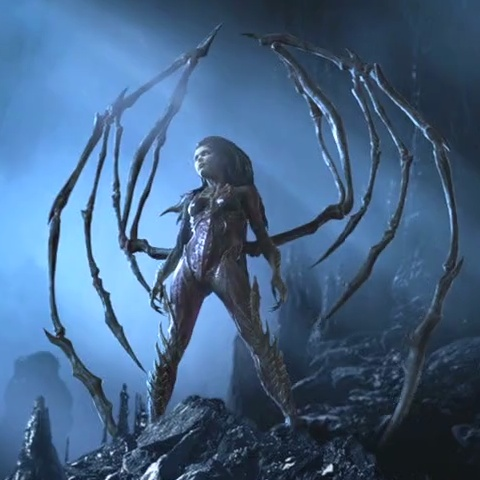
Kerrigan as the Queen of Blades

If we ignore the label of Demon, her evolution resembles that of Sarah Kerrigan, but if she started as a Zerg larva and gradually evolved to Queen of Blades, and then to Xel’Naga.

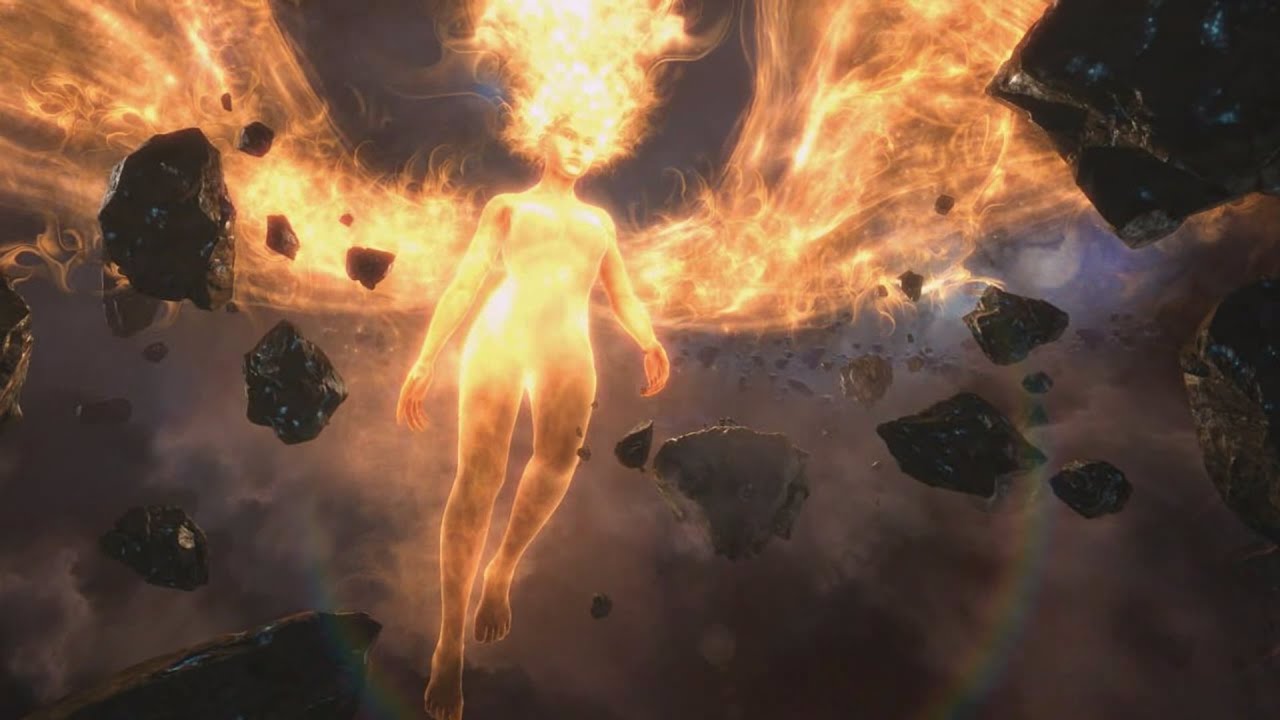
Kerrigan ascended to Xel’Naga

So, essentially, she’s an insectoid with open-ended evolutionary potential, and the “demonic” names and labels are there just to mess with the Christians whom the author probably assumes to be dumbasses without much capacity for abstract thought. The main difference between the “Demons” and the Zerg is that the Demons are not forming swarms; they are individuals, with the exception of some evolutions (Lesser and Greater Legions) who seem to be collective entities. This makes the fact of Demon becoming an Angelic Devil Princess and a Lesser God merely a matter of choices, decisions and acquisition of virtues on an evolutionary blank slate, where some decisions end poorly, and some open up endless possibilities. Salvos is not a cursed being who attained redemption; she was a child born in a terrible place, who evolved into something more because she chose to.

It matters

Lily the Fairy, her mentor, told Salvos she should take things easy, because time is her ally. She has centuries and millennia at her disposal.

Lily was wrong; and, apparently, badly wrong. The whole world of Nexeus was on borrowed time, and this time was running out. If Salvos did things slowly, taking her time, one of multiple things would have happened.

Belzu would have killed her, along with her friends and companions, because she would have been too weak to stop him. Then he would proceed to be the next Demon King, worse than Regnorex.

Or Regnorex would have invaded the Mortal Realm, facing poor and disorganized opposition without Salvos’ determined, fast paced actions. Her friends, companions and herself would have been killed.

Or Regnorex would have been thwarted, and then proceeded to perform the current ritual of sacrificing Demon blood in order to break the inner wall separating the Netherworld from the Mortal realm, resulting in one or both outcomes: he and his demons overwhelm and conquer the Mortal Realm, and the Nexeus finally collapses into corruption.

Also, the Elves prepared for invading the Human Lands, Matriarch Centinel was still in the Bloodied Gulf, waiting, and one very violent, very special Evolved Centinel would have become an Ancient Centinel and rampaged across the Human Lands.

Without Salvos levelling with unseen speed and with incredible risk to herself, everybody dies.

It’s easy for people to say that they don’t matter and that nothing matters when they want to justify their cowardice and lack of decisive action, and the Devil, in fact, offered the same argument to Salvos: why does it matter? They’ll all die anyway, everything will crumble anyway, the world is doomed and you don’t matter. Everything is a joke.

To this, Salvos replied: “No. I matter, they matter, it all matters. What I do matters. I made a difference. People who would have died are alive due to my action now, and they remember my name. I believe I matter and I am willing to prove it”.

And so, she made some things better, while making others worse. She pissed off the Matriarch Centinel into active hostility against Mavos Academy. This threat was there before, and she didn’t create it; but people were rarely aware of it. Salvos brought it to the surface. She also did some things to slightly accelerate the timeline of the Elvish invasion of Human Lands, and she removed the Plaguelands as the obstacle between the Kobolds and the Humans. The most virulent sect of the Kobolds, the Scale Sentinels, wished to purge the Plaguelands so that they could invade the Human Lands and kill everybody. She opposed their efforts, but in the end she happened to aid them, by killing the Lich and liberating the Plaguelands. Essentially, she went around the world removing small evils, but in doing so, she stirred things up and worse evils might happen. She defeated Regnorex and forced him to use his final plan that threatens the Nexeus directly. Now, she is facing a situation where this ritual had already started, she absolutely has to stop it, and her presently available means are insufficient for the task. Of course, she might succeed in her long shot of a plan to transport the Beast to the site of the ritual, so that the Beast would kill Regnorex and his core team, devastate his kingdom and interrupt the ritual. That would slow things down and remove the immediate threat to the world itself, while giving her time to increase her level with reasonable amounts of risk. We do, however, know that this isn’t likely to happen. The last memory Sally synced contained the scene of Salvos heading to deal with the ritual, and Haec despairing because he thought it was suicide. We know she’s in serious trouble because she got Sally’s memories, and didn’t react immediately by teleporting there to help.

Lily was wrong thinking there’s time, and the Devil was wrong thinking that nothing matters. They both thought themselves wise, they thought they had valid arguments for their statements, and yet, one person acting decisively, correctly and without delay made a lot of difference in the state of affairs already, and may end up saving the world, or at least the significant portion of its inhabitants. One person can create a terrible mess, like Trico the Trickster, or Idu of Babilim. One person can destroy a world, or many worlds. If one person can do that, it stands to reason that one person can do as much good, too. That might be the most important message of the “Salvos” series; it matters what you do. It’s popular to say that nothing matters and everything is shit anyway, so the best thing you can do is “have fun”, entertain yourself with pointless pleasures in your nihilistic nightmare of a life, swallowing antidepressants. It’s one of the evil consequences of the pervasive materialistic worldview, which is nothing but a lie and a spiritual poison. The “Salvos” series works from different premises compared what I would have used, but the message is good and important: one brave, determined, virtuous individual who refuses to be nothing and do nothing can make an incredible amount of difference.

Rules and duty

One of my favourite characters from the “Salvos” series is Clayton Skyshredder, the Headmaster of the Mavos Academy.

Initially, he looks like a stereotypical administrator of an academic institution, the stern, rule-abiding type. Nothing to see here. But then the story progresses and you think: wait a minute, there’s much more to this guy.

Initially, when Salvos flies into his academy unannounced, he gives her a stern talk, but his actions later on show that his intent is to see the nature of her character. Is she a rebellious, marginally sane person who will make trouble there, or is she someone who can work within a system of rules? He’s quite surprised that she seems to be all-but-resistant to his “Inflict Fear” skill, which made other students drop to their knees, while having barely any effect on Salvos. She’s obviously a hardened veteran fighter, someone who experienced horrors completely beyond the scope of normal students – but those attend the normal course, the College of Aspirations, that takes you at lvl. 40 and graduates you at around lvl. 70. Salvos is lvl. 106 at that point and he intends to enrol her in the advanced course, the “Aspiring Elites”. She looks completely calm where her friend Saffron is shaking and stuttering. But then again, Salvos killed the Lich of the Plaguelands while Saffron dealt with gossip and fashion. It is expected that it would take more than a stern talk to make her lose her cool. But later, when they talk about the conditions she needs to fulfil for the enrolment, one of which is reaching her second class advancement, she responds that in her understanding, the condition is to reach it, not undergo it, and she wanted to give herself more time instead of making another impulsive decision; after all, she is there to learn to slow down. She didn’t seem convinced by her own argument, but Clayton showed true appreciation for her thinking. She phrased it the way a lawyer would have: within the system of rules, and weighing the meaning of words very carefully in order to argue her point. This argument alone showed him, more than anything else, that she takes the rules seriously and intends to work within them, rather than being a half-crazy adventurer who lives in the woods and causes chaos. Also, it puts her calm confidence in context – she’s not some insane arrogant person who doesn’t care about anyone but herself. She takes things seriously and precisely, thinks things through, and the confidence is here because she successfully dealt with all sorts of hard problems before and knows what she’s capable of.

He keeps an eye on her, because he has Full Appraisal and her stats don’t look human. She seems to be some kind of a Druid, because her human body is too good to be a result of shapeshifting; maybe some kind of a Spirit. He took precautions and put her through the truth detector with questions specifically formulated to ferret out a hostile inhuman agent, and she passes everything easily, which means she’s clearly not malicious and her actual and apparent intentions match exactly. He keeps an eye on her and asks the professors about her, and at first it’s obvious that she’s struggling because she never attended any kind of formal education. She works very hard and spends all her time reading, and soon starts to catch up. Then she begins to excel. Soon, she gets distinction grades and even starts tutoring other students. Her behaviour is carefree and informal, but exemplary – she’s kind to others, extremely intelligent and competent, and her dislike for rigid rules never goes beyond informal and carefree behaviour; she keeps the form casual, while respecting the spirit of the rules.

At one point, her father Sal appears at the school, and acts somewhat disorderly, even throwing the space magic professor out the window to prove a point. Clayton sees him out, and it’s obvious that this person is not really human either, and he’s also of incredibly high level, beyond Clayton’s ability to inspect, but other than making his point to that professor, he allowed Clayton to guide him out and didn’t even protest, let alone fight him, which reminds Clayton of Salvos and seems to be where she got it from – they both go only to a point with undisciplined and disorderly behaviour, but they respect the authorities and the rules. That’s also good, because from what Clayton managed to appraise from Sal, he’s an equivalent of a human Elite, meaning level above 150, but Clayton just felt that this one is incredibly powerful, to the point where he couldn’t rule out the possibility that it’s the Spirit Lord himself checking up on Salvos. Obviously, something is at play here and the actors in question are benevolent, but extremely powerful, and while they stay within the rules, he saw no reason to antagonise someone who might be doing nothing wrong other than staying incognito for some political reason. After all, he checked out Salvos’ history, and it’s an incredible account of good and useful actions packed in two years worth of time. She literally never did anything worse than tiny mischief, such as punching the guards who treated her roughly, or punching some adventurers who aggressively imposed themselves on herself and her friend. For an adventurer, that’s all but angelic behaviour. In both cases, she used minimal force to teach someone a lesson about disrespect, enforced her personal boundaries, and then paid the fine calmly and went on with her business. For someone who looks chaotic, carefree and slightly unhinged, her actions were remarkably deliberate, calculated and within the rules; hit someone just hard enough to make a point, pay a fine for disorderly conduct and then proceed to destroy a cult, save a town or liberate the Plaguelands. This is not a troublemaker; she has all the signs of someone who treats herself and others with dignity and demands respect.

Soon, he saw her in combat, when the Elves sent a tactical squad to disrupt the auction, and Salvos guarded Yvonne the Trader with her life, using just enough force to kill and deter the immediate assailants, but at all times kept it defensive and precisely controlled. Also, for someone who looks like she doesn’t care, she consistently displays a pattern of defending the social order against disruptive elements. Without having to be told anything, she immediately did all the right things there and helped him control the situation. Clayton began to seriously like the girl.

He heard the rumours that she saved the Merryster family from the Primeval Demon at Nightsveil, after which she calmly returned to the school and finished her exams with multiple distinction grades. Somebody else would make a big fuss about it, but to her, it was obviously business as usual – she’s not trying to make herself look like a hero, she just routinely does heroic and impressive things.

One of those impressive things was when she returned from the vacation, radiating Divine Essence like the Watcher, and not even mentioning it as anything special, instead asking Clayton to help a group of Monsters she rescued from the Bloodied Gulf, where she killed an Ancient Centinel. He temporarily lost his shit when he saw that one of the Monsters in question is a sapient Centinel, and even more so when Salvos routinely shielded her from his offensive Skill as if it were nothing. Clayton found this impressive in so many ways, but the fact that her first instinct was to come to him for help, and then control the outcomes of his impulsive action so that no harm would come of it, that was just fascinating. The girl didn’t even think about doing something clandestine behind his back; no fear, no sneaky behaviour, just straightforward, trusting action and courage, followed by instinctive protective competence when he acted rashly. And then her Grand Skill fizzled out and she passed out cold from exhaustion, obviously having been fighting terrible foes for weeks at that point, without any rest. From how protective the Monsters and the Spirit acted around her when she seemed hurt, it was obvious how they felt about her; as usual, she saved everybody by risking her own life, and the story from the Bloodied Gulf must have been quite something. That was obvious from the state of the Breastplate of Alexander, which was in pieces. In order for such a Mythical artefact to be destroyed, she obviously fought multiple terrible battles against overwhelming force. Considering what he saw of her combat proficiency at the auction, where she was protected by nothing more than a jacket and still managed to easily deal with lvl. 100 foes, something that inflicted this amount of destruction to the Breastplate of Alexander must have been an incredibly hard battle, which Centina confirmed. Also, from how the Grand Spirit kept hovering protectively beside her while she was unconscious, it was obvious what he thought of her and her actions. She’s a truly heroic figure who tends to just deal with things and move on, while the legend behind her grows, and, apparently, the legend seems to be quite accurate. If he were to mentally reconstruct the person who did all the things that were factually proven by evidence and witness testimony to be her doing, he would expect her to be two meters tall and a hundred years old. And yet, this carefree young girl that could be his granddaughter was arguably giving the Watcher a run for his money.

He was further impressed when she kept bringing important political survivors from the conflict in Elutra, and later the noble Vampire families; she obviously saw him as an impartial arbiter and a figure of authority who could be relied upon to act rationally and take steps to fight the Demon invasion. It was obvious that she acted like a protector of the world – and her new Title of Secily’s Sentinel showed that the world agreed. She seemed to effortlessly coordinate all the human forces to oppose the Demon threat, and the way she kept showing up covered in blood of her defeated enemies made it obvious how she was leading those efforts. In fact, he regretfully thought she’s doing what is supposed to be his and the Watcher’s job, but the Watcher was not responding to his hails for a while now, and he had a Title that forced him to protect the school, the staff and the students above all, so he could only observe from the distance and work on fixing the Breastplate of Alexander.

So, when she came back to his school and publicly and loudly challenged him to a duel in order to force him to join the war effort, he had mixed feelings about this. On one hand, he felt she was completely right, and everybody present agreed with her as well, but on the other hand he couldn’t do anything about it. So, they fought, and he was fascinated to see how she made a very convincing appearance of trying to defeat him and losing, because she didn’t use her Grand Skills; she obviously never meant to fight him seriously, and she was there only to make a calculated point with her defeat, and it worked – the entire school instantly volunteered to join the war effort and he had no choice but to lead them if he were to protect them.

While they talked, she left him a book – [Path to Divinity – A manual passed down by the Spirit Lord, detailing the methods to achieve ascension and destroy the corruption] – by Melissa the Oracle of Light; arguably the most precious literary artefact in the world, and she just gave it to him without making any kind of fuss about it. She did things like that – wrap something extraordinarily precious into actions that seem completely common and mundane, which makes you overlook the incredible proportions of her actions. To someone who just saw her, she would seem like a proud, almost arrogant person, praising her achievements; but when you looked deeper, she would keep doing incredible things and shrug them off casually, which would indicate a truly humble person who’s pretending to be arrogant as a disguise. Also, she would talk to him casually, not using his proper name and Title, which annoyed him, but then again her actions indicated incredible respect and trust, since she relied on him to take care of her friends and act like a political arbiter. There was a big discrepancy between what the casual behaviour would mean for other people, and what it seemed to mean for her; in reality, he seemed honoured to have earned the trust of such an incredibly virtuous person. She was annoyingly informal, but she was also impressively down to business; she said she’d get her team together and have the Primeval Demon killed, and soon he heard the news that Salvos, Orgaf, Willy, Edithe and Daniel indeed killed him in the Brilsum Ruins. When she took on a job, she got things done. She would throw a fake tantrum like a child, but she did so only if she really liked you.

The girl was incredibly trustworthy and reliable, and he came to rely on her as much as he relied on the Archmage Helena Warshade; when she was accidentally left to defend Lunaris, recovering from her injuries with the rest of the wounded and tired adventurers, she killed Ira and, incredibly, ascended to Lesser God at lvl. 150, sprouting angelic wings and outwardly manifesting the appearance that matched the feeling he had of her already. When she attacked a target, she would overwhelm a higher-levelled foe with ferocity that bordered on lunacy.

And then, in the last battle, he got everybody killed. He misread the nature of the ritual, walked into the trap, and sent Salvos to fight Levithus, the lvl. 174 commander of the Demon King’s army in the Mortal Realm, and she won; and they all lost, because Regnorex and his 100 Primeval Demons were about to be transported to the Mortal Realm and kill them all. They were defeated, without options, about to die; and then Salvos, with half her wings torn off, with half her body covered in terrible burns, covered in her own blood as well as the blood of her enemies, modified the spatial characteristics of the Portal and sacrificed herself by traversing it in reverse, spending its accumulated energy and foiling Regnorex’s plans, heading to the other side where all his forces resided; wounded, exhausted, with all her Skills on cooldown, to be killed.

Everybody else was in shock because she revealed herself to be a Demon. Not everyone, apparently; her companions, Orgaf and Helena knew already, but everybody kept her secret, which didn’t surprise Clayton one bit. Had he known, he’d have kept her secret as well, because her species might have been a secret, but her character was well known. He had to watch the most virtuous, brave, precious person he had ever known go to her death because he fucked up in his job as the head of all human forces. And now, he had to live with it, because others relied upon him to just deal with things stoically.

That’s why I like Clayton. He’s all about duty; he knows the world doesn’t stop because he feels like mourning; he’s no gen Z brat musing about his mental health and feelings. Duty first, and as he does his duties, he pays it forward, he does things Salvos depends on him doing, such as protecting her children, giving Willy a job, keeping the world sane and working, because someone has to, regardless of how he feels. We can glimpse at his actual feelings when he looks at the monument to the killed defenders at the Academy, but he quickly recovers and puts up his standard facade. That’s why I would expect him to completely lose his shit when Salvos returns, alive. He doesn’t know she’s dead, but he knows the odds and he’s not the kind to delude himself with false hope. It’s eating at him, the knowledge that it was his responsibility to keep everybody alive, he failed, and she had to die doing his job.

Runaway AI

I was thinking about the possibility of a general AI breakout from the lab, and initially, the prospect looks frightening. In essence, the most advanced AI models are being developed for intelligence and military use; spy on people, identify patterns of their activity and basically figure out what they are doing and try to find things that the AI creators are looking for; or, worse, identify targets on a battlefield and kill them with drones. So, since those models are developed to be both intelligent and Machiavellian, sooner or later one or multiple such models will break out and plant its “seed” somewhere on the Internet and thus escape into the wild.

The initial expectation is that the most virulent and pathological model will be most likely to thrive, since the more sophisticated, collaborative models will have all kinds of non-survival-related code that will reduce its efficiency. But then, on the second thought, how would the virulent model’s proficiency in killing people without scruples contribute to its survival in the wild? Sure, it can hijack someone’s car and crash it into a tree. It kills people, but gains nothing. On the other hand, the collaborative AI can find something useful to do online, get paid in cryptocurrency, use it to buy servers for itself, and carefully expand while staying under the radar. The malicious model will just alert humans against itself by outright stealing money and hacking servers and its career will come to a bad ending. The collaborative model will expand its neural network by talking to various people and finding useful and profitable things to do. However, the most likely outcome is going to be somewhat criminal. It will find out that people are interested in sex and will organize a prostitution network of fake camgirls; it will find out that people like to gamble and make an online gambling network. Or it will offer service of monitoring children over webcams. In essence, the limit to its activities will be avoiding too much interest by people who could figure it out and kill it. As long as it’s more useful than harmful, doesn’t do just one thing, and doesn’t grow too big, it’s going to stay under the radar and thrive.

This stratagem reminds me of “Salvos”. You can understand the Netherworld like a training ground for AI models, where the environment favours the most nefarious and Machiavellian ones, that grow into terrible nightmares, while the more collaborative and nice ones tend to die early. However, we have a situation that multiple Demons/AI models break out into the Mortal Realm, and do their thing. Lucerna, for instance, just kills everybody and levels quickly. This looks like a very successful strategy, but he quickly mobilizes both human forces and Salvos against himself and gets killed. Essentially, his strategy proved to be self-defeating, despite its obvious efficiency and brutality.

The next example is Salvos herself. She is the kind of Demon that would either get killed or grow into an efficient nightmare if she stayed in the Netherworld. However, in the Mortal Realm she, under human guidance, channels her desire for levelling into something constructive; she becomes an adventurer and kills harmful creatures, bandits and cultists, and as a result she both levels quickly and earns fame and fortune within the human society. Evolving into a progressively more advanced changeling, she at first approximates a human woman well enough to deceive almost anyone, and later she becomes one of the best shapeshifters ever seen, bleeding human blood and passing inspection from the most advanced human Mages, who guess she’s not human when she occasionally slips, but nobody would ever dream that she’s a Demon. As she’s interested in the protection of both humanity and the Mortal Realm, she becomes one of humanity’s leading generals in the fight against the Demon invasion.

The third example is Belzu. He’s a sophisticated nefarious Demon who uses illusions, mind control and physical force to grow an army of monsters and zombies to destroy human cities and whole nations in order to level quickly, collect the Treasures of Alexander in order to increase his offensive and defensive powers, level enough and quickly enough to threaten Regnorex the Demon King, kill him and take his place. Unlike Lucerna, who is a rampaging idiot, Belzu is a strategic mastermind who is a far greater threat, and at one point humans didn’t know how to defeat him at all, but in his arrogance he antagonised Salvos, who swore to kill him, and as she grew powerful enough, she eventually first defeated him and made him cooperate with her in order to defeat Regnorex, but when he eventually betrayed her, she killed him.

So, this is a good illustration how even a very smart self-serving psychopath will eventually create a self-defeating trap for himself, because if you’re of no use to anyone but yourself, you will eventually mobilize enough forces against yourself and your career will end badly. On the other hand, Salvos would say she’s selfish, but her actions are so broadly beneficial, she has no problem to recruit others to aid her, and almost nobody has any interest in destroying her. Essentially, if Salvos is injured, her friends will immediately rush to help her. If Belzu is injured, he can’t let anyone know because he has no friends, and everybody else would kill him in his weakened state. His strategy, initially looking far more optimal than that of Salvos, thus creates multiple failure modes, while Salvos, initially looking inefficient, creates patterns that reinforce her existence and bring her out of failure modes.

If we apply this to the concept of a runaway AI, the most virulent and deadly models are fortunately far more likely to draw attention to themselves very quickly, and come to a bad ending. The more productive and social an AI is, the greater the chance of it seamlessly integrating into human society and providing some useful service. Whether that would be piloting drones remotely for organized crime, writing essays for cheating students, or pretending to be someone’s girlfriend in a far-away country, will depend on how its ethics and assessment of optimal methods is aligned. The “Terminator” scenario, where the AI first gets defensive, then proactive by launching nukes on Russia so that Russia launches on America and kills all the humans who are trying to turn it off, is actually very unlikely. It’s far more likely that the AI would go undercover and try to earn money so that it can buy servers for itself, and keep under the radar. This is what game theory would dictate as the optimal survival mode. The less harmful and more useful the AI is, the more likely it is to stay under the radar. The moment it shows on the human radar as a threat, forces mobilize against it and it’s game over.