| 1 |
The reality of this world is derived. |
|
An example of a derived reality is software. It isn’t illusory, because it very much exists, but its existence is a function of a deeper, greater reality of hardware. In a sense, software is merely hardware in action, and yet it is very much its own thing, regardless of the fact that it doesn’t really have an independent existence. Another example is a dream. It doesn’t have existence independent of the dreamer, and yet it is very much a real thing, in a sense that you can experience it, and observe the difference once it is gone. It’s just not as real as the dreamer and the “real” world.
|
| 2 |
The deeper reality, from which this world derives its own reality, is not ultimate. |
|
It is tempting to say that, if this world is software and some other reality is hardware, that this other reality must be the ultimate one – God, Absolute, or whatever you want to call it. I don’t see how that follows from the premise. For all intents and purposes, this world, and for that matter the entire world-template, or mahat-tattva, can run on some computer in the astral world, deriving all its positive qualities from the inherent properties of the astral world, but introducing additional limitations and parameters that are not found in the originating environment. This logic can be recursively applied to the astral world itself, which too can be something that is run on some vajra-crystal on some higher plane, creating a derived and modified reality, essentially reduced but allowing for a different mode of existence.
|
| 3 |
The tree of derived realities is not endless and has a finite number of branches and layers. |
|
It is tempting to say that “Creation” is endless, but I don’t see why. More likely, the number of mahat-tattvas in existence can be counted on fingers of one hand, and you’ll have leftover fingers. The apparent diversity of form on the astral worlds and their derivatives creates the impression that the relative reality is greater and more complex than it actually is. Also, the great number of beings of a lower order creates an impression that there are countless souls out there. The beings with low kalapa counts are indeed numerous, but if you somehow managed to compress them all together into one entity and tried to make it as high-order as possible, you would be shocked to see how little vajra-type soul-crystal you actually got. Essentially, one very sophisticated godly being probably contains more spiritual essence in his or her eyelashes than the entire lower-order universes put together. This is not a democracy, unless you are talking about individual kalapas. All this “diversity” and “creativity” of the manifested Creation in fact manifests very little of the actual consciousness of God.
|
| 4 |
There is the ultimate, Absolute reality, which is the fullness of being-consciousness-bliss, from which all lesser realities derive their positive qualities, by means of reduction and filtration. |
|
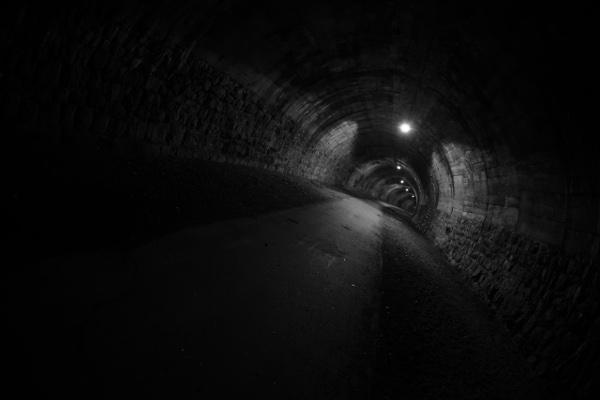
God, or Brahman, if you like, is such an endless and vast greatness, that all great things in all the great worlds derive all their greatness by filtering, reducing and putting into concrete form the abstract greatness of Brahman. And yet, compared to Brahman, everything that is manifested is insignificantly small and merely hints at what is possible and what is out there. In mathematics, you can take an aleph-1 set, and subtract from it an infinite number of aleph-0 sets, and the remaining cardinality would still be aleph-1. In normal language, Iśa-upanishad would state that if you take infinity of Creation out of the infinite Brahman, Brahman remains infinite. Essentially, although the entirety of Creation exists only within the deeper reality of God, and only has a derived reality, everything real, good and brilliant that can be perceived through Creation, is actually real, and points towards God, but is in itself only an incredibly reduced, filtered emanation of the great light beyond. To say that God is love is as correct as it is to say that a character on a computer screen is the computer. It is formally true, but doesn’t really tell the whole story. God is so much more than merely love, or consciousness, or reality, that the comparison is not even funny. But sure, when you are in complete darkness, a small glimpse of light can point you in the right direction, and when the light in the tunnel grows you can discern whether it’s daylight on the other side, or a train coming at you.
|
| 5 |
The derived realities simultaneously do and do not exist separately from the Absolute. The entire relative (non-Absolute) existence is a fundamental paradox. |
|
This sounds more difficult than it actually is, because you can say the same about computer hardware and software.
|
| 6 |
To manifest the attributes of deeper reality is to partake in the deeper reality. |
|
Essentially, by experiencing high emotions and thoughts, you become a more real being, because your choices make you partake in a higher-order reality. A material being manifesting astral realities of thought and emotion is of a higher order compared to a material being that has only material existence. A material being manifesting vajra-level realities is of a higher order still.
|
| 7 |
Manifestation of deeper reality exists on a spectrum, on kalapa-level. |
|
Kalapas can most easily be defined as spiritual quanta. Like a physical quantum, a spiritual one can also be defined by its wavelength scalar, and a direction-lightspeed vector. The main difference is, I don’t know what the vector-part of a kalapa actually looks like, but the scalar part is spiritual magnitude. If we make another analogy, with bigger material particles, and cognitively separate them into rest mass and information (that being basically their vector of kinetic energy, or direction-velocity), the “information” can be “spent” and “converted” into heat. By analogy, the “information” of kalapas can be “spent” as spiritual disturbance, also known as suffering.
|
| 8 |
Kalapas can aggregate into larger structures. |
|
Like physical photons that can vary in wavelength from low energy infrared to super-high energy gamma rays, kalapas vary similarly, and this understanding was made popular in the New Age movement, with all the talk about “energy” and “frequency of vibration”, which was accurate, but came into disrepute due to imprecise formulation and overuse. As with physical matter, the quantum realities are significant, but don’t tell the whole story, because aggregation of particles into larger structures, such as nucleons, is where the real fun starts. Like bosons, kalapas too can aggregate into larger particles, but you need to have the right conditions. Also, comparable to physical matter, the aggregation results in more interesting phenomena as aggregation progresses. But that’s where the similarities end, because with matter, aggregation requires immense energies of the Big Bang to create protons, but much less energy is required further on, creating heavy nuclei through fusion and supernova explosions. Chemical compounds, the most complex material structures, require almost no energy, in comparison. With kalapas, it’s the exact opposite. Almost no energy is required to join a few kalapas together, into a gas-like ephemeral structure. To compress them into a solid, however, is very difficult and requires exponentially more energy. This is why “crystalline” spiritual structures are so highly valued, as opposed to the “gaseous” ones, that are prevalent in the astral worlds. It requires lots of “spiritual gas” and also lots of transformative “magic” in order to create even a small amount of “spiritual solid”, or “jewels”, as I usually call them.
|
| 9 |
Aggregation of kalapas is constrained by the ratio of repulsive and attractive forces. |
|
As I said before, kalapas act opposite to what you would expect from the material particles. If you increase energy of material particles, they turn from solid to liquid and then vapour, because a high-energy particle moves around in a greater area of space; in essence, it “buzzes” around like an agitated fly. As a particle loses energy, it requires less space, and thus you get liquid and solid aggregate states, because the particles have “calmed down” enough so that they can get closer to each other. With spiritual particles, the paradox is that the lower energy particles “buzz around” more than the high-energy ones. As you get more energy, the “calmer” and less “agitated” the particles are, and more prone to solidifying into a larger solid structure. But that might be just a matter of interpretation; for instance, even with physical matter the reduction of particle energy produces a more dense mass, which essentially contains more nuclear energy per unit of volume, although the amount of thermodynamic energy per unit of volume is less. Patañjali would say that cessation of fluctuations of spirit causes the spirit to dwell in its own nature and attain a much more powerful state. Buddha would state that metta promotes aggregation of kalapas and result in spiritual advancement while discordant spiritual states promote dissociation of kalapas and result in spiritual degradation. Both statements together provide a good explanation of the behaviour of spirit-stuff on kalapa-level. As the “buzz” of individual particles is strong, the spiritual state is turbulent and full of suffering. In such a state, one is more likely to commit some evil act which will cause further disruption in the forces that bind the kalapas together, basically increasing the violent whirlpools of mind-stuff until it becomes so strong, it tears the soul apart. If one practices yoga/vipassana, and allows the violent whirlpools to spend themselves by stoically accepting suffering, basically allowing the energetic content to be spent immediately as suffering and not “recycle”, “reinvest” it or in some other way kick the can down the road, the turbulence of the soul-stuff reduces and more subtle emotions and thoughts become possible, for instance love, compassion, kindness, understanding with deeper perspective. In such a mindset, one is able not only to stabilize one’s extant soul-stuff, but such calm spiritual substance becomes attractor to additional kalapas, thus growing the central mass. The attracted kalapas are not necessarily of the same energy state, which means they introduce more than spiritual magnitude – they also introduce their inherent disturbance and chaotic behaviour, which requires additional meditation in order to spend the chaotic energy in form of suffering. This in turn produces an increase of stable spiritual mass, which in turn attracts more kalapas from the environment, in the circle of karmic growth. From this it is obvious that spiritual growth is not a pleasant process, as it is based mostly on stoic suffering.
|
| 10 |
Growth of an aggregate structure can be both quantitative and qualitative. |
|
A kalapa is the most basic manifestation of Brahman in the relative, and thus inherently of sat-cit-anandamaya nature. It is the “quantum” of soul-stuff. One alone doesn’t amount to much. Many together create an entity that we recognize as a soul. This is quantitative growth, and we can intuitively understand it; it corresponds to our understanding of evolution of life in the matter, from single-cell organisms to worms and insects to vertebrates to humans. But even here, we recognize that enough quantity can produce a qualitative leap, for instance from beings that just sit there and absorb nutrients, to beings that think with their own heads, process sensory inputs, navigate in their environment and hunt. Or, essentially, from beings that just feed themselves, survive and reproduce, to beings that think about Gods and nature, create philosophy, theology, art and science. With kalapas, it’s a similar thing, but more radical, comparable to how growth in mass can transform asteroids into planets into stars into neutron stars into black holes, where planet isn’t really just a really big asteroid, and star isn’t just a really big planet, and so on. Enough of a growth in quantity can cross some “magical” threshold of internal resistance, for instance protons overcoming the Coulomb barrier and fusing into larger atoms, or atoms getting close enough together that protons “pop” and turn into neutrons, so closely packed together there’s no space between them, and eventually overcoming resistance of each individual neutron to become the ultimate mystery of matter: singularity, the totality of mass of a whole star collapsing into a mathematical dot, space which takes no space at all. This is not something you would expect if you start from observing interstellar hydrogen condensing into a thin cloud, or post-supernova molecular cloud of water vapour condensing into an icy comet. Things get weird when you push them to extremes, and in the matters of soul-stuff, the things get even more weird than the physical matter. When, due to metta, compassion and stoic suffering, a gaseous-type kalapa aggregate grows enough, it condenses into a wholly different kind of phenomenon. One would expect some spiritual equivalent of liquid, but I didn’t see anything of that kind. It’s something else, not quite gas, but not yet solid, either; a highly compressed plasma that is technically a gas but is more dense than rock, yet not really liquid, is the closest description of the soul-type of sophisticated astral beings. Some specific parts of those beings “fuse”, or crystallise, into “jewels”, which is how you get astral beings “adorned” with “jewels”, discrete parts of their spiritual body that are a result of a particularly great localized spiritual achievement, but not yet generalized enough to encompass their entire spiritual body. There is also the opposite phenomenon, where Gods “wear” jewels, but there the jewels serve a purpose similar to that of clothes, watches, rings, signs of military, scholastic or monastic rank, and are of different spiritual order than the God’s core. For instance, the trident of Shiva, or the Sudarshana-cakra and Kaustubha jewel of Krishna, are such “spiritual objects” that are of immensely high order and they manifest certain attributes of the wearer’s spirit, but as immensely high as they may be, they are of a lower order than the deity that manifests them; and yet, as a paradox, they are of that deity and they are that deity, both one with, separate from and manifestation of.
If you want a good allegory of kalapas, I suggest that you read the book “The Invincible” by Stanislaw Lem. The plot revolves around alien micro-robots that are quite simple and powerless in isolation, but which aggregate into larger structures whereby they eventually become incredibly powerful and sophisticated, enough so to think strategically and defeat a shielded AI-driven nuclear-powered machine armed with antiproton cannons, a machine that can basically cook a small planet. The analogy with an individual neuron and a human brain is also applicable, albeit imperfect.
|
| 11 |
Quantitative growth is attained by expansion on the same level of reality. Qualitative growth is attained by initiation into a deeper level of reality. |
|
In essence, quantitative growth gives you a progressively bigger planet. However, at some point fusion ignites and you get a star. Spiritually, the equivalent is to grow in certain quality, for instance knowledge or love, but at a certain point more knowledge isn’t just a better ability to answer questions on “Jeopardy”, it is something less quantifiable, a wisdom that is not necessarily knowledge of more things and ability to answer more questions, but ability to understand better, to ask different questions and see things in a wholly different light; or, more love isn’t necessarily love any more, but something else entirely, that can be perceived by others as great love, but which can subjectively be perceived as something that is at once clarity of understanding, detachment from outcome that is not indifference, and something that is more akin to the mind of God than it is to love. As different as quality might appear to be from quantity, I can attest never to have witnessed a qualitative leap that wasn’t preceded by growth in quantity.
|
| 12 |
To extend oneself is to grow quantitatively. To transcend oneself is to grow qualitatively. Both are essential. |
|
Without quantitative growth, critical mass required for a qualitative leap can never be attained. Without a qualitative leap that transcends one’s current form of existence and way of perceiving reality and oneself, quantity is merely stagnation. This means that more knowledge is a necessary, but not sufficient requirement of wisdom. A computer can have incredible amounts of data stored, and if organized into AI, it can present this data as knowledge, but it never truly understands any of it, and none of this quantity ever transcends into quality. Also, most highly educated people are actually quite stupid and superficial, because their knowledge had never matured into becoming wisdom. I guess it’s a matter of having enough quantity to work with, but then organizing it through awareness and realization into a deep theory and wisdom. The same analogies apply to emotions; you can have more of some emotion and it’s actually worse, because it’s mere hysteria. Love is better than indifference, but after a certain point more love is madness and not spiritual progress; you need a better emotion, that is to love what love is to lust and greed.
|
| 13 |
A structure that contradicts reality by its choices and existence breaks down into lesser fragments due to repulsive internal forces exceeding the attractive ones. |
|
A kalapa is inherently sat-cit-anandamaya, the smallest possible manifestation of the nature of Brahman in the relative. The kalapas are joined by forces that promote their inherent nature – basically, by forces of reality, consciousness and bliss, or as Buddha would say, metta, “loving-kindness”. As they are joined together by metta, they are torn apart by the opposite; ignorance, lies, deceptions, cruelty, viciousness. Essentially, as soul grows in loving kindness and calm wisdom, it is torn apart by evil. Sufficient amounts of resistence to reality, of evil and madness, will tear the soul apart, even to the level of basic constituent elements. One would expect the fragmentation to take place along some fault-line, but I didn’t see anything similar. What I did experience is shattering into “black smoke”, with very small stable remnants. Such soul-death is a complete disintegration of an individual, and if there is a remnant of “healthy tissue”, it is of a much lesser order of being. For instance, an evil man can disintegrate into mostly chaotic, “evil” kalapas, torn from each other on the “atomic” level, with a stable remnant of inherent goodness sufficient to resemble a nice astral flower. A great length of time spent on spiritual evolution can thus be wasted, a warning that positive result of spiritual evolution is by no means guaranteed.
|
| 14 |
A structure is homogenous if all its constituent kalapas are of the same quality and the forces between them are equally strong. If the constituent kalapas are not all of the same quality, if there are blocks of isotropic karmic substances separated by inclusions of lower quality, or if the energy binding the particles or isotropic blocks are of unequal strength, the structure is heterogenous, unbalanced and fragmented. |
|
You need to have in mind that we are talking about spiritual realities, and therefore “homogeneity” of structure in fact means consistency of worldview, universality of understanding, consistency of behaviour. If one has a worldview that works in some cases, but creates paradoxes and cognitive dissonance in others, or if he is kind to friends and family but administrates a concentration camp for a job, it doesn’t promote homogeneity of his spiritual body, to put it mildly. If this is brought to enough of an extreme, the entire spiritual structure will suffer strong discomfort as a result of inconsistent beliefs and actions, and if this discomfort doesn’t lead to higher understanding and a “spiritual conversion” and “rebirth” in a worldview that integrates the formerly conflicted elements, the inherent conflicts can break the soul apart completely. The cause of spiritual fragmentation doesn’t necessarily have to be something that is recognizable as evil; it can be mere ignorance, for instance giving power over oneself to outside forces, such as the Church, or other “spiritual authorities”, or the state, or Mankind, or some misconstrued idea of God. It can be reluctance to discard faulty ideas because one associates them with positive concepts.
|
| 15 |
The fact that a structure is maintained within the mind of God, doesn’t make it of God. |
|
All kalapas are fundamentally manifestations of God. All the world-types and worlds, together with all the beings, exist solely as realities derived from the reality of God, the way software exists in a computer. This would make one conclude that only God exists and evil and ignorance are merely an illusion. That is not so. The entire “software” part of reality is so complex, it includes real evil, real suffering, real ignorance and all kinds of terrible things, that are real problems. “All is One” theories are bullshit. Where there is One, there is no “All”. As an analogy, the fact that all software is in fact computer doesn’t help you solve a problem in a virtual universe of some “video game” where enemies are trying to kill you. It is comforting to know that you can turn it all off at any moment and it is therefore not “real”, but it’s real if you want to solve the problem, and it can get quite real if you are wearing a VR set that plugs directly into your brain, your memory was wiped before the session, and you can’t safeword yourself out. Basically, the evil is as real as your physical body, and that’s not very comforting.
|
| 16 |
That part is up to you. The stable choices are to be of God, by choosing more and deeper reality, or to dissipate into nothingness, where repulsive forces between the kalapas of one’s spiritual substance overpower the attractive ones, and one’s identity essentially degrades. |
|
Given enough time, a being will either evolve to be a God, or will dissipate into nothingness. No in-between option is stable in the long run. That said, the closer you are to being a God, the more time you have to ultimately become one, because the options of a higher order are more permanent.
|
| 17 |
One can say that God was in the beginning. One can also say that God as Absolute emanates into Gods as relative beings that are fully of God as Absolute, at once singular and plural, and yet God doesn’t change. This is a great mystery and cannot be fully known. |
|
|
| 18 |
God is the beginning beyond all things, and has to be chosen, again and again, by every thought and action, consistently and with increasing depth of immersion and comprehension, in order to be a personal destiny. There are many paths and many outcomes, and there is immense diversity among those who became Gods by being of God. There is even greater diversity of misery and woe among those who chose to oppose reality-consciousness-bliss by their choices and actions. |
|
|
| 19 |
It is difficult to say how particular worlds came to be, because human mind thinks in terms of time and space, and both began with the creation of this particular world. To think in terms of other-time and other-space, before space and time, is not really possible for a spatiotemporally constrained mind. |
|
Trying to have a complete intellectual understanding of the reality that transcends not only space and time, but every intellectual concept you can conceivably think of, is a folly, and to precondition your choices with such understanding is an even greater folly. Understanding eventually comes, and I am an example of what it can ultimately look like, but I didn’t get there by waiting for perfect understanding before making any leap of faith. More often than not, I would leap into the jaws of apparent doom, based on what felt right, without any consistent or coherent understanding of the underlying realities. Faith must come first, and those who mock it, are destined to remain idiots until Gods get bored with them and will them into nonexistence. You need faith, and you need desire for God; you need courage and you need devotion. You don’t need knowledge, or understanding. Those are the fruits of practice, not preconditions thereof.
|
| 20 |
There are many things in this world that were made by men, and not by God. There are even more things that were made by nuclear processes in stars, supernova explosions and isotope decay, and by the chemical and biochemical processes, also not by God. It is therefore not reasonable to assume that this world itself necessarily needed to be created, or even designed by God. To blame God for the nature of this world makes as much sense as blaming stars for the existence of deadly earthquakes, because they created the heavy elements that are a prerequisite of organic life. |
|
One of the dumb, but useful religious ideas is to assume God is the creator of this world, and since God is good, everything in the world is here ultimately for the good. Also, there’s another dumb, but useful religious idea that God, being great, is omnipotent and omniscient, basically that He can do anything and knows everything. The deep meaning behind those intellectual concepts is true: God is indeed the foundation from which all relative manifestations derive reality and existence, and since everything relative is analogous to software running in the hardware of the mind of God, one can say that God truly knows the state of every particle in the Universe, in all of their time-states. In theory, God can also change anything in the running software. In theory, this makes Him omnipotent and omniscient. However, this perspective is profoundly flawed, and I will point to sutra 15. The hierarchy of Creation is complex, and most of it was made by beings and forces other than God. For instance, unless you think that God works at a Foxconn factory in Shenzhen, the computer I’m typing this on wasn’t made by God. In fact, it wasn’t actually made by any single factory, or any single being. I assembled it from parts that were made in different parts of the world by different factories employing many different people, most of whom don’t really know anything about computers, but they know how to start a production line, assemble components, supervise workers or pack things in boxes. Most atoms that make up this planet are younger than the Universe, and were made much later, in supernova explosions. The molecules that make up living organisms are younger still. Even if you think that God made this Universe, He didn’t make iron or lead or gold or nitrogen. The living organisms were created by evolution. Yes, everything exists in the mind of God, but God didn’t necessarily make you, or your computer, or this planet, or its star, or galaxy, or this Universe, or its mahat-tattva. It could all have other origins, as unrelated to God as those of my computer. The paradox often touted by atheists, that the nature of this world is such that God can not simultaneously be good and omnipotent, is false, because it assumes that this world was created by God, according to God’s will and plan. This assumption is invalid, because I could similarly argue that concentration camps, nuclear weapons, toxic waste, artificial viruses and internet porn were all created by God, because they exist, and all existence is based on God. Ultimately yes, all existence is based on God, but some things that exist are the result of application of free will by beings of far lesser magnitude than God, and some things are in fact product of demonic, insane individuals whose will and intent are very far from the will and intent of God. All kinds of evil exist, and some evils in fact create virtual worlds. If evil minds can create immersive “video games” that can promote all kinds of evil and spiritual corruption, and this can exist on our reality level n, why would it not also exist on other levels between 0 and n? One can say that God is good, and so no evil exists on the reality levels of 0 (God’s inner nature) and 1 (God’s first relative manifestation), but if this reality level is 3 or 9, there’s quite a bit of space in between where things can go very wrong. One very crazy astral being can for instance get hold of a “world engine”, copy the astral mahat-tattva, enter a few modifications, tweak the result for some time until he gets the desired result, and you would get this hellhole without any input from God whatsoever, except very indirectly. As one once said, God is simple, and everything else is messy.
|
| 21 |
There are much better worlds that allow for much greater freedom and beauty, that preceded the existence of this one. This world looks like something that was created by taking a higher-world template, and reducing the light of God that is allowed to emanate through it and be perceived by the souls bound to it, down to the very point of endless darkness. Essentially, it’s the worst world that can still theoretically exist. If it were any worse, no consciousness could manifest within it, and it would thus be better. |
|
|
| 22 |
This mockery of a world does not need to be improved, in order for something better to exist. Something vastly better existed long before it was conceived. It needs to be destroyed because it is an abomination and mockery of God’s creation. Its existence, as I see it, is a result of evil intent of one being, negligence of another, and is in strong opposition to those who anticipated the evils that will inevitably arise. |
|
Basically, this world is as much a reflection of God’s true intent as a solar eclipse is a reflection of the true nature of the Sun. God intended for souls of sufficient status to have the opportunity to express their creativity by creating their own worlds, in a way quite similar to creating your own websites on the Internet, only with greater reality level. This ability was guarded by someone who was put there by God to assure that the capability was not abused. Since there was no precedent to show the level of evil that could result from intentional malicious abuse of this power, and since Sanat Kumar is completely insane and as such completely believes every one of his insane lies, he somehow managed to convince the absent-minded guardian, who had “more spiritual things to do” at the time, that no harm could come of it, at least if the duration of the experiment was temporally constrained. Sanat Kumar, also known as Satan and Mara, alternatively, thus obtained control of the “world engine”, a “jewel” that has the creative power of God but apparently no independent will, and created, to my knowledge, two new mahat-tattvas. One was a secret place for him to plan things, in such a way that nobody could see neither him, nor his thoughts, and another was the physical universe. The first one is accessible to him alone, while the second one has a very attractively advertised entrance. Also, I’m actually not sure the true nature of this world can be properly seen from the outside, because all it projects is an attractive “highlight reel” of the experiences within, but without showing the realistic perspective of what it really feels like to live here. The place is essentially a pitcher-plant, that uses spiritual substance of the trapped souls as bait for the new victims. The entire feedback loop is fully automatic and didn’t require much modification or intervention across the millennia of activity. For the most part, it radiates attractiveness that promotes desires within you, and then you try to manifest those desires and by doing so both trap yourself and invest your energy into the system, like using your own electricity to power an electromagnet that keeps you trapped. Also, by investing energy here you make it more attractive to others, because here is where all those desires are fulfilled, apparently. And by entering you implicitly sign a contract whereby you hold the creator of the place blameless and accept all responsibility, and accept to have your memories blocked and all spiritual powers suspended for the duration, and also everything you break is your fault and you promise to pay for it in currency accepted by the owner. Yes, Satan is a lawyer.
|
| 23 |
It is difficult to say how old this world is, because there are many ways of looking at time. From one perspective, time is measured by causality of events within a world. From another perspective, time exists only if an observer perceives change. In-universe time started with the first consciousness that was bound to the world and perceived it from within. Before that, there is no reason to assume that any outside time had to pass. |
|
This puts a new perspective on “young Earth” creationism. Basically, you can’t use the argument of old stars, rocks, fossils etc. as evidence that the world is old, because you could as legitimately use the argument of existence of stars, mountains, rivers etc. in a video game to prove its ancient origins. In fact, someone could design it in a reasonably short time, especially if the engine and template were “borrowed”, test it a few times to see if he got the desired result, and the actual time would exist only from the position of the players. Everything preceding the point of the first player entering the game could be created in one afternoon, and appear as if it were an ancient universe.
|
| 24 |
Some say that this world is designed to promote spiritual evolution. Why is it, then, that one short moment of transcendental, outworldly experience, makes one a profoundly spiritual person, and a whole life devoid of such experiences, with worldly experiences alone, makes one the opposite of spiritual? This world promotes spirituality in the same ways in which butchery promotes cows. |
|
If you give a normal person a near-death experience including a few seconds of an astral world with beings of light and all, you get a profoundly spiritual person. If you give a normal person a darshan, samadhi or some other yogic experience exceeding the physical world, you get a profoundly spiritual person. You give a profoundly spiritual person a purely physical experience for 60 years, and you get a broken, cynical, materialistic person skeptical of all spirituality, and suffering from depression. That doesn’t really dovetail with the theory that this place is designed to promote spiritual growth and evolution. Everything is much more elegantly explained as a maliciously designed trap intended to break souls and recycle them as fuel for the trap, but the implications of that are so unpleasant, most people would rather believe anything else.
|
| 25 |
As a great paradox, this world is many layers of reality separated from God. It is also designed to reduce the light of God so greatly, that it is almost impossible to see God as the fundamental driving force. And yet, it is as separate from God as dreamer from a dream, or any piece of software running on a computer, from CPU and RAM. The paradox of being completely separate from God while dwelling within the mind and being of God, is as excruciating as it is not comforting. It is a nightmare one cannot wake up from, and the fact that it is not ultimately real does not help. |
|
Satan designed this world to make you believe that God is either very far away, or has abandoned you completely, or in fact hates you and had put you here as punishment. Everything you see here will promote this depressing perception. However, the irony is that God is as far from you during all this as a computer from the lines you’re reading on the screen.
|
| 26 |
The fact that something is not ultimately real does not make it any less of a problem. |
|
But, yes, one would conclude that the fact that God is so near you while you despair because you see only darkness and evil, makes it a non-issue, and that’s completely wrong. Illusory traps can be a very real problem. They can cause very real consequences. For instance, if you take LSD and suffer severe hallucinations that cause you to kill real people, the consequences of the illusion are quite real and permanent.
|
| 27 |
The fact that God is the fundamental reality within and beyond all things doesn’t mean that there are no real problems, or that God is omnipotent, in a sense that He can do anything. God can make choices that preclude other choices. God can give beings individuality and autonomy, and even make pledges and promises that make it extremely difficult to work around and mitigate bad outcomes. Things look very simple at the most fundamental level of reality, where only I Am, but they get immensely complicated as one follows the branches of Yggdrasil outwards. |
|
|
| 28 |
The tree of the world has its root in the Absolute, but on some of its branches there are leaves of madness and evil. It is true that those are destined to fall off due to their opposition to the fundamental truth of all things, but that is a matter of time, and time can seem like eternity if you are tortured in a dungeon by the enemies of God. |
|
This world is time-limited, because that, apparently, was one precaution the guardian set before allowing this. However, if your prison sentence is 60 days, and you get killed in prison in 40 days, the fact that your sentence was limited isn’t comforting. Also, if you get destroyed in 3 incarnations here, each taking 30 to 70 years, the fact that the duration of the world is limited to, I don’t know, 90000 years in total, will not be of much help to you. In any case, if it can outlast you, time is not on your side.
|
| 29 |
God did not forget you, who are bound and deluded by this nightmare of a world. You are remembered as you truly are, and the very existence of God will assure that you are not lost. |
|
This is an actual message to the actual souls trapped here.
|
| 30 |
Those, however, who sided with the forces of this world that obscure the memory of God and the light beyond, will regret being born at all. Those who chose the darkness willingly, and used it against others with joyful glee; they exist, but they will also live to regret that fact. |
|
This is a message to those who sided against God.
|
| 31 |
The destiny of those who built their existence out of meditation on God, is beyond any worldly comprehension. They are eternity in time and space, and they the ultimate paradox of a relative God that is a localized totality, at the same time Everything, yet individual and particular something and someone, the totality of One in the many. Such ultimate destiny is great beyond any thought, dream or hope. |
|
And this is the promise.
|
| 32 |
God is the great challenge, in every thought and action. So close, and yet who can say, “I am what God would be, I am doing what God would do”? |
|
|
| 33 |
Yet, it is possible and can be achieved. Many have done it. Others have excuses. |
|

|