Who should buy gold and when

Let me clarify a few things about buying gold.

Imagine you have a hybrid car. The car can run either on gasoline or on electricity. It is not a plug-in hybrid that can be charged from the grid, it can only be filled with fuel at the gas station. In that analogy, you are the car, refilling at the gas station is your pay check, the amount of gas in the tank is the amount of money you have, and the LiIon battery is gold.

Gold is something you buy when you want to store the excess money that you have, instead of keeping it in the bank where you would get a negligible interest rate that doesn’t cover inflation. In order to have extra money to buy gold, if we’re talking about non-emergency, normal-inflation times, debt generates financial loss as a function of time. Debt, however, is sometimes necessary, because there are worse things than incurring a loss over time. You can gain utility that covers the loss and even allows you to increase your profitability. Debt can sometimes save you from disaster. Reasonable debt, such as a fixed-interest mortgage loan, can be a good long term strategy for getting yourself a place to live. I’m not going to preach against debt here, because people who do usually didn’t have to choose between debt and a terrible disaster, as I have many times. However, when you are maxed out on your credit cards, when you have a mortgage loan and you drive a car bought on credit or leased, it might be a very bad idea for you to buy gold with what little extra money you have. You need to pour concrete into those holes in your finances first. Get yourself to the point where you pay everything cash, have no revolving credit and the only loan you have is a mortgage for the place where you live. At that point it makes sense to put extra money into gold, because then you can actually say you have savings. Before that point, you’re just deluding yourself, because that money you poured into gold would serve a better financial use if you poured it into your credit pit, to make it generate less interest every month.

As I said before, this is the state of things in case of a normal economy. In a hyperinflatory economy, there is a good chance that your debts will be erased by the combined effects of the collapse of banks, state and global economy. This is what happened prior to the collapse of Yugoslavia, during the hyperinflatory phase, where all mortgage loans were expressed in local currency, and hyperinflation reduced them to nothing within months. Basically, the banks were ruined and people got apartments for free. Be quite sure that won’t be repeated quite the same way, because they learned on this experience and all the loans now have a foreign currency (usually EUR) clause. However, I’m quite sure they are not protected from a large EUR devaluation event. If your income grows due to inflation, and your loan doesn’t, you will be able to pay it off rather quickly in the hyperinflatory scenario; however, considering how the banks and the states are known to conspire against the citizenry, they are more likely to be allowed to completely fuck you over and declare an emergency event whereby they will confiscate your collateral (read: house) and evict you. This is of course a point where massive upheaval will take place and the state will likely collapse. Your property rights will remain questionable, until a successor-state forms and settles the matter in some way or another, which doesn’t guarantee anyone any safety. Even if you have perfectly clean property rights, you are likely to be forced to sign it over to mafia at gunpoint and be evicted.

I’m basing my assessment on past events of that kind, which were quite abundant in recent history. If such a disaster takes place where you live, the logic according to which real-estate is a safe long-term investment might prove quite fragile; real-estate wasn’t worth shit in 1991 Vukovar. If you have gold, you can leave the country with it and use it to start over somewhere else. If you have to start somewhere else and you don’t have gold, you are in an incredibly difficult position, because you’ll basically be a refugee who will not be distinguished from the social parasites from the Middle East and Africa. Running away is therefore the last thing I would recommend, but sometimes it is actually the best option, if things get incredibly bad. Why am I saying “gold” instead of “money”? Because if your country is at war, that country’s money is usually in a hyperinflatory phase and is for the most part worthless, especially outside the country. Inside the country it is usually useful for buying day-to-day things and barely making by. The money you have in form of gold is the only actual money you will have. Gold is not practical for buying things on a daily basis, because you need to convert it into paper first, so it’s not something I would recommend during normal times, but in times of a terrible crisis you either have it, or you are fucked.

So, there are basically three forms of gold you might own. First is the gold jewelry, second are the gold coins, and third are the gold bars. Gold jewelry is terrible investment because large portion of the price is not the actual gold, but labour and bullshit.
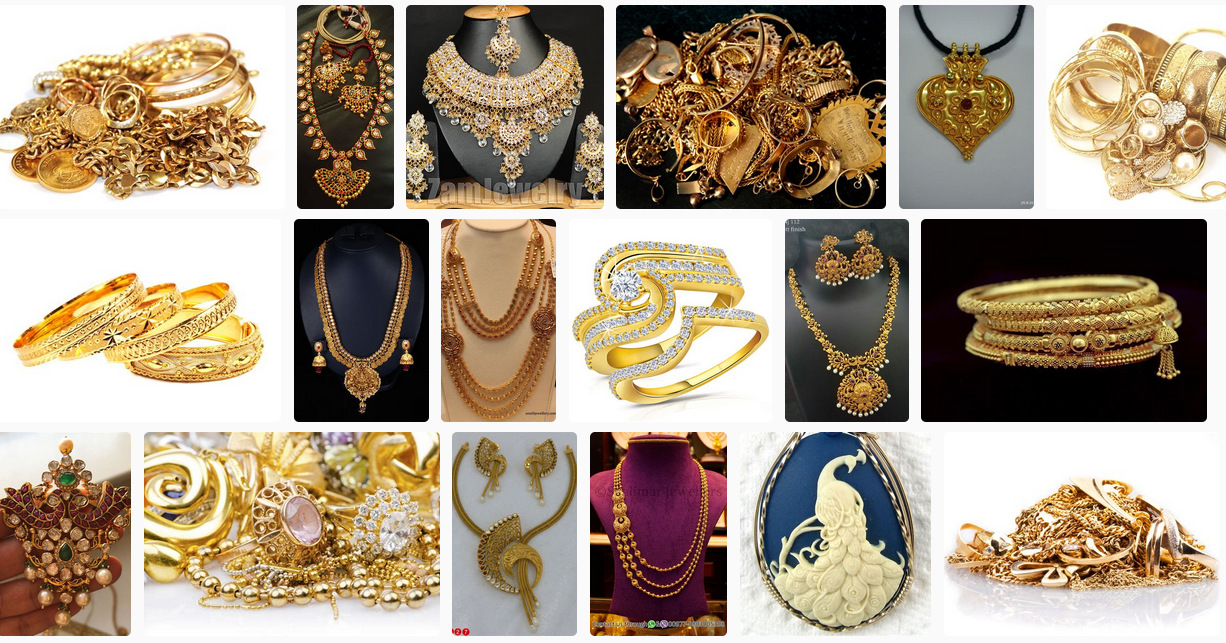
If you already have it, fine, but don’t buy it with the rationale that you can always sell it later if push comes to shove. It’s a bad idea, because it’s always worth less than you think, it takes up lots of space, is very visible and therefore makes you vulnerable to theft, and you always overpay for it.

The gold coins exist in two basic forms: 1 oz and fractional. 1 oz coins are large enough to be considered mini gold bars. One such coin is around 1300 EUR.

This is the amount you would use in a crisis to buy guns and ammo, to bribe border guards to let you out of the country, or to buy a cow. Those are your safety net in case of a crisis. Consider the amount you would need per family member, and plan accordingly. In the EU, 1 oz Vienna Philharmonic gold coin is the cheapest per unit of mass and therefore the way to go.

Fractional coins (basically ½, ¼ and so on of troy ounce) are the kind you would buy in the EU instead of silver, to pay for the small expenses, as 1 ducat Franz Joseph gold coin is around 150 EUR.
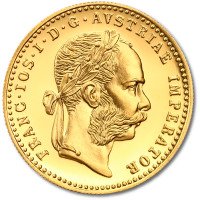
You want to buy the kind that is most common, most recognizable and therefore easiest to trade in your area. The one I mentioned, the 1 ducat Franz Joseph gold coin is the way to go in Croatia, for instance. They are very small and don’t seem like much, but 150 EUR is just that kind of money that makes sense for medium-sized trading, for instance you might get a gun for five of those, or quite a bit of ammo or food for one.

Gold bars are a different matter entirely. You wouldn’t use those as bribe, on the black market to buy food or anything similar. You would use them as money when you want to buy a house. Normally, the bigger the bar the less of a premium you pay per unit of mass, but this function ends somewhere around 250g, and 500g costs exactly as much as two 250g bars, so 250g bars are the way to go.
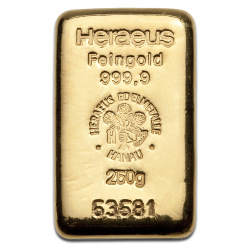
This is serious money, as one 250g bar is around 10000 EUR. If you can bring enough of those out of the country or region that is impacted by a crisis, you can start anew, but not from zero. Just remember those people carrying their belongings in nylon bags during the Yugoslavia civil war.
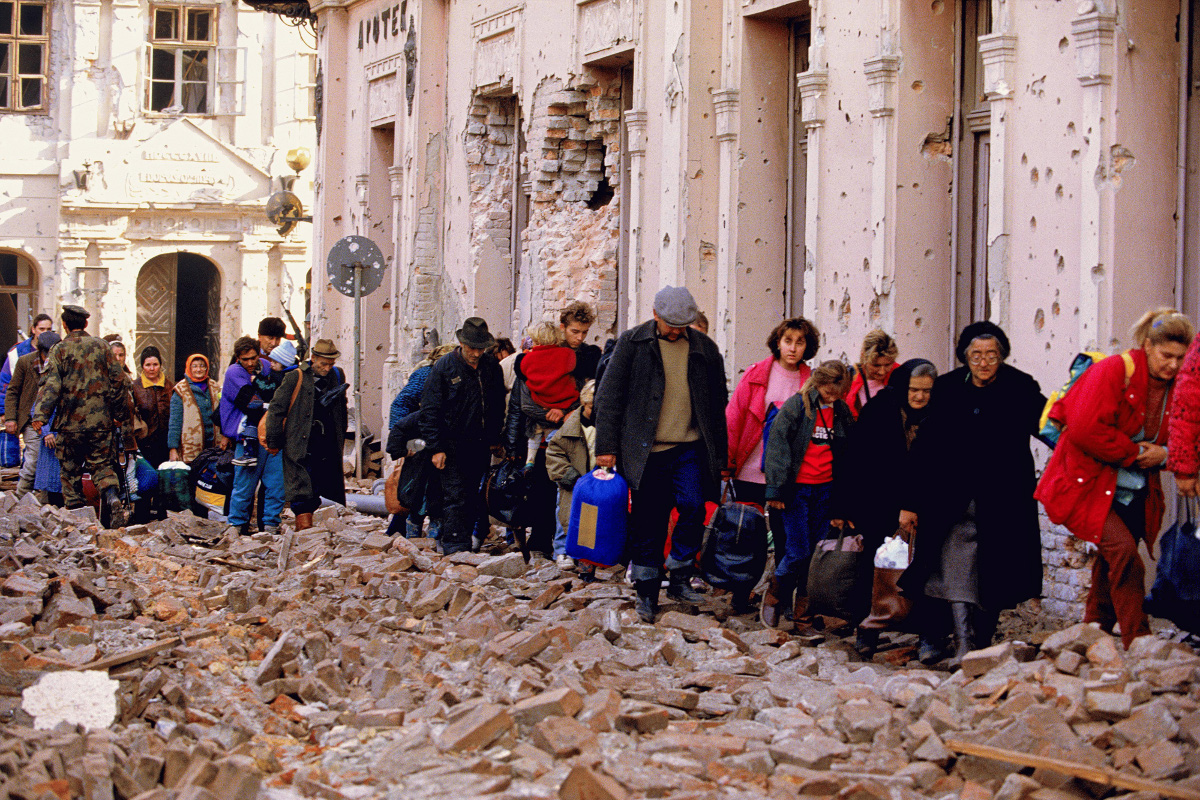
That’s what you’ll be able to carry with you if you have to relocate quickly under weapons fire. You’ll have a backpack and two bags. If you have 250g gold bars in your backpack, and each member of the family has five of those, when you arrive on your destination you use those to buy a new house; you are not a poor refugee with only some clothes to his name. However, if you have gold bars, you would be wise to also have some gold coins, for small trading, bribing and getting your family out of trouble on the way. You don’t want to be forced to bribe a guard with a 250g gold bar just because you don’t have 1 oz coins with you. That one bar is ten thousand fucking euros. That’s a nice used car.

And yes, despite gold, you should always have paper money with you, the local kind, no matter how worthless. Always. It’s for paying small expenses in daily situations without attracting attention to the fact that you own gold, because if you’re in a vulnerable position, gold is a liability, beside being an asset.

Mining asteroids for gold

I recently saw articles speculating about asteroids with high metal content and feasibility of mining gold, platinum and similar expensive stuff there. The calculations is basically that there must be a zillion tons of gold there and if we bring it to Earth the price of gold would plummet because the supply would suddenly increase.

I agree with Schiff’s analysis. However, I would also explore the details, as I once used the “gold is a discovery of a golden asteroid away from being worthless”. At first, this argument is sound, since the value of gold is based on restricted supply, and all the gold ever mined on Earth would fit in a cube with a side of 20 meters.

However, another argument is that gold is extremely abundant on Earth. Earth is unique among the planets because of its extraordinarily high metallicity. That’s why we have a magnetic field at the time where other rocky planets have cooled down and no longer have a core floating in a molten mantle. We have so much heavy elements, that nuclear fission and radioactive decay create over half of the temperature that keeps Earth’s interior molten. A significant portion of that are the elements we would deem precious, such as gold and the platinoids. Also, Earth’s crust contains quite a lot of gold. It’s quite easy to create heavy machinery assisted by human labour here on Earth, and create mining shafts and what not. Despite all that, mining gold is barely profitable.

Now let’s imagine we really do find out that there are significant amounts of gold on some asteroid. You know what would happen to the price of gold on the market? Nothing. Why? Because we still haven’t managed to bring home a sample of material from an asteroid. In comparison to mining asteroids, having a steady population on Mars is child’s play.

Operating a mine, which basically means crushing millions of tons of iron ore into dust, separating what you want to keep from what you want to discard, all in micro-gravity, high radiation and no atmosphere, no food for the workers, it’s such an enormous task, it could realistically be imagined by a Kardashev type II civilization, and we are not yet type I. You can realistically imagine us crushing asteroids for mining when it’s easy for us to terraform Venus and have six billion people living there, and have cities on Titan and Europa. However, at that point adding all the gold in the solar system still wouldn’t be enough to cover a GDP of the size necessary to run a civilization that mines the asteroid field for minerals and creates a Dyson sphere with the remaining material, just because they need the solar energy to operate the thing. Mining asteroids for minerals isn’t something that would be done by Earth. It would be done as a joint endeavour of Mars, Europa and Ganymede, by the Russians and the Chinese who would make up the population of the colonies; Earth would be too busy talking about genders to take part.

A Delta IV rocket launch costs $17,400 per kg delivered to lower Earth orbit (LEO). Falcon Heavy is supposed to reduce the cost to $1700 per kg. Essentially, you have to pay at least an ounce of gold to get a kilo of anything into orbit. This includes an entire asteroid-mining spacecraft, with human crew because a mine can’t be safely operated over more than half an hour delay due to light speed. If an AI could operate a mine in the asteroid field independently, then it would have a Kardashev type II civilization and you would be either apes in a zoo, or fossils. If remote operation is impractical because of the speed of light, AI operation is possible but then you have bigger problems, it leaves you with the simplest and the most practical option of maintaining a manned space station in the asteroid belt, supplying it from Earth, shielding it from radiation and impact in an area full of high-speed debris, dealing with rock and metal dust produced by crushing ore, in microgravity conditions, mining gold, shaping it into a sun sail in order to slowly reduce its orbital velocity and send it to Earth, catch it there by the second crew somewhere in Earth or Moon orbit, melt it into gold bullion and send it to Earth to be recovered.

In short, gold is going to become cheap once the AI running the solar system finds no use for it, but until then, or other cause or extinction, it’s the best place to store your life savings.

Crisis indicators

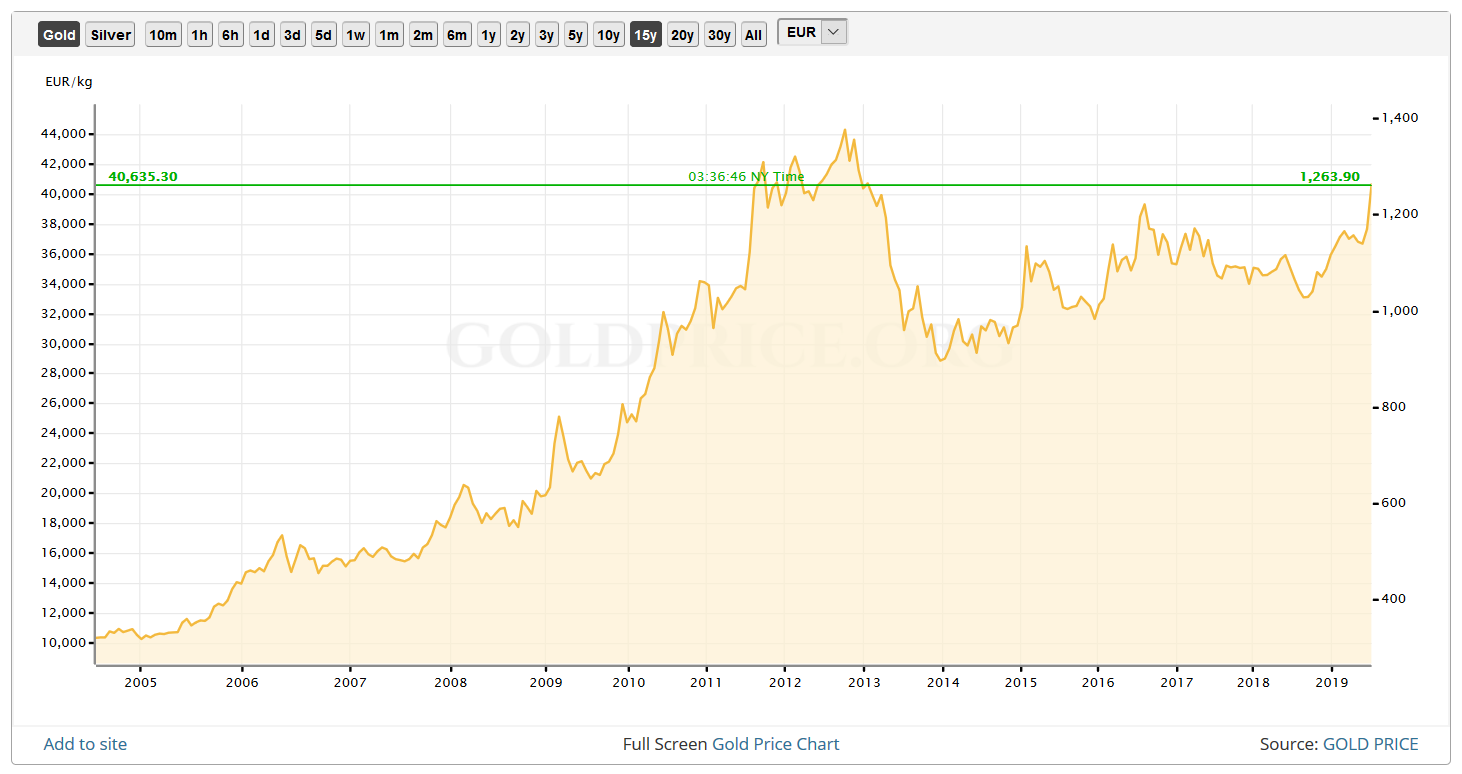
Gold price is up:

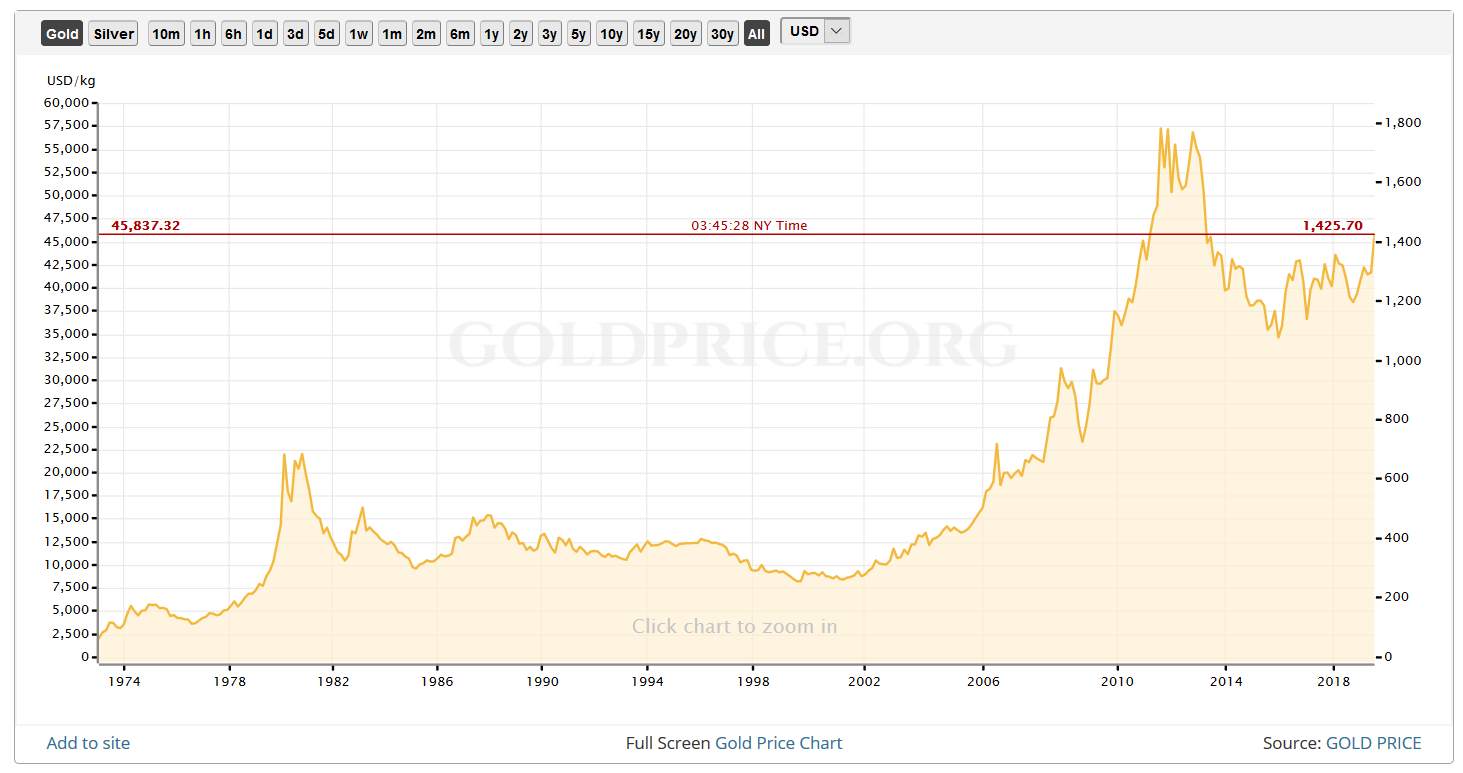
It’s the highest it’s been since the panic-spike in 2011-2013, both in EUR and USD. However, if we remove that spike from the graph and see what it looks like then, we can see something else. I’ll show you another graph, this time in USD, to make it clearer:

Let’s get some painfully obvious things out of the way. First, this is not the price of gold. It’s the value of paper currency over time, measured in gold. Some people have calculated that gold and silver can be used as a very steady marker of value from Roman times up until today, measured in things like a good suit, lunch or a goat. So, essentially, if a good suit cost you the same amount of gold in ancient Rome as it does now, it’s not gold that’s getting more expensive over time, as the graph seems to indicate. The graph shows inflation.

Another obvious thing on the graph is that paper currency doesn’t just fluctuate randomly. There are patterns: times where it keeps steady value, and inflatory spikes. Unfortunately, the graph doesn’t show the Nixon shock in 1971, where “the dollar plunged by a third during the 1970s”, or the “Executive Order 6102” from 1933, which “made gold clauses unenforceable, and changed the value of gold from $20.67 to $35 per ounce, thereby devaluing the U.S. dollar”, to quote Wikipedia.

The third obvious thing is that we are on top of a very nasty-looking inflation trend, and although one would naturally attribute that to the financial crisis of 2007-08, it appears to have started some years before that, and it’s possible that the crisis was a consequence of inflation, not the other way around. You see, the crisis was triggered by sub-prime mortgage loans market collapse, but what if the root cause was in the reduced purchasing ability of the homeowners due to inflation, triggering defaults? This is an interesting thesis that would require some deep data mining to prove or disprove.

Now we are getting into the realm of the non-obvious. Something seems to have happened around 2002 that gradually reduced the purchasing power of the populace in real terms. There are many candidates: globalization and outsourcing, printing money to finance wars, but the date itself is indicative of 9/11. Whether the event itself triggered other events that were harmful, or it was used as an excuse to implement harmful things that were being prepared in advance, that I can’t tell, because it’s probably a combination of both. However, the graph indicates that the purchasing power of EUR and USD measured in gold are continually falling on a steep curve, and my hunch says we are approaching a hyperinflatory phase of a complete economic collapse.

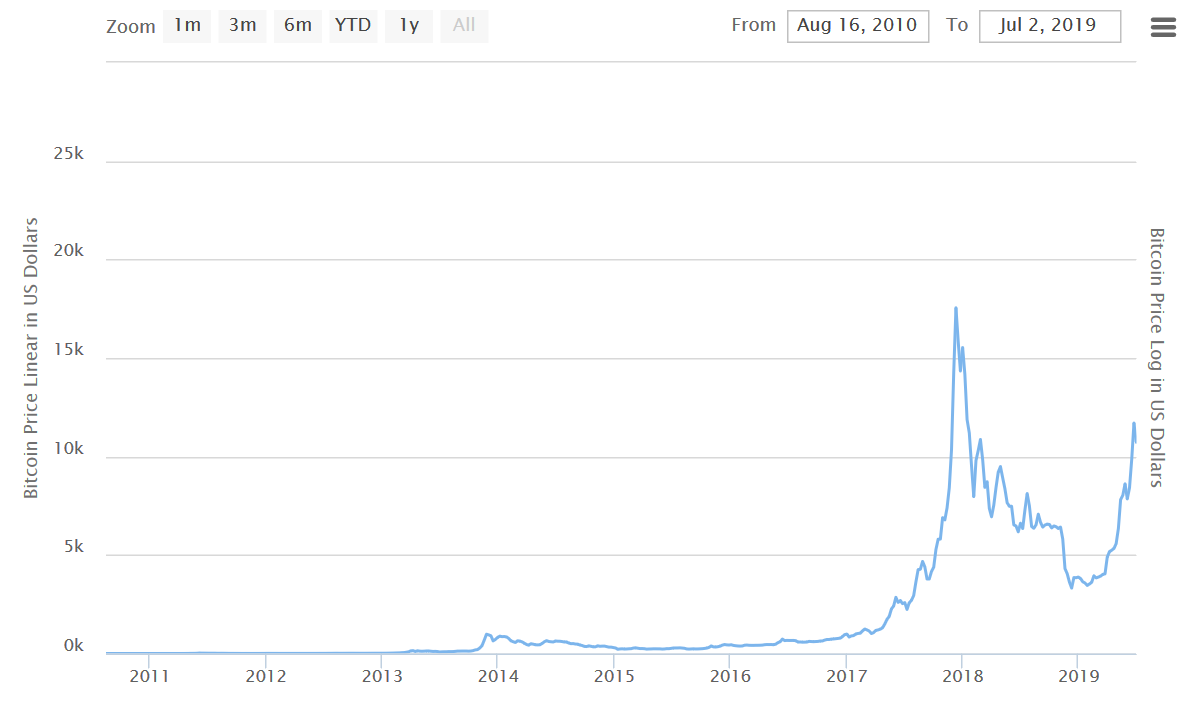
Let me show you another graph, of Bitcoin price over time:

My interpretation is that the post-9/11 restrictions on the financial markets and all kinds of Fascist policies with newspeak names had the result of people hysterically trying to rescue their money and the so-called crypto-currencies appeared as an alternative to the banking system, SWIFT and the credit card mafia. Bitcoin price is not a great indicator because it behaves like a high-risk investment paper, and not like a financial safe-haven, but apparently if you want a safe haven against America and the banking system, crypto is not at all bad, if you can get out of it in time, because crypto is a financial version of the Schroedinger’s cat: you can think it has value based on some graph, but you only get to learn what it’s worth when you want to sell it, basically at the point of collapse of the greed-curve.

My general recommendation is that the greatest losses in any financial crisis will be suffered to the investment papers with the highest level of abstraction. Essentially, the farther away from the real thing, the greatest the danger, because bullshit, hype, greed and deception always hide in the high levels of abstraction, which can also be read as “bullshit”. The historic lesson with complex financial packages based on bad mortgage loans should be obvious. In times directly preceding a crisis, bullshit-papers create bubbles and trick investors into buying, but when the panic starts, the value of something is always determined by how much someone is willing to pay you for it, not by what you paid for it, and when a bubble bursts, there are no longer any buyers. At that point, everybody hysterically tries to save money by putting it into safe havens, but by then it’s too late.

Essentially, buy precious metals when everybody buys high-risk, high-reward papers, and when everybody goes crazy because the bubble burst, do nothing. Wait it out, then convert metals into a rational wealth-generation plan. This is essential, because as good gold is as a store of value, it doesn’t actually produce additional value by just sitting there, and you need this generation of profit in order to be able to pay for your expenses. This is what my advice would be if this was just another big bad crisis. However, other indicators show that it’s not just about the monetary system, or the economy. The western civilization itself seems to be in its death throes, and we haven’t seen anything that bad since the fall of the Western Roman Empire.

A fig leaf

There has been lots of talk lately about the need to embrace the gold standard for currency again because of America abusing the dollar. There are two issues that need to be separated, and the answers are not as simple as it might seem.

The reason why gold functioned as currency for the majority of history is that mankind had a solar powered economy. This means it was restricted by the amount of agricultural land that was used to convert solar energy into carbohydrates. Also, solar power was used for energy, in form of wood and coal. This made the total supply of energy available to mankind more-less constant. Also, technology was primitive and constant. This made the economy constrained, and its volume could be represented by another constrained resource, gold. Essentially, you could dig out just enough new gold to match the eventual growth of the economy. However, the problems started with the industrial revolution, where new inventions could multiply the size of the economy, and the monetary supply remained constricted. When petroleum use freed mankind from solar restrictions on energy by tapping into a huge energy buffer of oil reserves, invention of electricity broke all restrictions wide open, and Haber-Bosch method of synthesizing artificial fertilizers allowed for a huge increase in food supply, the economy and population started growing exponentially, and the monetary supply needed to be expanded far beyond the constraints of any single constrained resource. So, having in mind that the supply of gold couldn’t successfully cover the expanding economy even in the times of Tesla, Westinghouse and Rockefeller, and needed to be supplanted and eventually replaced by mechanisms based on mortgage loans and GDP calculations, suggesting an introduction of a currency backed by gold at this point reveals lack of understanding of the constrictive effect that would have on mankind. With gold, the totality of everybody’s wealth always equals the totality of gold in supply. With a gold standard, if you invent something that grows the economy by 30%, the supply of gold doesn’t grow by 30% to match, which causes a shortage of money in circulation and artificial appreciation of gold, favouring those who already hold the most gold, instead of giving power to the inventors and “new money”. Of course, if gold-backed paper money is used, the state will print more money in order to keep up with the economy, but then this money will lose convertibility into gold. This is the reason why gold standard was removed: it was a problem rather than a solution. When economy grew, for instance by the size of petroleum reserves, it was much better to use petroleum reserves as basis for currency than to try and dig out enough gold to represent the value of all the oil in the world, or to artificially inflate the value of gold to the comic proportions. Also, when someone came to the bank to request a loan, the bank could either say “sorry, but there’s not enough money in circulation to give you a loan, because we didn’t dig out enough gold this month”, or they could say “we can take the mortgage papers as backing for a low-interest loan we can get from the central bank, which will use this guarantee as backing and create new money which we will then sell you at increased interest”. Guess which turned out to be more acceptable for a growing economy.

However, when you allow someone to print papers saying “this paper represents a gold coin”, you will inevitably get more papers than gold coins, because the position where you can create money out of thin air is incredibly tempting. The first experiment with paper money in ancient China ended for exactly those reasons. But that is a separate matter: you can’t say that abuses of the fiat currency system justify returning to the gold standard, if the gold standard was not viable even in the 1930s, due to its restricting hold on economy. You can only make a currency that is required to be backed by actual physical resources, such as metals, petroleum, electric currency production, foreign currency reserves, and mortgages on physical assets. You can require solid backing for all newly printed money, but gold, there’s just not enough of it in existence to cover the value of our economy. It can’t even cover a minute fraction. And even if there were enough gold, it would work only if our economy remained constant. For a 5% growth in economy, you would need to have 5% of increase in total supply of gold, which is utterly unrealistic.

There is that other matter of dollar being an instrument of pressure and abuse, which warrants its removal from the position it presently holds. This would require the United States to relinquish a position where they can print new money out of thin air, and have the rest of the world pay for it; essentially, that’s what you get when everybody is forced to pay for petroleum in dollars. Instead of the normal inflatory effects you would get from increasing the supply of money in circulation, you get the situation where the rest of the world is artificially impoverished and American economy is artificially boosted. If you think America would relinquish this position without a very ugly world war, I have some real estate on the Moon to sell you.

However, there is a reason why America might actually find it preferable to have dollar crash and burn, despite all its obvious benefits. You see, all American debt is denominated in dollars. Also, American debt is so huge, it approaches the point of being unserviceable. There is a very easy and tempting solution for this: America can just print trillions of new dollars without any backing, and use them to cover their debts and thus reset their situation. Of course, that wouldn’t sit well with all the nations that hold American state bonds denominated in dollars, and would basically crash the world economy and monetary system in an instant, producing an avalanche of consequences, and that’s the reason why other great powers have been diversifying their assets, from US bonds to gold, rare earth minerals, etc.; because they see this coming. Either America will cause a world war to cover its naked butt, or remove any semblance of a fig leaf by simply resetting its debt to zero using the aforementioned method. Of course, having in mind that this would wipe out all retirement funds and personal savings of their citizens, this method would be hugely unpopular and would need to be covered up by some fabricated external factor. This is why I find a war to be much more likely. They will stir the pot so much, nobody will pay any attention to the little man behind a curtain pulling the levers and pressing the buttons. The plan seems to be to provoke Russia and China into a war, suffer a limited nuclear strike, introduce martial law, and then reset their debt and thus hide their plan behind some external villainous force, playing the poor victim of evil in the world. There is too much propaganda to that effect already in place for me to have any confidence in the possibility that I might be wrong.

What to do

In the previous article I explained what the Western “democratic governments” have in store for their population in case of a major disaster. The worldview behind their planning can best be described as “pragmatic materialism”, which BTW is how Satanists would describe themselves if asked. However, I can easily anticipate readers’ questions: if shit does indeed hit the fan that hard, what, if anything, can we do?

Well, I’ve been studying disasters and the answer doesn’t conform to this “pragmatic materialist” paradigm, to put it mildly.

The “conventional wisdom”, if you listen to the American “prepper” community, is that one needs to stock up on food, water purifying equipment, guns and ammo, and in case of a disaster, defend one’s property against intruders. Essentially, they sort people into three major groups: the hapless unprepared victims, the predatory criminals and the prepared homeowners. When I listen to their theories, I try to envision the world they are describing, and my conclusion is that there are unlikely to be any survivors.

Let’s say the supply of food, water and electricity is disrupted. There is no rule of law. Follow the Maslow hierarchy of needs combined with the game theory in order to figure out what’s going to happen. The most prized assets will be the off-grid farms that have private water sources and can grow food. Also, those places will have food and medicine caches. The most desirable assets will be taken over by the most powerful forces, those most likely to resort to murder and robbery. They will take over the farms, kill the owners, and allow everything to go to ruin because they don’t know shit about farming. So, the theory that the ones best prepared for a post-civilization life will survive is very implausible; a much more likely scenario is that they will be the prime targets of undisciplined, panic-driven violence, which will further disrupt the supply of resources. Once the predators run out of food, they will resort to predatory cannibalism, because humans will be the most abundant remaining source of protein. After that, everybody dies. The scenario is very similar to that of the extinction of the dinosaurs: in the initial chaos, the carnivores and the vultures wipe out the remaining herbivores, and then they die off as this short-term food buffer is exhausted.

However, regardless of what the Americans might believe in their satanic worldview, my study of limited disasters shows a different pattern. You see, when shit hits the fan, the course of action that is most likely to result in survival is not self-centered predation, but cooperation. You don’t try to hog resources, because you understand that you are always going to lack something someone else has. Eventually, the resources are going to run out. The sociopaths do exist, but they are immediately treated as a foreign entity and killed off. The non-sociopathic armed gangs will trade protection for food, essentially becoming the paramilitary force that will guard the farms against attackers. The farmers will accept this as preferable to being killed, and will become the new serfs. The armed forces will become the new lords of the realm, and will form a hierarchy among themselves, resulting in new feudalism. How do I know this? Because that is what happens every time there is a major civilization-ending crisis. The armed thugs divide the food-production resources (farmland with serfs) among themselves. The serfs get to survive, the armed “knights” and “lords” survive. The sophisticated intellectual part of the civilization is wiped out. Nothing unrelated to food production and fighting has great chances for survival. In essence, civilization is reduced to a territory under control of a mafia gang: people get to mind their own business and have some semblance of normal life, but the price of this is paying for protection by the well armed militia. The territory is divided into areas controlled by different militias, which wage turf wars, until at some point they decide to merge, and then you get a state with “police forces”, and you even get “democracy” where you are periodically asked to choose which gang gets its turn in exploiting you for resources. As the baseline of violence is reduced and commerce is established between territories, there is need for high-level products and technology, which gives birth to sophisticated trades, and later to science and technology. The more connected the world, the more abstract structures it can support, until you get the global civilization that veers so far into the abstract it ends up destroying itself, and you get a reset into barbarism, feudalism etc., ad nauseam. That’s history of civilization for you.

Of course, we are talking about a civilization-ending event, not a species-ending one, but the irony is, in a species-ending event, the best you can do is try to preserve your spiritual integrity by cooperating with others from the position of kindness, trading for resources, offering services in exchange for resources, being helpful and protective, and simply continuing to do the best you can until everybody eventually dies. This would be very hard for the materialists, who believe this life to be all there is, but for the religious and spiritually inclined people it would be quite easy: in fact, it would be just another day in life, where you’re supposed to do the best you can in the available circumstances, and thus show God that you’re a worthy person who will remain faithful even in the darkest of times. You see, for the best people life isn’t about surviving, or having your family survive. It’s about being faithful to God by doing the best you can until the very end. And that is what you should do when shit hits the fan. Be the best version of yourself you can be, and you will leave this world as a winner. Choose to desperately fight for scraps, trying to survive at all cost, and you will lose everything, and still die.