Mahayana or the wide road to hell

I have an interesting dilemma.

Let’s say you’re Superman. What is moral high ground for you, regarding mankind? Are you bound by ethical principles to help humans? Are you immoral if you simply ignore them and go your own way?

Are you immoral for ignoring ants, mice and crows? When was the last time you sacrificed your interests in order to help a hamster?

Is the analogy correct? Isn’t mankind a phenomenon of a higher order compared to those? I don’t know; maybe if you tried asking a hamster, it might tell you helping it is a praiseworthy effort. I know why you don’t bother with them. First, it’s none of your business, and second, you don’t really give a shit; they are beings of a lower order and bothering with them means to neglect your own, more important business. Sure, if it doesn’t cost you anything you might help an animal and feel great about yourself for doing it, but if you’re honest with yourself, it’s usually the farthest thing from your mind.

But why do the authors of the comic books and movies assume that the higher, more powerful beings would find helping humans supremely important; at least if they are “good” powerful beings, the superheroes. Why would a superhuman find humans interesting? When was the last time you were interested in a human who is 3 standard deviations in IQ distribution below you, and with whom you have nothing in common?

And yet, people assume someone like Jesus sacrificed his life for their salvation, because of course a Superman, a God would do that. He had nothing better to do but find a bunch of total fucktards, teach them something they were sure to misunderstand, and then get himself killed in a very painful way so that their sins would be redeemed, and pray for their forgiveness while they ridicule him.

Really? Honestly, look at yourself and tell me, do you consider yourself worthy of that? Of a God sacrificing his life for your salvation? Would you accept it at this cost? Let’s make it less abstract – let’s make it your best friend or a beloved family member. If you had to push a button and cause that person to die and you are instantly saved, would you do it? OK, let’s make it less causal. Let’s say someone killed that family member or a friend and you need only to accept that it was good and proper for that person to be sacrificed for your salvation, and you’re saved. When does this stop being monstrous? What is salvation, if not loving God so much you want to spend an eternity with him? And if the price of admission is signing off on his murder, isn’t it so contradictory as to negate itself?

Accepting such a sacrifice is morally wrong, but does offering it make any sense whatsoever?

I have serious problems with the bodhisattva concept, where someone renounces enlightenment and instead tries to help others. The entire thing looks like a trap, because there’s the assumption that the world is full of people who would immediately choose to be enlightened if only a bodhisattva stumbled along and offered to teach them. That certainly doesn’t look like the world I know. What would actually happen is that people would ask him who the fuck does he think he is, trying to impose his silly beliefs on them? Of course they know better. The first thing the world would tell a bodhisattva is that he isn’t needed and nobody really gives a damn about him. The saints seem to think that humans are in a terrible need of salvation and he has just the thing for them. However, what humans would actually think is that the saint is in a terrible need of psychiatric help. He needs to be taught that there’s no God or salvation, and he in fact isn’t anything special. In fact, he’s worse than they are.

So, basically, spiritual people live in cognitive dissonance compared to the rest of mankind. They think salvation is in high demand and short supply, and it’s therefore their sacred duty to provide supply in order to satisfy the demand. However, I will offer a different interpretation. Salvation is in great supply and short demand. Whoever wants it, gets it. I can’t remember a single person who was known for making a serious spiritual effort, who actually failed to attain enlightenment. People just don’t care to take it when offered. They simply have other priorities, and different ideas about what would be the best use of their time and efforts.

I once heard a story about Ramanuja, who for a long time wanted to receive a holy mantra from his guru. Eventually, the guru told him the mantra, but warned him not to reveal it to others because that would be a terrible disaster and he would end up in hell. The mantra had such a profound effect on Ramanuja that he decided it makes sense to reveal it to everybody, because it’s not a big deal if one person goes to hell and thousands attain liberation. When his guru found out what he did, he was furious, but when Ramanuja offered this explanation, he was supposedly amazed at his disciple’s compassion and holiness.

But let’s consider an alternative ending, the one I find more likely.

The guru finds out about Ramanuja’s action and his motive, and tells him this: “You stupid, ignorant fool. A mantra is not a hammer, so that anyone could wield it. It’s like a musical instrument, that produces wonderful things in skilled hands, but only terrible noise in unskilled hands. It’s a portal to higher levels of existence, but it’s a door that opens only if you approach it just right, with the proper attitude and motives, in the proper state of mind and emotions. If a mantra is revealed to the impure, ignorant people, they will defile it. They will ridicule it and contaminate its ability to reach the higher spheres of existence, for both them and those who witness such defilement. The mantra works only if it causes the subtle workings of mind in just the right way. That’s difficult to accomplish and easy to disrupt. That’s why it is kept secret, and why it is revealed only to the pure minds of dedicated and holy students, after training, purification and testing. It’s not kept secret because of my lack of compassion, because I would like nothing better than everyone to attain enlightenment, but that option simply isn’t available. What you did, exposed the mantra to the impure minds, and this inhibited its effect on you; you can now no longer use it to reach God. Those others who heard it without proper context and outside of proper training, created a wrong impression of the mantra and its meaning, and that will forever stand in the way of their ability to really understand it; they are forever lost for the mantra, and even if they went through the proper process, the wrong understanding would stand in the way so powerfully, the subtle effects would be impossible to achieve. Basically, you ruined them, you ruined yourself, and you ruined me, because the holy mantra, that was so closely bound with the inner workings of my mind, was exposed and defiled, and this path within my spirit is now broken. And now that you know what you did, tell me, was it really worth disobeying me because you though you knew better, and you thought you were more compassionate than me, in your bloated arrogance and egomania? You, the savior of mankind, will sacrifice yourself in order to save many, and will teach me a lesson in compassion? Isn’t it just great how it turned out, yes?”

As I said, this bodhisattva concept of teaching God a lesson in compassion, that looks exactly like Satan’s motive in creating this whole mess here, because he wanted to demonstrate some collective concept of evolution, that was supposed to be better and more compassionate than God’s concept of individual evolution and initiation of souls. The entire concept reeks of egomania and narcissism and I am incredibly wary of it.

Mahayana means the great vehicle, that can carry many to enlightenment. However, that sounds suspiciously like that wide road Jesus talked about, that leads to ruin and damnation.

Only the narrow path, and the small vehicle lead to salvation. The path isn’t narrow because of some intent to bar access – it’s simply because few choose to traverse it. The small vehicle isn’t small because it’s designed as too crowded – no, it’s small because it automatically resizes itself in order to fit all occupants. The concept that everybody would be doomed if not for your compassion, it’s just incredibly arrogant and deluded; yeah, God didn’t know how to design the Universe and he needs you to teach him. Stand in line, because Satan had this idea first.

Irrationality of truth

Truth is under no obligation to make sense. It is inherently irrational, because truth is obliged only to state the facts as they are, without distortion.

Only conclusions and interpretations of facts can be rational or not. They are rational if they follow Aristotelian logic, regardless of the truth of the premises. You can make a perfectly rational logical process that starts with the premise that all men are crocodiles, another premise that Socrates is a man, and correctly concludes that Socrates is a crocodile. Rationality, therefore, doesn’t necessarily have anything to do with truth.

Truth is also under no obligation to be elegant. The Greeks loved elegant lines of thought, and that almost always resulted in their adoption of utter falsehoods. Truth can be messy and inelegant. For instance, the beings on Earth evolved this way not because some elegant master plan of a wise divine being, but because global cooling and a big asteroid impact wiped out the dinosaurs, and forced the survivors to either learn to hibernate, or to migrate to warmer parts, or develop big enough brain to be able to make clothes and use fire. This entire set of circumstances is inelegant, but true. There’s no circle or a sphere or a dodecahedron underneath, just a huge mess of thermodynamics, entropy, accident and chaos.

The reason why I believe in some things that sound crazy isn’t because I think they are elegant and rational. The entire model that sees Sanat Kumar as an explanation of the mess we are in is the exact opposite of rational elegance. It is ugly and messy and based on randomness and chance and exceptions, not all-encompassing general rules that make elegant models. So, it’s neither its elegance nor rational aesthetics that make it appealing. Unfortunately, it just happens to be the best interpretation of facts and evidence that I managed to formulate. I didn’t even make it up; for the most part, I simply accepted it, because huge parts of it were already provided by Gods, saints and people gifted with particularly good spiritual vision. I actually knew about that model for a decade and a half before I stopped resisting it – I hate it that much. I prefer impersonal models. I prefer a model of gravity that simply states that mass curves space. I wouldn’t like a model that assumes existence of an evil god Tatarus under the Earth, and explains gravity by him trying to suck everything into his realm. However, the fact that I would hate that model doesn’t mean that I wouldn’t accept it if forced to do so by the facts. That I had to accept a model that ascribes huge part of all perceivable phenomena to a quite insane spiritual being who did it all out of hatred for God and out of wish to prove some crazy point, is painful. I actually tried to come up with some other interpretation of the facts, for instance to interpret the Sanat Kumar phenomenon as a very old giant tulpa created in the Earth’s astral field by some form of coherence in thinking and emotions by a very large number of humans and humanoid beings that preceded them in evolution. If this structure were to behave according to the classical tulpa model, it would be a very good explanation of the perceived reality. However, I am aware that this explanation is merely an outburst of my hatred for the inelegance of my primary model, and that I was willing to ignore a significant amount of facts and evidence just to come up with an impersonal, elegant model.

However, if we come to elegance, how is inheriting a bad powerful entity less elegant than making one gradually by means of collective spiritual pathology of mankind? If we imagine that the Sanat Kumar entity was indeed created by mankind, and that mankind perished in an ice age or a nuclear war, and he survived to make weird, irrational things later on, how would his existence and actions be perceived by our successors? Would they perceive the solution as elegant?

So, my best effort at achieving intellectual elegance only produced the same inelegance, one step removed. It’s like the panspermia theory of the beginning of life – it removes the problem of primordial soup from Earth only to displace it into the supernova remnant cloud. It is for this reason that I simply suspended my desire for rational elegance and accepted this mess as it is – filthy, disorderly and inelegant, with the only condition that it be as close to the truth as I can possibly understand it. And that, of course, is the limit of the entire problem, because the actual truth and the actual facts might be completely beyond the grasp of human cognition, and only accessible in a pure spiritual state, unbound by physical incarnation. Be it as it may, I will continue trying to comprehend it, to the best of my abilities, and without conditioning the facts with the prerequisite of rationality. After all, if platypus and blob fish exist, then any kind of weird inelegant shit is not only possible, but probable.

Does owning guns make sense

I’ve been watching videos with Americans discussing guns. You know the drill: they want to be armed in order to protect their life and liberty, blah blah.

My question is: what is your opponent going to use to shoot back?

Let’s imagine several scenarios where a gun might be useful.

The first scenario is home defense against a burglar. Someone breaks into your house, is possibly armed, will possibly take your family hostage or harm them in some other way. Maybe it’s a personal enemy who decided to take revenge, maybe it’s a drug addict trying to steal your things in order to sell them. In this scenario, a gun is very useful. You’re not a victim, you can fight back and since you’re fighting from your known territory, the chances are you’ll win. In this scenario, the advantages of having a gun are so compelling, it should actually be obligatory to own a gun, and of course keep it locked in a safe so that your children can’t shoot themselves by accident or stupidity. The pros of owning a gun and being trained and prepared to use it for home defense so heavily outweigh the cons, it’s not even an argument.

The second scenario is personal defense in a public space. You carry a gun on your person in the street, at work or in a bar. If you’re attacked, you are not limited to your physical strength, and for women and weaker men this is a difference between being humiliated and beaten up in every physical confrontation, and being able to preserve your dignity. This is a strong reason for always carrying a firearm. However, if we imagine a realistic scenario, you’re not the only one who will carry a gun. If carrying a gun becomes the norm, it will be like the Wild West, where everyone wore a revolver like they wore pants. Altercations were very likely to turn deadly, and the fact that they were armed didn’t necessarily make people more careful, and they in fact got drunk quite frequently. So the problem is, you’re imagining a situation where you’re facing an arrogant bully, and if you have a gun, you can prevent him from assaulting you. The problem is, in a gun-friendly society a bully will always carry a gun, and a bully will practice with a gun the most. So you will basically only have normalized the escalation of violence, where you won’t have a fistfight against a stronger bully, you’ll have gunfight against a better marksman with a faster draw. In both situations you will be humiliated, but if a situation includes firearms, you’ll also be killed. Also, since the possible confrontation isn’t taking place inside your home against an invader, but in open territory, your actions will be scrutinized by a court of law even if you win. If the situation wasn’t clear, you may end up in jail. So realistically, the cons actually outweigh the pros, which is probably why American society migrated away from the Wild West model. However, there’s one situation where it’s good to be armed, and that’s a terrorist attack, of the “active shooter” variety, where you have one or multiple shooters who are indiscriminately killing civilians. If everyone is armed, this will completely discourage this form of terrorism, because it will look like an attempt of robbing a doughnut shop filled with cops. Not the brightest idea. However, have in mind that drawing a gun in an active shooter scenario makes you the prime target for the terrorists, if you’re the only one with the gun. That’s where my original question comes into play: what is your opponent going to use to shoot back? The San Bernardino shooters used AR-15 rifles and 9mm pistols. The Paris attackers used AK-47 assault rifles, hand grenades and suicide vests. Realistically, you’re going to have a pistol with you. It’s better than not having anything if you know what you’re doing and you’re lucky enough not to be killed before you can do anything or while attempting to draw the weapon, but you are still likely to be killed. If everybody is armed, your odds improve, but in that situation the terrorists are more likely to simply use the element of surprise and detonate a bomb. The better armed the target, the more likely the terrorists are to use stronger force. The worse protected the target, the more likely the terrorists are to deploy an improvised attack with light firearms or even knives. So basically, being armed and careful will help, but it will not solve the problem, because then you won’t have an active shooter problem, you’ll have a suicide bomber problem.

The third scenario is a temporary collapse of civilization due to some disaster, like hurricane Katrina, where the city infrastructure collapses, help doesn’t come quickly enough, and there’s massive looting and unrest. All the looters can be assumed to carry a handgun. Yes, if you don’t have a weapon, you potentially have a problem. However, if you do have a weapon, you will be very likely to become a looter yourself, or be mistaken for one, and killed. Also, your main problem isn’t looting, it’s having access to clean water and food, maybe medications. When you think of survival gear, think of water purification tools, not guns. The most likely thing to get you killed is diarrhea from drinking impure water, or infection from cutting yourself on something nasty and not having access to antibiotics. Here, again, the important question is what are you actually fighting? It’s lack of infrastructure, lack of essential resources, poor hygiene and looters. It might be more important to think about ways of bartering for things you need to survive than to think of survival in terms of repelling physical threats, although it’s useful to have a weapon.

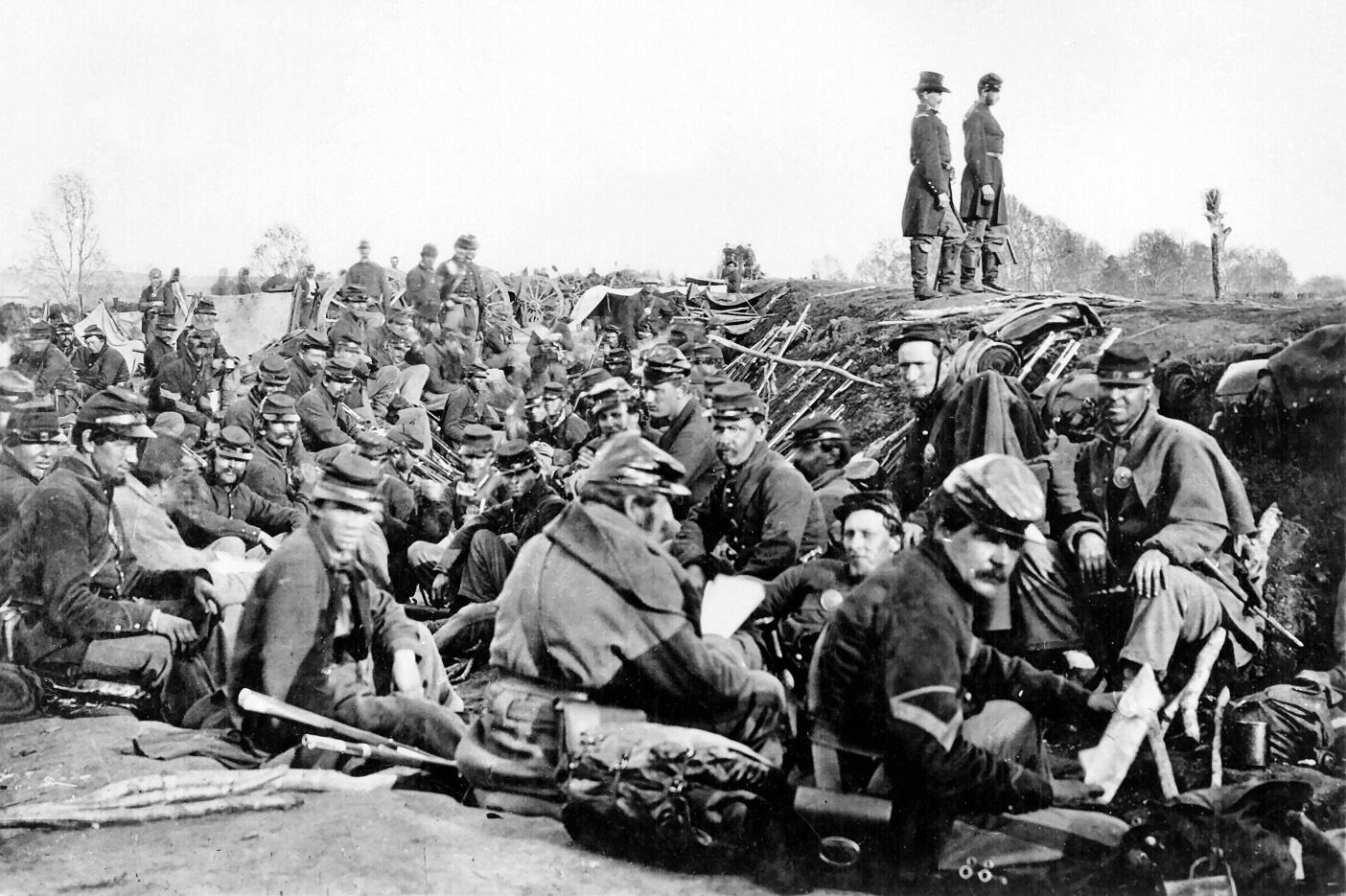
The fourth scenario is one of the commonly mentioned ones, and it’s civil war against tyrannical government. Americans like to imagine it as a scenario from their war of independence, where some tyrannical force will take over, and some George Washington will assemble the freedom-loving gun owners who will start a guerrilla war against them and eventually prevail, because freedom supposedly always prevails. However, let me illustrate my point with some images.

This is Vukovar after its fall, in 1991. The Serbs are parading the streets of the fallen city, singing about their leader needing to send some salad because there’ll be meat, they’ll slaughter the Croats. All men of fighting age were either immediately shot or transported to concentration camps in Serbia where they were tortured, killed or exchanged for Serbs. The freedom loving men took up arms against the evil force, and they lost.

This is Grozny, Chechnya, 1995. The country was taken over by separatists who declared independence from Russia. The Russians were in a difficult situation, realizing that if they allow the Chechens to secede, their country might disintegrate. The Russians decided to win at all cost and, with a lot of help from pro-Russian Chechen forces, they won.

In American civil war, the South declared independence and tried to secede from the Union. After more than a million casualties and a country destroyed, the South surrendered.

If a civil war breaks out after totalitarian government takeover, there will be two realistic scenarios. Either you will be part of a small band of “terrorists” who will have little or no resources at their disposal and little or no support in the apathetic population, or you will be a part of a massive rebellion that will include a serious part of the armed forces, police and the national guard. In first case, you’re dealing with a Ruby Ridge or Waco scenario. You’ll be killed, regardless of how many guns you have. In the second case, you’re dealing with the American civil war scenario. You may win or lose, but having a gun of your own is of limited importance because if a wing of the military is on your side, you’ll be recruited into the armed forces of the rebels and you’ll be issued a rifle and other military equipment.

However, if you think you’ll be dealing with a George Washington kind of rebellion, that’s out of the question, that’s completely unrealistic. If a tyrannical government is in charge, the first thing they’ll do is create propaganda according to which owning guns is dangerous, and owning guns that are useful for military purposes is criminal, something only terrorists have a need for. They will have lists of guns and their owners, and they will send a SWAT team to your house to confiscate your weapons. You will be alone, facing an overwhelming force, and unless you run to the forest in time and become a fugitive from the law, you will be either disarmed or killed for resisting the law. The law will be what the fascists in power decide to make it. Nobody will ask you. The general population will obey the law, as always. They obeyed the Nazis in Germany not because they loved them, but because that’s was the law and that was the government. Most Americans will do the same.

I’ll tell you what the Yugoslav government did in Croatia as part of the preparation for Serbian takeover. They confiscated the weapons of the territorial defense, the guns that were supposed to be at the disposal of the people in case of war. Essentially, Croatia was disarmed. Then they began the process of the political takeover where all the power would be centralized in Serbia and dissent wouldn’t be tolerated. Nevertheless, Slovenia and Croatia declared independence and one of the first things we did was to capture the army barracks on our territory, with the little small arms that we had. We also bought weapons on the international black market. Essentially, we had to act like terrorists because the Serbs had complete control of the military. The police forces, however, changed sides, as well as some important military officers of Croatian nationality. We had to build an army almost from scratch; in the meantime, the enemy had everything from tanks to airplanes and warships. We were disarmed, but we had the advantage of every person being able to handle weapons, in Yugoslavia it was taught in schools as part of the normal curriculum, so the entire male population was able to fight as soon as they were issued a weapon. The fact that we were disarmed was a problem, but only initially. Very quickly, that problem was overcome and we crushed the Serbs militarily. So basically, it’s better to allow yourself to be disarmed initially, then bide your time, organize with a few friends, steal weapons so that they can’t be traced to you and form or join opposition forces. The initial attack at your freedom will succeed; your enemy will know what he’s doing and you won’t. He will come at you with overwhelming force. If you resist, you will lose. However, being armed isn’t the same as being prepared. If you’re prepared, you can allow yourself to be disarmed and still retain initiative and strike back later, when opportunity presents itself. Getting yourself killed in the initial power grab doesn’t help anyone but your enemy, so essentially, all those AR-15s that you Americans have at home because you’re “prepared”, be prepared to give them up, without a fight, peacefully. However, also be prepared to lay a siege on a police station later, steal the weapons and organize an armed resistance cell. That’s what civil war looks like, and forget being seen as a hero. You’ll be seen as a home-grown Bin Laden, and the general population will hate you. If this dissent manages to get support from a significant wing of the military, you have a chance.

So basically, that’s my take on owning guns with a purpose of being prepared. It sometimes helps, that’s true, but it’s perfectly useless against being dominated by a tyrannical government, because any such government will know perfectly well how to pull your fangs out. Again, ask yourself what will come for you. If it’s a burglar, no problem. If it’s a heavily armed SWAT team or a platoon of regular soldiers, what will your AR-15 accomplish beside making you a legitimate target and your death perfectly justifiable?

Challenges and mitigation of maleness

Wittgenstein said that if it is possible to communicate an idea, it should be done in a clear an unambiguous manner, or, if that is not possible, we should shut the fuck up.

It would be interesting to see his reaction to the politically correct newspeak that’s so widespread today. For instance, the word “challenge” frustrates me so much I wish to chain it to a rock in Tartarus where an eagle would eat its liver for all eternity, because of the extent of its sins against intellectual clarity.

Let’s first see where and how it is used.

A mentally impaired person is said to be mentally challenged.

A difficulty is called a challenge.

Opposition to idea or force is called a challenge.

So, what’s common to impairment, difficulty and opposition?

It’s like calling a black guy “a person of color”, although black is the absence of color, or like calling a blind person visually impaired. It tries to be sensitive and manages only to be ridiculous.

I know what the intent is. It’s that stupid positive thinking trend. If you formulate things in a way that implies possibility of positive action, it’s a way of motivational speaking. Like, every difficulty is a challenge, implying that you can overcome it if you have the right attitude.

Except it’s a form of passive aggression and can be probably the most dangerous form of sophistry ever devised. Let me explain.

If you tell a sick person that his sickness is a challenge, that might be useful if the sickness is curable. However, to tell that to someone with an incurable sickness only adds a layer of emotional suffering to his problem, because of the implicit expectation that his condition could be overcome if he were just strong enough. You’re basically telling an old person that old age is a challenge to be overcome, or a terminal cancer patient that cancer is a challenge to be overcome. It’s much less cruel to just call it a deadly illness. That way, the person at least knows it’s not his fault he’s going to die, because it’s inevitable. He can know that he did what he could and can now rest knowing that it’s out of his hands. Placing the burden of expectation on someone who has no way of meeting the expectation isn’t positive thinking or motivational speaking, it’s cruelty and insensitivity.

It’s similar with calling difficulties “challenges”. The implication is that you need to face the challenge and overcome it. However, this form of motivational speaking only makes sense if attacking the problem is the proper way to solve it. Sometimes, you need to accept that the problem cannot be solved and approach it differently, by completely avoiding it. For instance, you can call the speed of light a challenge, or you can call it the maximum speed limit. If you call it by its proper name and not some stupid motivational euphemism, you’ll be more likely to avoid the misguided attempts to go faster, and seek alternative solutions such as folding space. Implying that something is a challenge is to imply that you’re a real man only if you face it head on and overcome it, when that might be the stupidest possible way to approach it. It’s better to call it a problem or a constant or the insurmountable obstacle. Dividing primes isn’t a challenge, it’s mathematical impossibility.

And here we come to the reason why I find some uses of the word literally chilling. For instance, when some American general calls Russian and Chinese military force a “challenge” to America. Again I remember that stupid Batman vs. Superman movie, where Batman says that if there’s 1% probability that Superman could turn bad, it should be treated as certainty.

The danger of “challenge” as a motivational word is that it implies an aggressive approach. It doesn’t acknowledge one’s limits. It inhibits understanding that Russia’s power isn’t a “challenge” to America, it’s a limit of America. It cannot be overcome and it shouldn’t be attempted because a credible attempt at overcoming such a “challenge” will result in full release of nuclear weapons. It’s like seeing the fact that your neighbor has a rifle and a fence around his property as a challenge to you, and you attempt to overcome that challenge, guided by misplaced positive thinking, and get yourself shot. It’s not a challenge, it’s a limit. It’s something you don’t overcome, don’t cross, don’t go beyond, and don’t test. Instead of challenging your armed neighbor, meet him on friendly terms. Acknowledge your limits and respect his power. Don’t see his power as a challenge, see it as a given.

That’s a good example for showing how unmitigated male approach to things can be deadly. The male approach is to meet challenges head on and to overcome. It’s to see difficulties as challenges, it’s the way of thinking of a ram in a rut, trying to head-butt everything that looks like another ram. Not only is it silly, it can be very deadly when you try to head-butt a truck. There’s a good reason why biology developed femaleness; it’s because not all things can be usefully approached as challenges, because it’s much more useful to charm a neighbor than to challenge him. If he sees you as a charming and friendly person, his rifle is not a challenge to you, because he will use it to defend you as much as he will use it to defend himself. That’s the thing: powerful independent beings with guns and nukes are not necessarily challenges and opponents, they can be friends and allies. You just need to use the female approach and smile at them. However, if they try to take advantage of you, you need to apply the male approach and shoot them. That’s what I would call a balanced, realistic approach. A smile is good and a gun is good, you just need to know which to use when.

Responsibility

There’s an important thing that people today seem to misunderstand, or not understand at all, and I’d like to talk about it here a bit.

It’s responsibility.

You see, people today think they have rights. They don’t. You don’t have a right to live. You don’t have a right to be happy. You don’t have a right to feel good. Nobody really gives a shit whether you live, or you’re happy, or you feel good. When the state says you have a right to live, they don’t mean it in a sense that they give a fuck about whether you live or die, they mean it in a sense that if somebody other than the state kills you, they’ll punish him. That’s it. You don’t have a right not to be beaten up, robbed, raped and killed. It’s just that if someone does that to you, he’ll be sentenced to jail. You, however, will be having a dirt nap with blood and seminal fluid dripping from your bodily orifices. You don’t have rights of any kind, no more than that poor caged pig from one of the previous articles. The only difference between you and the pig is that when a pig fucks up, it is killed, and when you fuck up, you’re killed, and the one who killed you goes to jail if they manage to catch him and prove that he did it, and in America, for instance, in a third of the cases they don’t. So basically, your “rights” aren’t an impenetrable personal shield that glows around you and prevents all kinds of harm. They are merely a social construct that is meant to discourage inflicting harm on others by threat of retribution. If, however, you’re dealing with an attacker who isn’t bothered by law, your life is worth as much as that pig’s. You will now think that every attacker will be bothered by law, but you’re wrong. A rabid dog, for instance, couldn’t care less about the law and it might bite you. A drunk and stoned driver is too fucked up to care about the law and whether he hits you or not. A hardened criminal won’t give a fuck about the law, and, most importantly, the state won’t give a fuck about the law, because it owns both the law and you. If the state wants to kill you, you’re dead. If it wants to imprison and torture you without a trial, it will simply label you a terrorist and you’re fucked, because nobody cares what happens to terrorists, and since there was no trial where the charge had to be proven, they can call you whatever they want and get away with it. Essentially, there’s just that one simple label that makes the difference between a citizen and vermin that is to be imprisoned, tortured and disposed of in orderly manner, and the state took liberty to decide who gets labeled. So, good luck in trusting in the state to protect your rights. As far as the state is concerned, you have the right to shut the fuck up or be put in jail.

So, responsibility. You are responsible to take care of yourself. You are responsible for taking precautions against injury, theft, rape or other forms of harm. It’s your job. Once you’re fucked, it’s too late. When you’re that caged pig that is to be carried away to a slaughterhouse, it’s little comfort to you whether the hunter is to be punished by the state or not, because it makes precious little difference to you. Your job is to take precautions against being caught and killed. If you fail, you can have all the excuses you want, you can have all the emotions you want, and you can have the perpetrator punished or not, but there’s no conciliatory prize for failing.

As a spiritual being, it’s your job not to turn yourself into a fucking mess. It’s your job to take care of your spiritual condition. It’s your job to avoid mistakes, and if you still make them, to redress them and learn the lessons necessary in order not to repeat them.

Yesterday, my son came from school with a broken umbrella, and when I asked him how the hell did he manage to break it after only a week of use, he started fumbling about how it’s some other kid who bumped into him and what not. You know what I told him? I told him it’s his job to take care of his things. It’s his job to take precautions against having his things ruined. I don’t care whether it was this or that reason, because it’s always something. What I want from him is not to break things; I don’t want valid-sounding excuses for having things broken.

Everybody has a story that is supposed to excuse their shitty life before God. I’ve seen it, people literally chant bullshit in their heads about how it’s not their fault, how they had to do this or that, how it was their job and they couldn’t help it, how everybody else did the same and they couldn’t help it, how it’s normal to do things their way and if God wanted them to do different things he should have said something.

That pig, too, had an excuse. It was hungry and the pecan nuts were tasty. Nobody gives a shit.

God doesn’t give a shit about your excuses. It’s your job not to fuck up. It’s your job not to commit evil deeds. If you have to die so that you wouldn’t commit an evil deed, then die. It’s your job to live in a state of constant diligence and controlled consciousness. There’s nothing more important for you than to take care of what your consciousness looks like, to take care that it functions properly, that it isn’t contaminated by bullshit, that it is aligned with the light of God. If you take care of that, it’s easy to avoid sin, because it becomes contrary to your nature. If, however, you allow yourself to become a mess, everything becomes difficult or impossible. Sin is impossible to avoid, evil is impossible to resist, good is impossible to do. However, don’t think you’ll have a trial after you die, where someone compassionate will listen to your excuses. Nobody really needs your opinion, because all your actions and the actual reasons behind them are known to God. You might have forgotten why you did something, you might have rationalized your actions later, but God knows exactly why you did something, for every single thought, word and deed. So, there won’t be a trial, because your opinion is the most worthless form of evidence which nobody has a need for. You’ll simply get to be the result of your choices and you will filter out to the plane of existence that corresponds to that “frequency”. If you’re a saint you’ll join God, if you’re a loser you’ll move to Loserville. If you’re a slob you go to Lower Slobovia.

If you want to defend yourself and say “no, I’m not really like that”, great. Defend yourself by making choices that will clearly show you’re not “like that”. I don’t care for what you have to say. I am deaf to words, they do not move me. I care for what you choose to be, what you choose to do. I am deaf to excuses, they mean nothing to me. You know why? Because one of the first things that filled my mind when I decided that I should engage in serious spiritual practice, were excuses. Oh, I can’t do it now, because I live with my parents who are psychotic and abusive and I’m never alone because I share my room with my brother who is always working on some project there. I’ll have to get a job, get my own place, and then start my spiritual practice. It was only for a second that those thoughts filled my mind, but I instantly got it – it never ends. There’s always some excuse. There’s an excuse not to begin, there’s an excuse not to continue, there’s an excuse for failure, but the end result of having excuses will be my failure. There are no prizes for excused losers. So I immediately started meditating, at that moment. I overcame difficulties. I found ways. I invented techniques that work in difficult circumstances. I modified my mind, behavior, actions and approach in order to adapt and overcome. People think I was born with the abilities that I have now, but they are so wrong. Most of what I am now is the result of inventing ways to overcome problems in such a way that I won’t ever have to find excuses for failing, because I knew nobody really wants to listen to the excuses of losers. I’m sure there were dozens of engineers who tried to invent a brushless electric motor, and I’m sure every single one of them had an excuse why he failed and why it’s impossible. There’s also a reason why I don’t know their names and I don’t care about their sad stories, because Tesla solved the problem. I know his story.

Nobody will care to learn why you failed if you fail. It’s your job not to fail. It’s your job to find ways to avoid bad outcomes. That is the purpose of your life, the only significant thing you need to take care of; everything else is unimportant. If you don’t know how, figure out a way. If it’s impossible, invent ways that make it possible. We don’t know the stories of the stone-age men who failed to light a fire and froze to death. Nobody gives a fuck about their reasons and why it’s impossible. If it’s impossible for you, you will leave the stage and make place for those who found a way.

In any case, nobody will care about excuses. Those who succeed won’t have need for them, and those who fail are not important.