I was just talking to the AI about the photographic requirements for Plitvička Jezera, and it made me laugh when it offered suggestions about cameras and lenses. Sure, I guess that’s what it found on the Internet – people asking what camera is the best, what lens is the best. I find it completely ridiculous.
You see, the camera/lens requirements there are so minimal, that as long as you have a camera with 4/3 sensor or bigger, with 12MP or more, and a standard kit zoom, you’ll do great. Sony R-1 did great when I used it there. Canon 5d and Olympus E-PL1 were also great. Olympus E-1 with 5MP had resolution that wouldn’t survive proper magnification, but with good technique, 12MP or more will give you a sharp B2 sized print. That’s 70 centimetres in width. If you want bigger magnifications, 24MP Sony A7II will give you sharp B1 print size. Everything higher than that is overkill. As far as lenses are concerned, 28-70mm is fine, 24-105mm is slightly better. Aperture doesn’t matter; f/4 is great. What matters is resistance to flare, and sharpness at f/8-f/11, because that’s where you’re going to be most of the time, or even at f/16. Yes, diffraction is slightly bad, but insufficient depth of field is much worse. You can correct for diffraction with unsharp masking. You can’t correct for insufficient depth of field, and then your ability to magnify the picture will suffer more than it would with 5MP resolution of Olympus E-1. Proper technique, meaning hyperfocal distance calculation, stopping down to f/16 or even more when necessary, tripod stability, ND filter so that you can blur the water; that’s what will actually give you sharp, good pictures. You can’t buy your way out of this one, because photographic technique is everything, and any semi-decent used camera will do. Biljana used the Canon RP with RF 24-105mm f/4 L lens there and the technical quality of her shots was absolutely top notch. What you actually need, and I mean need, not want, is a light, sturdy tripod. Not some big monstrosity; a traveller-type light carbon or aluminium tripod with a good ball head with Arca Swiss mounting plate, and you need the Arca Swiss L-bracket for your camera. When we took just the ordinary small mounting plates, they rotated on the camera body during exposure and caused issues. You need the L-bracket, or at least pinky grip with the Arca Swiss rail. Modern image stabilization that can work on a tripod is a big asset. You can survive without it, but it will enable you in getting the shots that would otherwise be lost to boardwalk vibration.
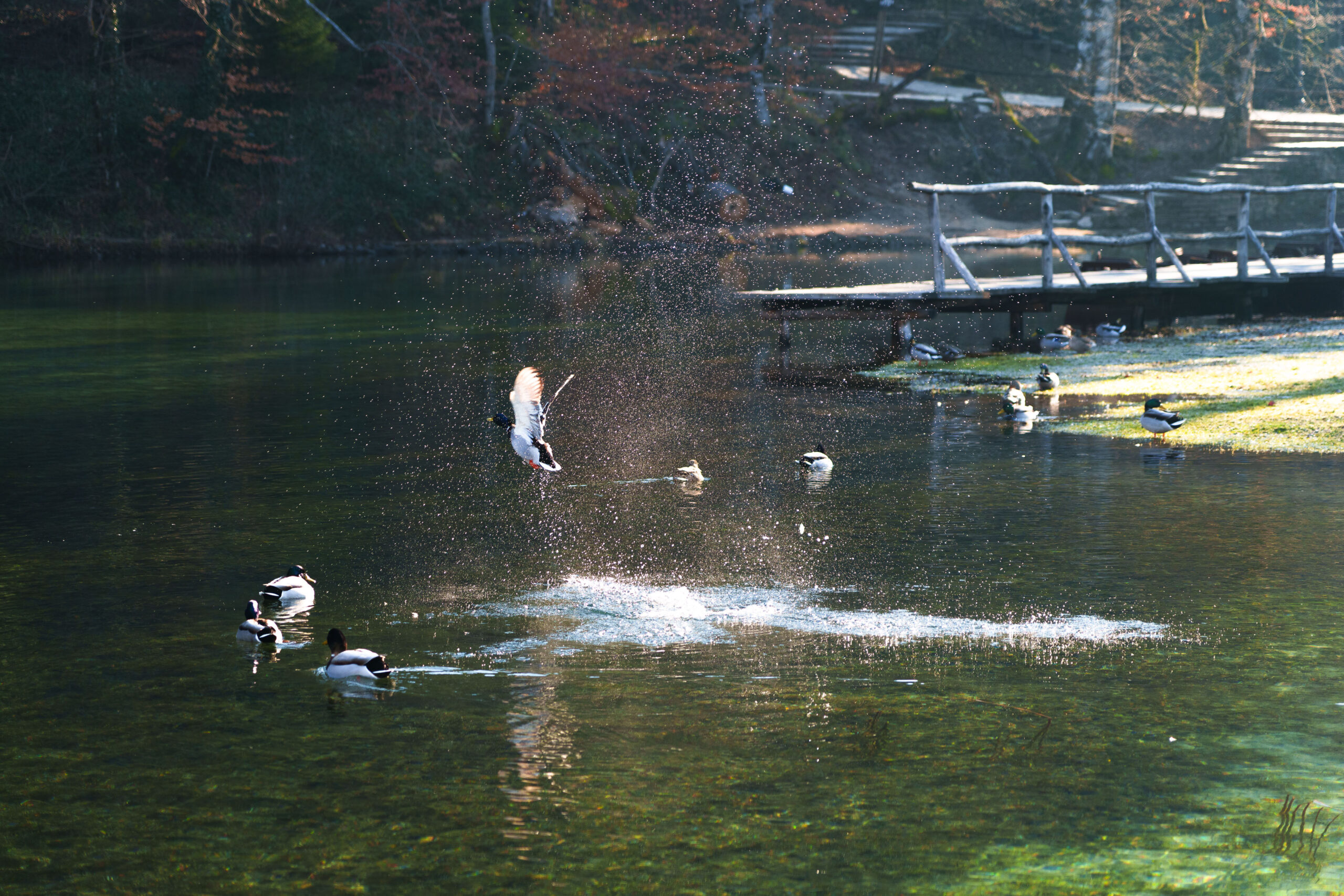
The biggest problems there are tourists – in a sense that they shake the boardwalk making it impossible to do long exposure shots. The solution to this is to get started as early in the morning as possible, before the hordes are finished with their breakfast. Get to the boats early, before they are working, and you’ll be rewarded with the ducks and cormorants messing around at the dawn, still at peace because the humans didn’t yet arrive to disturb them. When the entire continental China and most of Japan and India are in the park, the animals will hide, and honestly, I will follow along because at that point nothing is fun anymore.
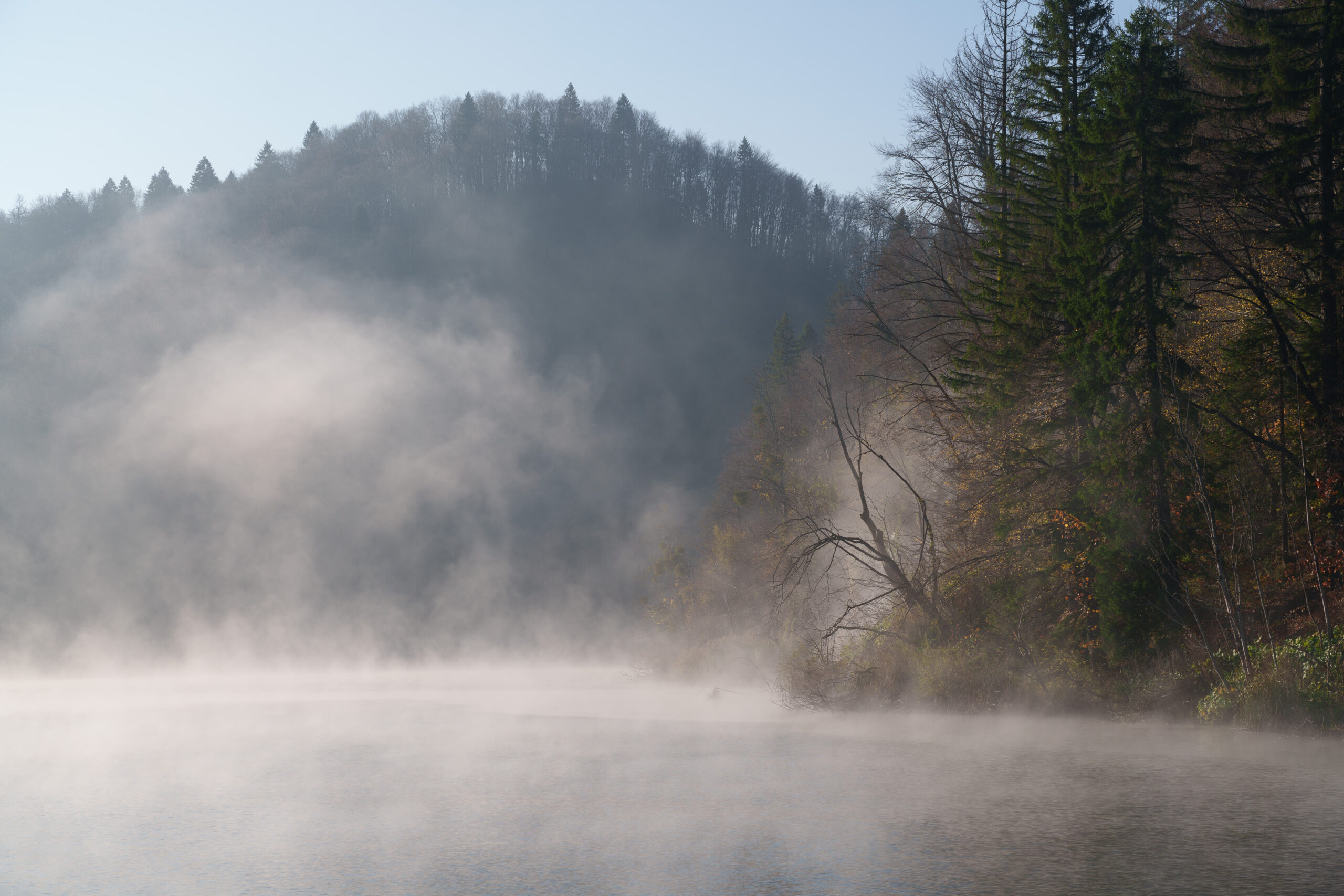
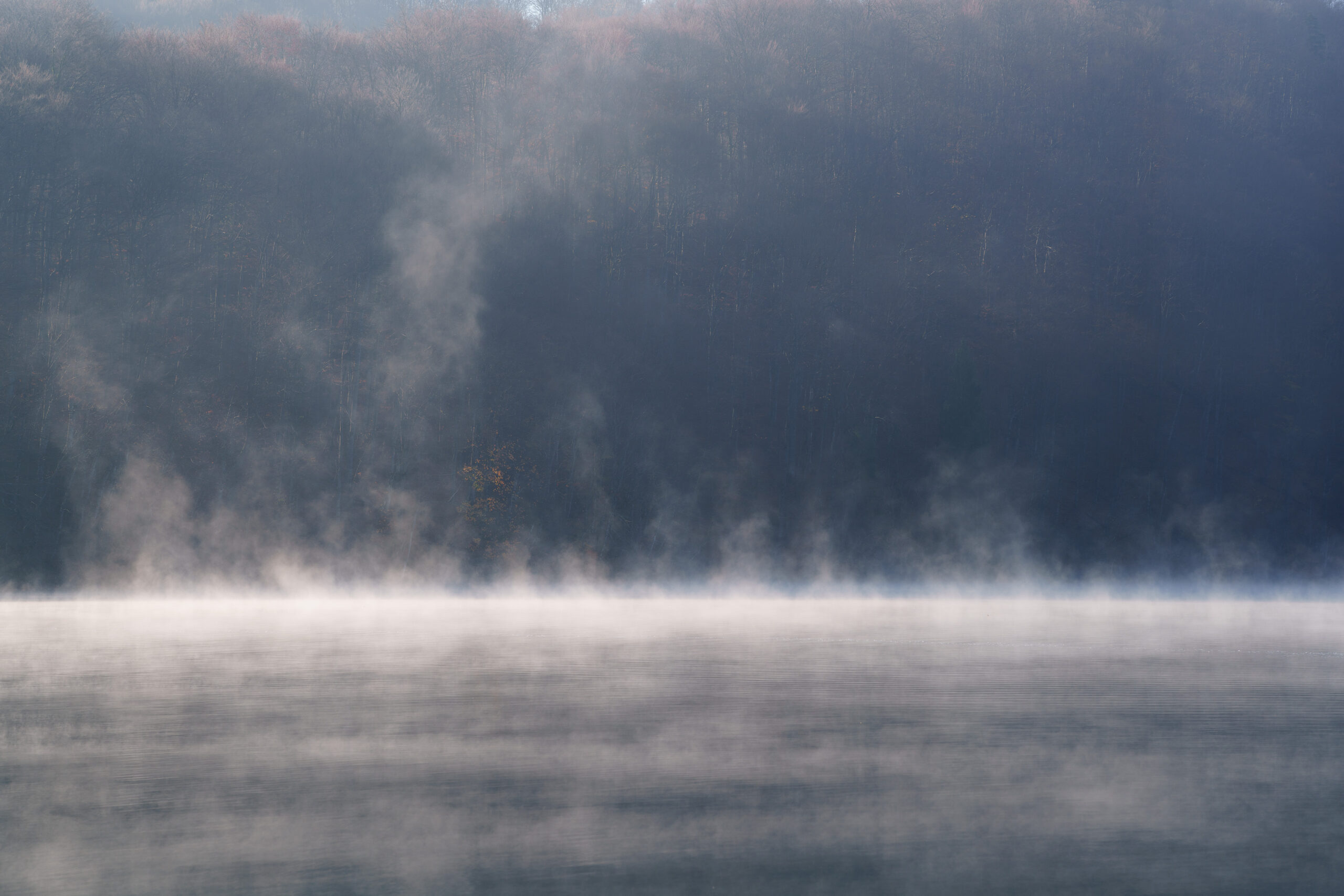
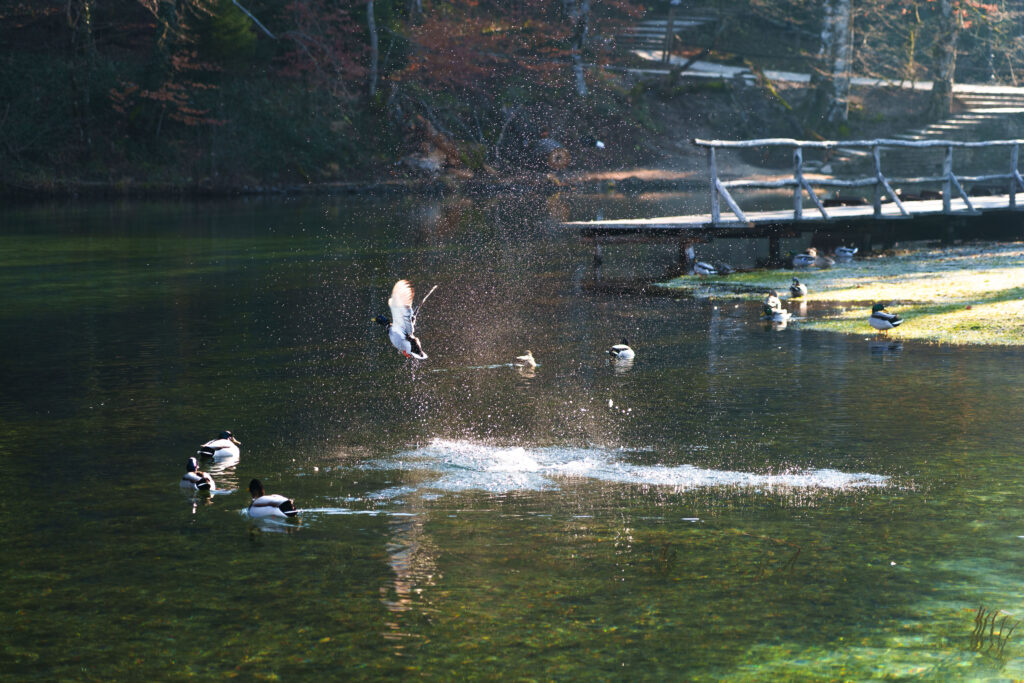 Also, what’s important is the light. Once the light is lost in the canyon, the white balance will go deep blue, which means you lost most of the frequencies of light. Not great. Also, when the sun is too bright, you will have hot spots across the picture; also not good. Ideally, you would want fog in the autumn morning, and the sun catching on the mist.
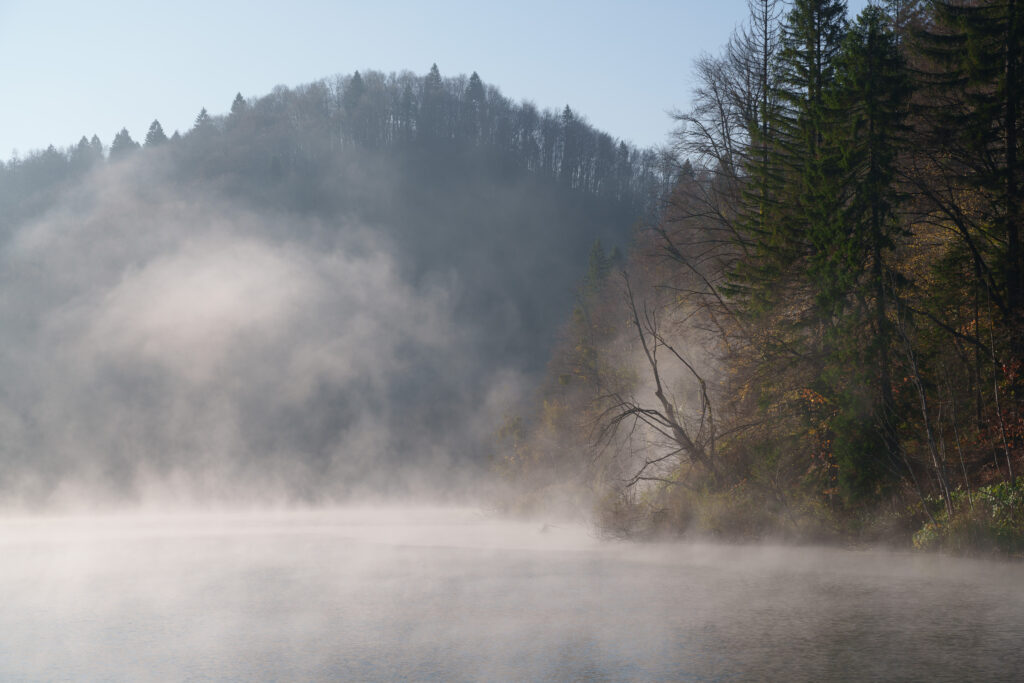
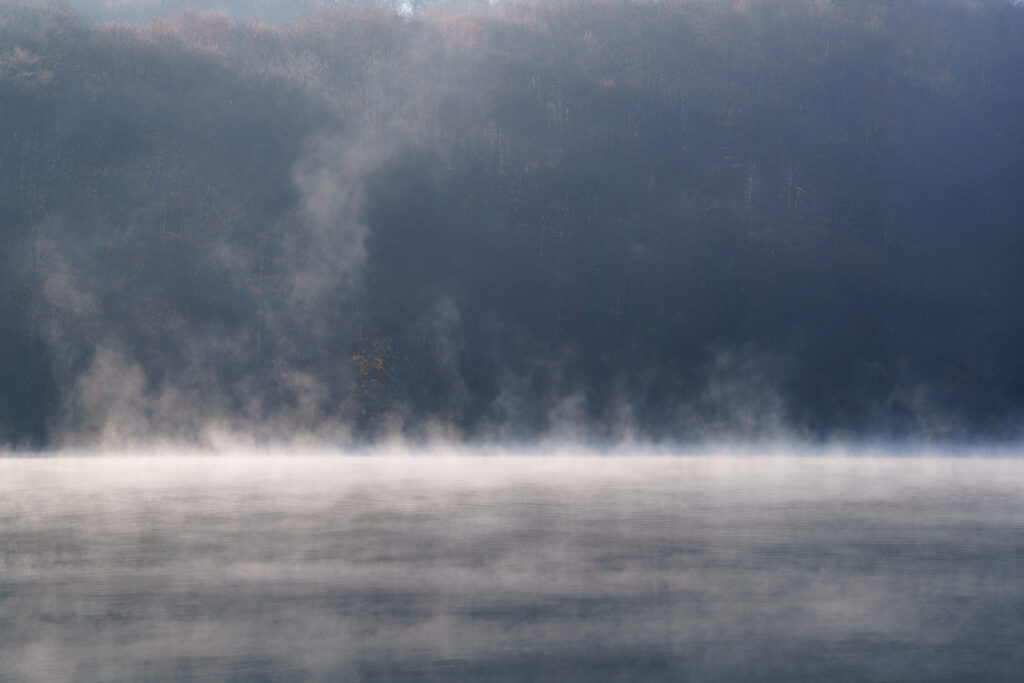 However, for the most part, if you’re trying to get blurred water, cloudy weather is better than sunlight.
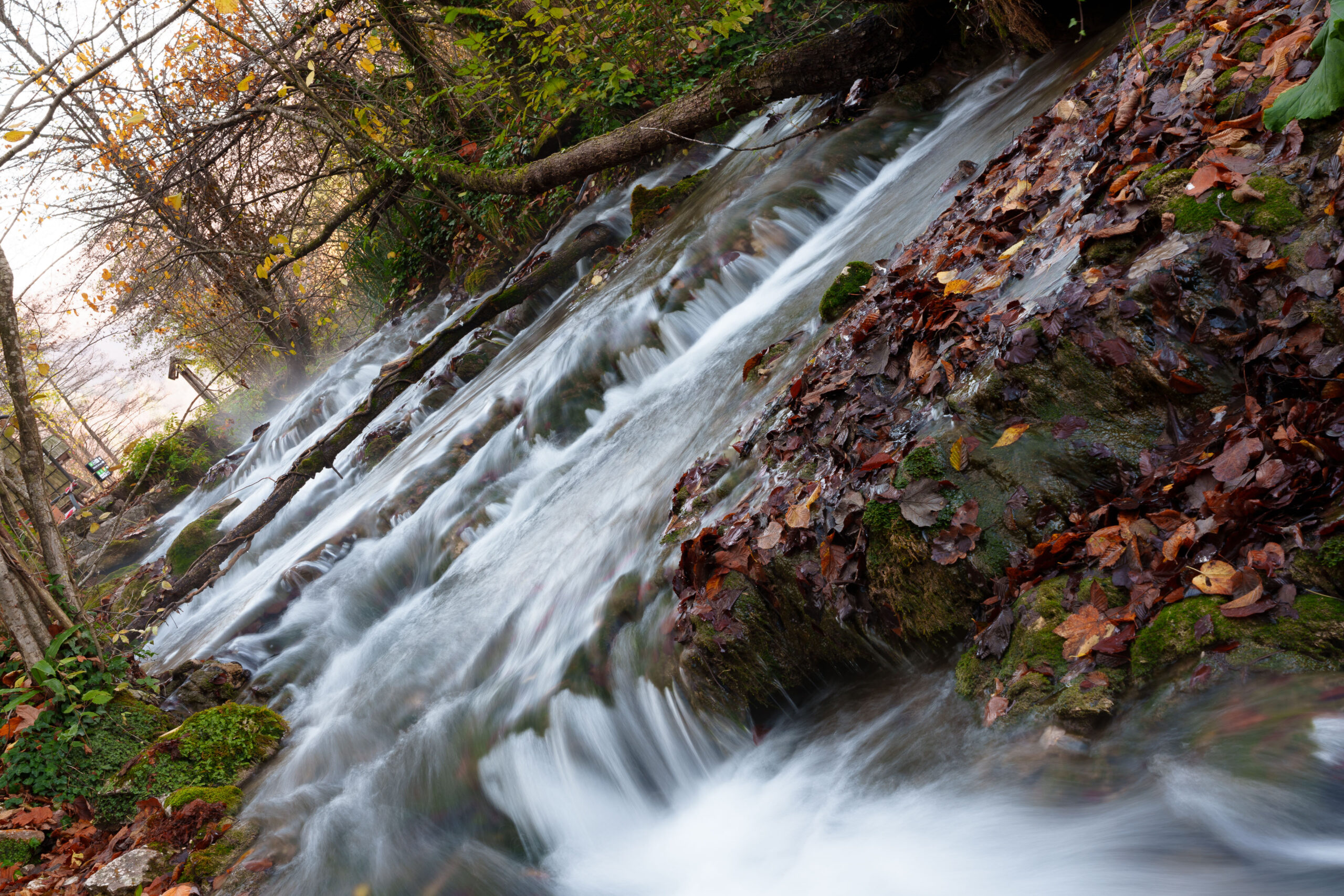
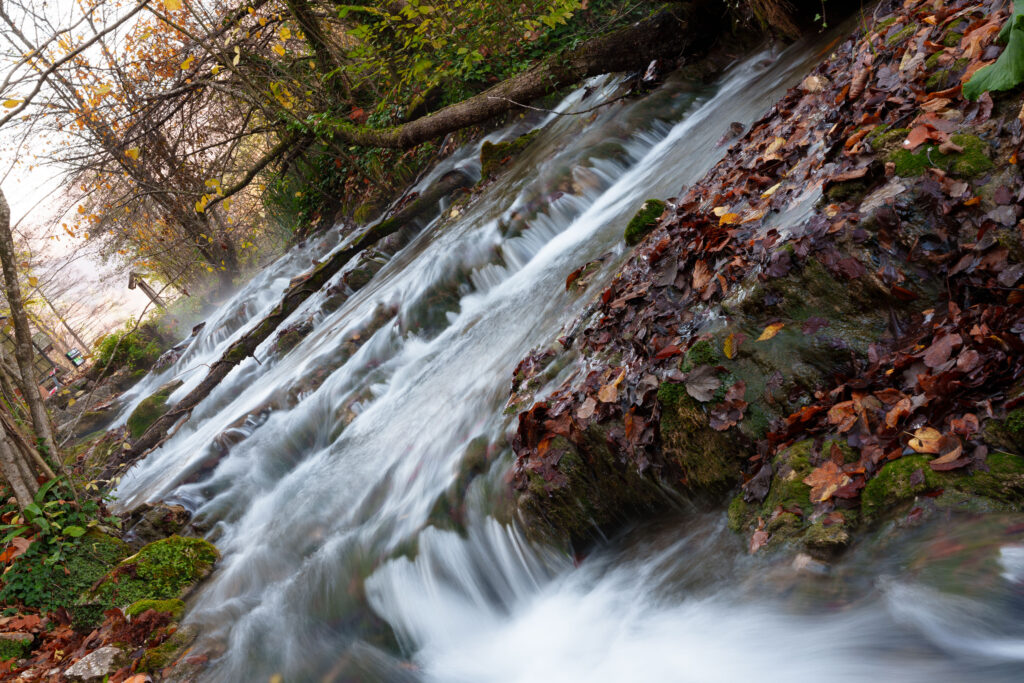 Circular polarizer is good to have, but a ND filter is essential. I usually prefer ND64, but it might be too strong for low light situations; ND32 or even ND16 might be more practical. With ND64 it’s easy to get seconds of exposure, but that will give you water that turned into mist. What you might want is texture in the water that indicates motion; not too much, but not completely blurred either. I got good results at 1/6s to 1/2s. Even shorter exposures like 1/25s can look good in some situations, but longer than half a second rarely does. Sure, if you want it dreamy, go ahead. I prefer it peaceful but alive.
The majority of good shots there, however, might not even require a tripod. Birds messing around on the lake require 1/500s or shorter. Lots of motives are just common forest/lake stuff, no need for blurring anything.
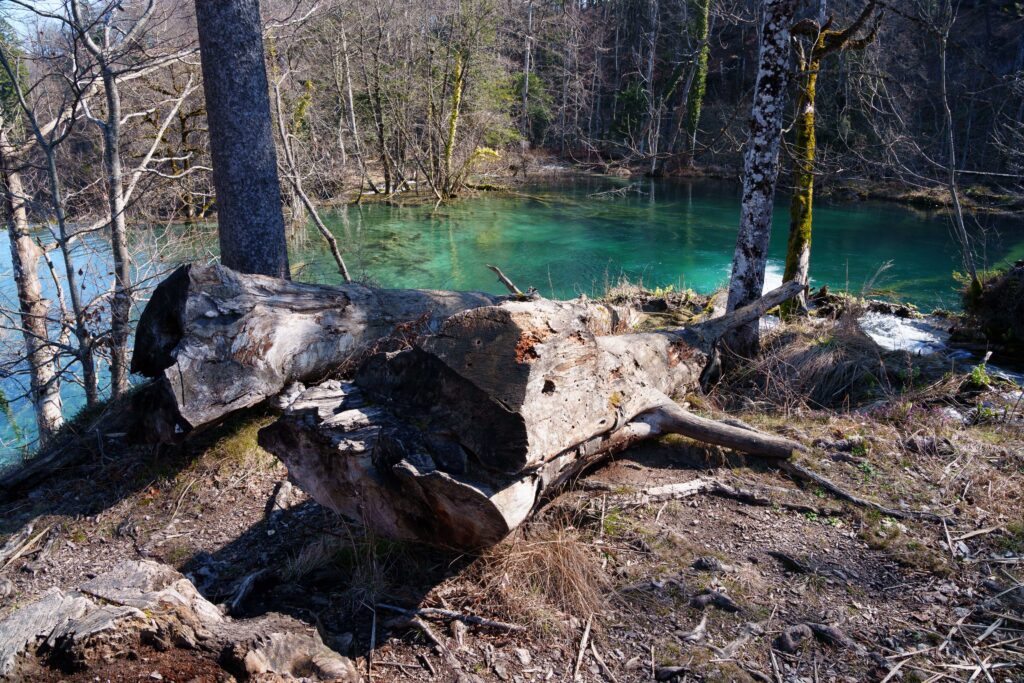 Lens flare, when it’s sunny, can be a pain there. It’s good to have a lens that’s resistant to it, which I usually don’t, so I lost multiple shots to flare. It’s a thing. Camera resolution and lens sharpness are non-issues there, but lens flare is a problem. Also, around noon or later, when the sun is too strong for photography, all the tourists are there, acting like they’re on Instagram and not in nature, and they disturb the peace of the place to the point where we pack our stuff and go have coffee and cheese cake, and then return to the hotel, shower and inspect our photos until dinner. The last time we were there, I caught an excellent shot of the snow caps in sunset light with a telephoto lens, so things like that might be worth looking into.
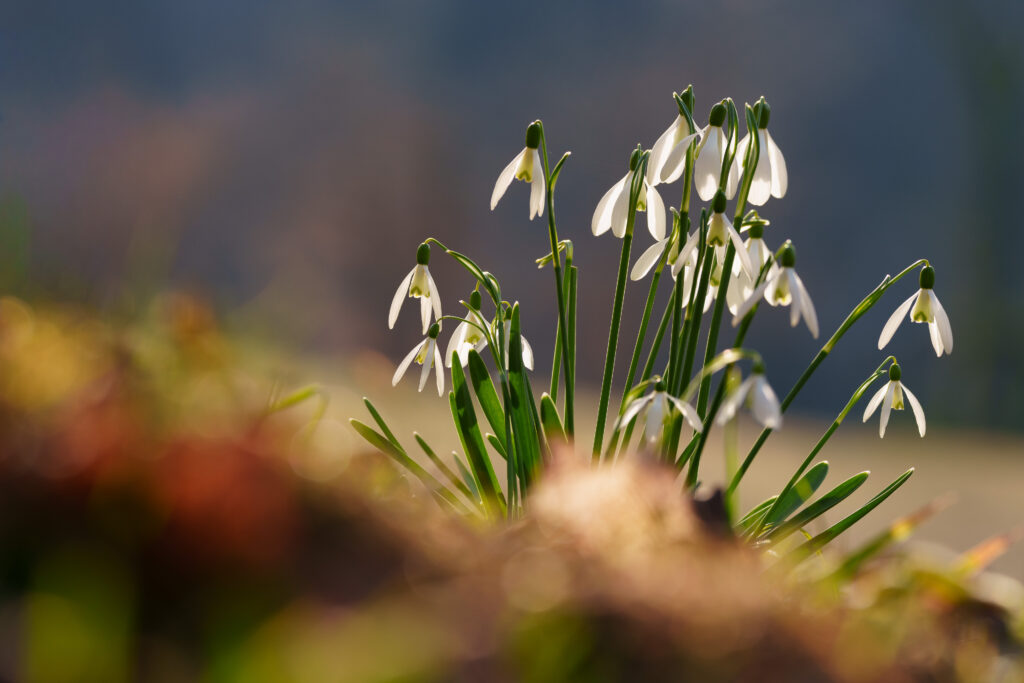 I always think I’ll set up the tripod with a wideangle and try to get a Milky Way shot, but it’s not happening. Too many street lights, too many trees obstructing the view. Not worth it. Instead, we go to bed early, wake up early in the morning, and that’s where the best light is.
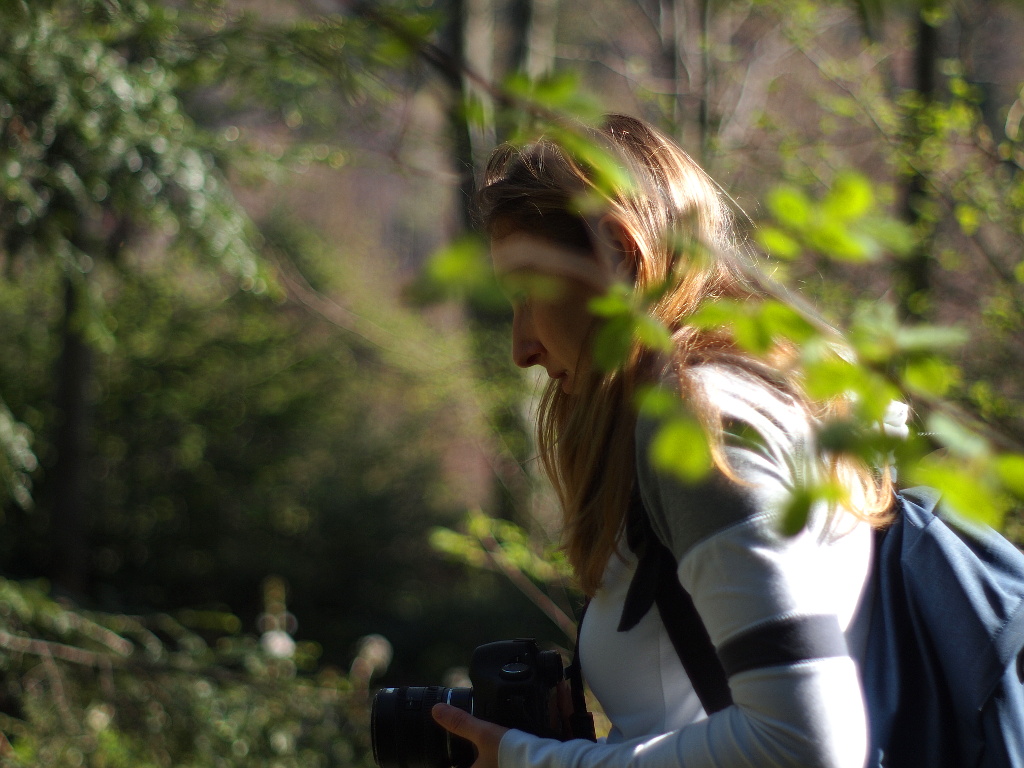
You’ll be crouching and kneeling a lot, because that’s how you get good perspective. Removing your backpack beforehand might not be an option, so don’t overburden yourself with lenses you’re not going to use. Also, changing lenses with all that mist and spray in the air is a terrible idea, because that stuff will require a wet cleaning of the sensor. Whenever I took more than one lens around the lakes, I regretted it.
So, that’s my take on it. I mean, sure, you can geek out over lenses and cameras all you want if it makes you happy, but out there the tripod mounting plate and filters will matter far more.