As you can see, I haven’t been writing much on the blog in the recent days. There, of course, are reasons for that.
The main reason is that I’m waiting for the events to unfold. I basically described what I see, but the global situation is now in an unstable situation. The pieces are apparently being moved across the chess board, and until they arrive, there will be apparent calm. I don’t have enough information to know what pieces are being used and with what purpose. I do have a hunch that the Russian aircraft carrier, Kuznetsov, isn’t used as a knight or a bishop, but as a pawn. Also, noise was made in the Western media about the Russian introduction of the Sarmat rocket. It’s simple equipment replacement without deeper strategic meaning. Also, it’s a silo-based rocket, and as such the most vulnerable and strategically irrelevant, which is why the Russians didn’t care to update it sooner.
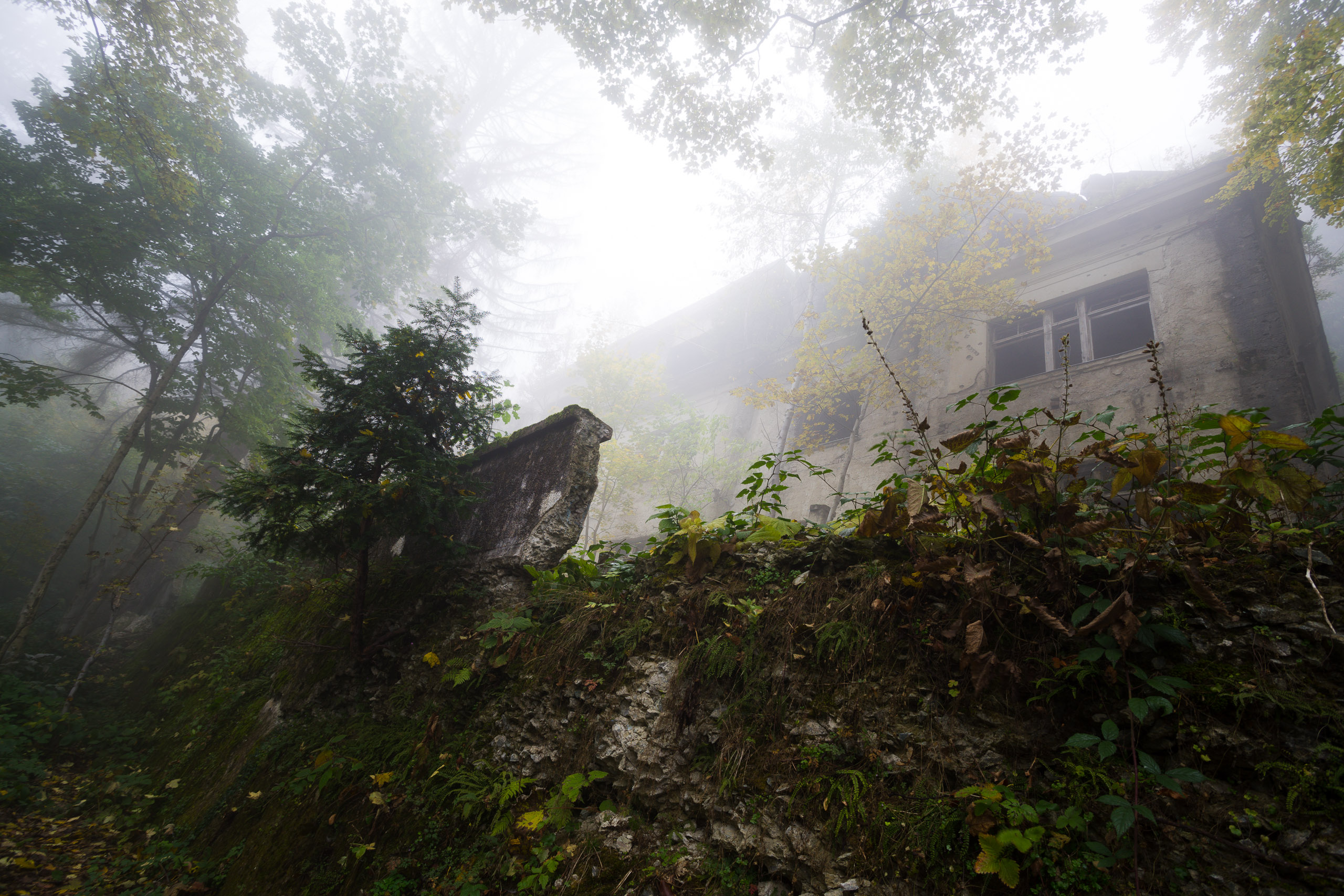
In the meantime, I’m working, keeping myself in shape by picking mushrooms and chestnuts in the local hills, and I’m catching up with my long neglected photography, because watching the news is making me sick.
The cold war balance of power was based on the concept of mutually-assured destruction. This means that an attack is deterred by certainty that it will be followed by a deadly retaliatory strike, with both sides being destroyed.
The acronym for this (MAD) is usually utilized in form of various puns, as in, that’s a MAD idea. In fact, the concept itself is the only reason why we didn’t have a major world conflict since the WW2, and the thing had all sorts of precedents in nature – we can see in animal kingdom that the more deadly the weapons the animals have, the less likely they are to actually fight, and instead resort to some ritualized dance.
Essentially, in a human society where everybody is armed, everybody is also polite, because offending an armed opponent gives you very good probability of getting killed. Even the very concept of “law and order” is based on the assurance that your life will be destroyed by imprisonment if you commit a crime, which essentially deters crime by a promise of retaliation by the state.
The cold war nuclear strategy was far more nuanced, sophisticated and complex than people usually give it credit for, thanks to the propagandists who portrayed the entire thing as insane accumulation of excessive amounts of weapons. In fact, the entire thing was very sensible and rational, albeit inherently dangerous.
Let’s see how it escalated through time. First, the Americans had the atomic bomb and threatened the Russians in case they were to overrun the western Europe. That bomb was Hiroshima-type, and was simply dropped from a propeller-driven airplane. The Americans had the advantage of having bases in Europe right on the Russian border, and Russia was within airplane reach. The Russians, however, had a problem. Not only were they late in developing the atomic bomb, they also had geography working against them. They could only fly a bomber from their territory to America to try to bomb it, and since the distance between Russia and America is far greater than the distance between Ramstein base and Russia, they were at a huge disadvantage, and their bombers had no realistic chance of reaching America before being shot down. The reason why the Americans installed all those northern air defense (NORAD) radars in Alaska and Canada was because the shortest path for the Russian planes was either over the north pole, or from Vladivostok to Alaska. Essentially, America was completely immune to a Russian attack, and the cold-war scare was merely a psyop for controlling their own population and for assuring the growth of military budget.
The Russians, on the other hand, didn’t like being in a position where the potential enemy can destroy them, and they can do nothing about it, so they worked very hard on developing technologies that would correct that. First they tried copying an American bomber, which succeeded, but due to the aforementioned geographical issues it didn’t solve anything. Simultaneously, they were developing rocket technology, and succeeded in creating a rocket that launched Sputnik in late 1957, and was essentially an intercontinental ballistic missile. The reason why Americans shat themselves when they detected Sputnik’s radio beep in orbit was the realization that the Russians could easily have, as Lyndon Johnson aptly put it, “dropped atomic bombs on them like rocks from a highway overpass”. The Soviets had the qualitative ability, but not quantitative: those rockets were few, they were more prototypes than robust weapons, and they took a really long time to fuel and prepare for a launch. This is the reason why the Soviets went on with the risky attempt of installing their short-range nuclear missiles on Cuba, to counter the threat of Jupiter missiles the Americans had already installed in Turkey and Italy. The American advantage was too great. You would never know it from the American media, however, because when they talked about the “missile gap”, they stated that the Soviets had a huge advantage over America, and that America is lagging behind.
In the 1960s, the wargame scenario would have looked like this.
Scenario 1, Soviet first strike. The Russians start fueling their rockets. This is detected by the Americans who declare DEFCON 2. The Soviets have strategic bombers in the air. Those are quickly intercepted by American fighters. The Soviets do not stand down, they launch short-range nuclear weapons at American bases in Europe. The Americans respond by leveling the Soviet ICBM launch sites with short-range nuclear weapons and shooting down Soviet nuclear weapons. The Soviets are issued an ultimatum: surrender or we nuke your cities. The Soviets surrender, as their nuclear weapons have already been taken out.
Scenario 2, American first strike. The Americans fuel their Atlas ICBMs, and prepare their European forces. They attack the Russian nuclear forces with their short-range missiles from Europe, and launch the ICBMs from America at the Soviet cities. The Soviet Union is destroyed.
In both scenarios, the world goes on just fine, as the level of radioactive fallout would not significantly exceed that in the Castle Bravo experiment. In the 1960s, the nuclear missile submarines were more of an experiment than an actual doomsday weapon. They were noisy, easily detectable and the missiles they carried had short range, necessitating a close approach to enemy’s coastal waters. The role they would have played in an actual conflict would have been marginal. In any case, America was at that point protected by the Nike Hercules nuclear-tipped anti-ballistic missiles. In the worst case scenario, America would have lost one or two cities, while the Soviet Union would have ceased to exist. This is hardly mutually-assured destruction.
This essentially remained valid throughout the 1970s. The Americans had a huge advantage in both missile numbers, nuclear submarines, and basically everything that influences the outcome. The number of the missiles and nuclear weapons fielded by both sides grew to such numbers, though, that it became inconceivable that life would go on normally after a nuclear exchange. Due to sheer number of the bombs that would explode, the radioactive contamination would have been huge, and although the Soviet Union would have been hit ten times more, enough bombs would probably hit America to destroy its industrial potential.
By the 1980s, everything changed. The Soviets finally fielded weapons that achieved full parity with the United States. This includes the nuclear ballistic submarines of the Delta and Typhoon classes, SLBMs that could reach America even if launched from the Soviet territorial waters, and the R-36 Voivoda ICBM, better known by the NATO designation SS-18 Satan. This designation itself tells volumes about what the Americans thought about it. It’s the ultimate enemy, it’s death itself. They had no defense against it, no chance of pre-empting it, and when that was fielded, shit got real. This, finally, was the time when the threat of nuclear annihilation became mutual. The mutually-assured destruction finally became exactly that, and America could no longer count on any degree of probability of survival even in the case of striking first. As a result of finally achieving true parity with the Soviets, they lived in true fear for a few years, contemplated building some kind of a sophisticated missile defense, and then decided to be friends with the Soviets because the game of intimidation was no longer fun.
After that point, the Soviets decided that the threat of war is over and they could finally try the long overdue reforms of their economy and the political systems, implemented glasnost and perestroika (essentially freedom of media and political activism, and reform, as a general trend), which ended up disastrously and destroyed their multi-state union and their economy. Their military degraded and the USA was left standing as the sole nuclear superpower. They exploited the opportunity by seizing all forms of strategic high ground and then decided it no longer matters much because the opponent doesn’t really exist anymore. Feeling no need to invest trillions of dollars in keeping their nuclear weapons up to date, they allowed everything to degrade, as strategic nukes were seen as a relic of the past.
The Russians, however, recovered under the leadership of Vladimir Putin. They worked very hard on restoring their military, on modernizing their industry, and on improving their economy. Some things they refurbished, some they scrapped, and in some cases they built new and improved versions. It was a huge job, in the span of 15 years, and they are only halfway through at this point. The quantity of their military potential significantly lags behind the Soviet maximum, but they make up for that with innovation and quality. In any case, it is interesting to observe how the roles have reversed, because by observing the degree of degradation of Soviet-era military equipment we can extrapolate that NATO military equipment from the same era degraded at the similar rates, and yet in Russia the degrading equipment had been replaced as obsolete or unreliable, while in NATO countries, no investments were made in refreshing the strategic deterrent, as it was seen as costly white elephant, something nobody really needs. In Russia, however, the strategic deterrent was seen as the only thing that can prevent America from raping and plundering their country forever with impunity, and its reconstruction was made a priority.
As a result, it is my opinion that the roles had been reversed, and there no longer is mutually-assured destruction, because the Russians have absolute supremacy in nuclear weapons, anti-ballistic and anti-aircraft defense, and probably also in electronic warfare. The Americans have unquestionable supremacy in conventional warfare, as this is the field where they invested significant resources and their assets are modern, well integrated and numerically superior.
The geopolitical result of this is that America assumes its nuclear supremacy or at least parity, it assumes its conventional military supremacy, and it assumes its economic and financial supremacy, and uses those to pressure Russia into submission. Their miscalculation is that when it comes to the use of force, the Russians will back down, as they always did so far, and America will have its way. However, the Russians understand that to back down amounts to acceptance of eternal servitude, and they also understand that in case of a nuclear conflict, they are in the same position relative to America as they were in the 1960s, only with the roles reversed. If a nuclear war were to break out today, Russia would have the choice of what to hit, when and how, and any kind of retaliatory strike on its military and its cities would not be anywhere near deadly. In fact, they might be better off with a nuclear war than they are now, with a Nazi-like blundering America formenting all kinds of evil, chaos and madness across the world, and using its force to pressure Russia in all kinds of ways, crippling its potential for growth and prosperity.
Since America simply doesn’t have the economic strength to invest trillions of dollars into rebuilding their strategic nuclear forces, which are fubared for the last decade or so, and is unwilling to stop pretending that it has superiority and stop forcing its way around the world as if it had the power to defeat anyone militarily, this, now, is the most dangerous point since the end of WW2, when America had the luxury of seriously considering the use of nuclear weapons, on which it had monopoly, to finally cripple all potential adversaries. We are now in a situation where Russia has the actual superiority, and America acts as if the roles are reversed and it calls all the shots. This is why MAD would have been a vastly preferable option, because when everybody knows they don’t have the supremacy, they tend to pick words and actions carefully and are not likely to go around offending and pressuring other powers like blundering buffoons.
The thing is, the Russians are not unreasonable, they just want the world to function as it was supposed to – they want to be able to freely trade and cooperate with other countries, and not be bullied into submission by America every time they actually succeed at something, and they also don’t want their friends to be killed off one by one, their borders surrounded by NATO bases and the Western press writing slanderous bullshit propaganda about them on a daily basis. Apparently, for America that’s too much to ask, and that’s why, in my opinion, we are on the brink of a nuclear war.
There’s a very simple way for America to both avoid investing trillions of dollars in modern weapons, and avoiding a nuclear war with Russia. Simply, treat Russia the way Austria treats Slovenia, or the way Denmark treats Norway. That’s all there is to it. Stop pissing on the Russians and expecting them to think it’s raining, because if you don’t they’re going to cut your dicks off and shove them down your arses.
I wrote generally about nuclear weapons and strategy of their use, but not much about the weapons themselves.
When there’s talk about the yield of the modern nuclear weapons, people usually compare the first Hiroshima bomb with the yield of 15KT (thousands of tons of TNT explosive) and the Tsar bomba with the yield of 50MT (millions of tons of TNT explosive), probably wanting to show how much bigger and more destructive our modern bombs are.
Well, yes and no. You see, no modern nuclear weapon has that big of a yield. The more powerful weapons have been systematically phased out, for several reasons. First, because they are heavy, big and clumsy, and thus difficult to deliver. The Tsar bomba was so cumbersome, it was difficult to deliver by a plane, let alone a rocket. It was a prototype designed for showing off, not an actual weapon. Essentially, Americans detonated the Castle Bravo test (which was so poorly controlled the Americans shat themselves), and the Russians wanted to one-up them by detonating a bomb more than twice the size, and they too shat themselves when they saw the results. The Tsar bomba was actually intentionally reduced in yield from the design’s theoretical maximum of 100MT, so that is the actual top yield nuclear device that mankind can demonstrably make. The laymen who think that the purpose of nuclear weapons is to blow us all up, and that those bombs are designed by psychopaths, probably think that the goal of nuclear weapon design is to produce stronger weapons, but that is not the case. In fact, the yield of the deployed nuclear weapons has been steadily going down for the last several decades. The strongest fielded weapons were in the order of magnitude of 20MT, but they have all been phased out. Why is that, you will ask?
Well, one of the reasons is that one big warhead is easier to destroy by an anti-ballistic rocket, than ten smaller ones. Furthermore, several smaller weapons are much more effective at destroying a wider area than one bigger weapon. And last, there isn’t much of a difference between a 100KT and a 20MT bomb when it comes to destroying military targets. In fact, a spread of 100KT warheads will probably do a better job because it’s less sensitive to accuracy of the individual hit.
When it comes to civilian targets, they are really an afterthought. The designers of warheads are more concerned with destroying hardened bunkers, command centers, aircraft carrier battle groups and similar targets; nobody really gets his dick hard thinking about destroying a city of millions of people with nuclear weapons. If anything, it makes everybody ashamed of their work, and the weapon design is harder to justify if it doesn’t have a clear military purpose. The civilians are such soft targets in any case, that even the first Hiroshima bomb did a good enough job at causing immense suffering and death. It is much more difficult, as it proved, to sink a battleship of the Prinz Eugen class, than to turn living people into shadows on concrete.
There’s no real difference between American and Russian weapons designers in that regard. They have both been following similar design parameters, working more on miniaturization, reliability, maneuverability, accuracy and yield control, than yield magnitude, because after they both ascertained that they can make very big bombs as experimental devices, they started thinking about what is actually practical as a fielded weapon, and they came to the conclusion that the best thing you can have is a spread of 10 or so individually maneuverable, highly miniaturized and reliable bombs, launched from a stealthy mobile platform. They all initially fielded 20MT weapons, but later withdrew them as they saw no practical military use for them.
There are other reasons why a reduction in weapons size is preferable to yield. You see, a small weapon can be launched with a lighter, faster rocket. Such a rocket is smaller, so you can pack many more of them inside a submarine. A lighter rocket can achieve maximum speed more quickly, and it doesn’t stay long in its vulnerable, slow phase of flight. You can put it on a truck, or in a train, or on a cruise missile. They even made suitcase-sized bombs. Miniaturization has a huge number of advantages, and yield, other than bragging rights, has precious few.
So, what do Americans and Russians currently have fielded in operational form?
The Americans have Trident II SLBMs on Ohio class submarines, armed with 8-12 MIRVed warheads. The warheads can be either 475KT or 100KT, depending on which version is used. They also have the Minuteman III silo rockets, which have fallen into disrepair and are not really taken seriously due to their vulnerability. They carry 3 MIRVs with 170KT to 500KT yield, depending on the version.
The Russians have Sineva SLBMs on Delta IV class submarines, 4-8 MIRV warheads with 100KT yield each. They also have Bulava SLBMs on Borei class submarines, 6-10 MIRVs with 150KT yield each.
They also have mobile Topol-M launchers with single 800KT warheads, and mobile Yars launchers with 4+ MIRVs with 150-250KT yield.
They also have silo-based R-36 Voivoda (known in the West as SS-18 Satan), which are in a similar state of disrepair as the American Minuteman III counterparts, and are being phased out and replaced with Yars launchers and, when its testing finishes, the Sarmat heavy launcher. The payload for those are 10 MIRVs with 750KT yield.
The Russian nuclear weapons are almost all brand new, with modern design; they are tested, reliable and dependable. It’s an irony that people in America think that Russians only have Soviet legacy nukes, and that’s not the case at all; if anything, the Americans have legacy stuff from the seventies and eighties, and it’s questionable whether it all works and how well. It is telling that of all the Russian nuclear rockets, only one is as old as the newest of the American nuclear rockets, and it’s the one they are quickly phasing out because it’s unreliable. Just food for thought.
So, what does that tell us? First of all, when you make calculations about yield in nukemap, ignore everything with a yield over 800KT because for all intents and purposes it doesn’t exist. Second, always count on more than one hit, because you’re most likely getting hit by a MIRV spread. Third, if you live in a highly populated area that doesn’t double as a strategic military installation (such as a nuclear submarine shipyard), you are probably a very low priority target and nobody really has any wish to kill you, unless your politicians already killed millions of people in the enemy’s capital cities, in which cases the enemy got so mad they’re probably going to kill you all. The name of the game in nuclear strategy is “disarm”, not “commit worst genocide of all times”. The enemy’s civilian population will be hit only by the doomsday retaliatory strike of last resort. However, the infrastructure of the world will be a priority target – satellites, Internet, electricity, transportation. All electronics will be disabled either permanently or temporarily by EMP blasts. You will hear no news, and there will be no way to find out what happened, maybe forever. There will be no food refrigeration or transportation. There will soon be no modern medicine. Honestly, it would be less painful and terrifying if they did hit us with the 20MT warheads, then at least we could hope for quick evaporation. This way, the soldiers will be the lucky ones, they will die from bombs, while the rest of us die from waterborne bacteria and hunger.
I was thinking about it just now and it hit me: most people don’t actually know what a nuclear war would look like, what weapons are used for what, what strategic issues are relevant and so they don’t know how to recognize crucial strategic breaking points.
I was reading books about SDI (also known as “star wars”) in the mid to late 1980s, but apparently I’m old. 🙂 I don’t think that anyone younger than 30 today has much clue about these things. So, I’ll do my best to explain.
There are 3 main ways to deliver a nuclear warhead: a ballistic rocket, a cruise missile and a gravitational bomb, which is a fancy way of saying that it falls when you drop it from a plane. We can safely ignore the last one, as it is militarily irrelevant today; in any case, those things would be used only on the battlefield, and would be launched from a fighter-bomber based very close to the front line. A situation where that would make sense in today’s world is completely beyond me.
A ballistic rocket, also known as intercontinental ballistic missile, or a submarine launched ballistic missile, is essentially a modern version of Hitler’s V2 rockets. It burns up all its fuel in order to put the warhead on a ballistic trajectory, and then the warhead goes back through the atmosphere very much like a deorbiting spacecraft. Essentially, there is no reason why you couldn’t put the warhead into orbit, keep it there for a while and then deorbit when convenient. This, however, is not deemed practical as it is assumed that the missile launch will trigger a retaliatory strike, so making circles around the Earth is a waste of precious time. The main problem with the ICBMs and SLBMs is therefore the obviousness of the launch. The satellites can detect the infrared flash of the launch, and they show perfectly on radar.
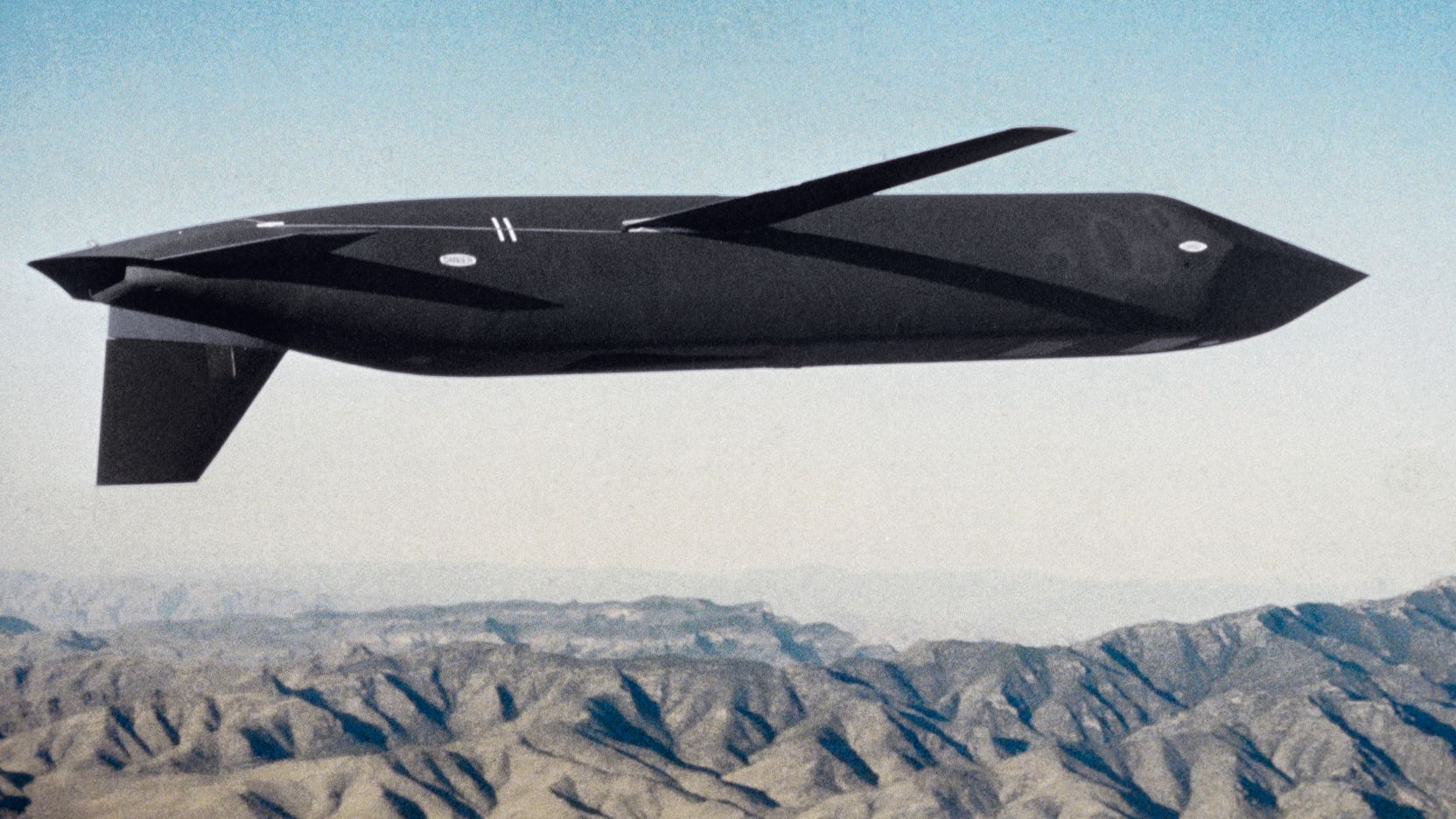
A cruise missile, on the other hand, especially one with low radar signature, or one flying very low, following terrain contours, is a very sneaky bastard. It is the main reason why the Russian strategic bombers are so scary: the purpose of flying them up to the enemy’s borders on a regular basis is to get you used to them being there and doing nothing. Then, one day, they squeeze off their load of cruise missiles, which are essentially small pilotless subsonic planes that navigate either by comparing the observed terrain to their internal map, or by GPS/GLONASS, and independently seek their targets. The reason why fighters intercept those strategic bombers is so that they could visually perceive such a cruise missile launch as it happens, because it might be completely missed by radar. If you have fighters nearby, they can both alert the base about the attack and try to shoot the cruise missiles down.
The reason why the B2B bomber is stealthy, and why its cruise missiles are stealthy, is that it can sneak deeply into Russian territory before squeezing off the rockets, performing a cloak&dagger first nuclear strike that will incapacitate the Russian defenses and radars ahead of the full ballistic launch.
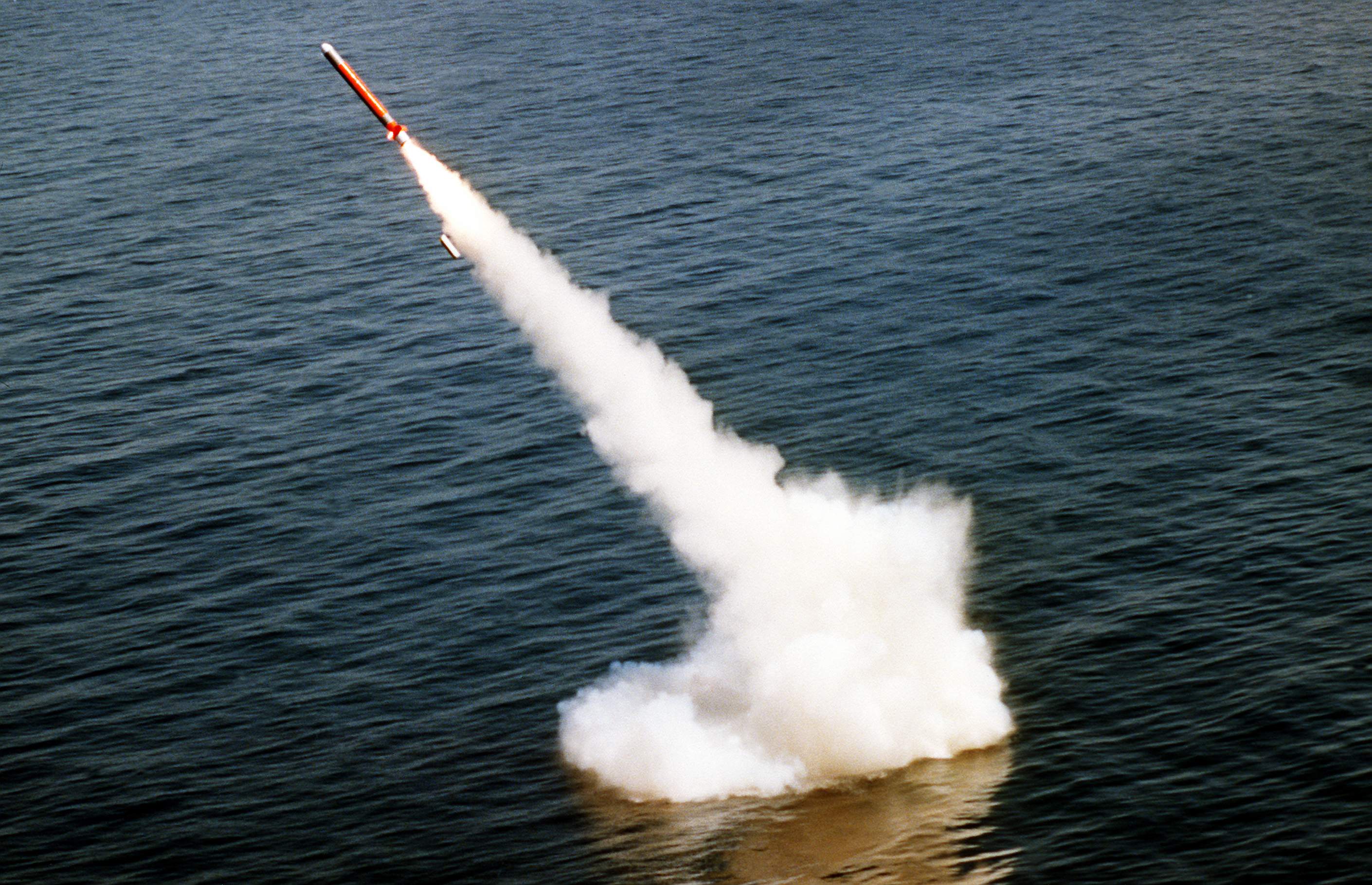
There are other ways of performing a sneak attack. You can, for instance, bring a strategic nuclear submarine very close to the enemy’s borders, and launch ballistic missiles from there. The fact that the missiles give off a launch signature might not even matter, because the time between launch and impact can be measured in seconds. You can also have a hybrid weapon, which moves like a torpedo for a while, then gets out of the water and behaves like a low flying cruise missile, with the goal of both shortening the visible flight path and hiding the launch point to give the submarine time to GTFO. Also, you can have pre-positioned nuclear/EMP devices on enemy’s territory, that can be activated on cue, destroying crucial infrastructure in order to blind the enemy right before the ballistic attack.
So, if you want to make a nuclear first strike that would destroy your enemy, you need basically two things. First, you need to make a sneak attack that will completely surprise the enemy, so that he gets hit without any warning, ideally in such a way that his ability to retaliate in kind is to be destroyed, or his ability to issue commands to launch sites had been negated. Furthermore, it would be very dangerous gamble to assume that the enemy will not be able to still launch at least something in your direction, so you need an anti-ballistic shield that will be able to knock out any strays.
And that’s why the anti-ballistic shield is such an issue of contention. It sounds like a defensive measure, but it’s actually part of the first-strike package. If you have a mutually-assured destruction policy, which demotivates any attack by assuring retaliation, you don’t essentially need an anti-ballistic shield, as simulations proved that you can overwhelm any defense by a massive enough attack with MIRVs and decoys. Essentially, against a massive retaliatory strike an anti-ballistic defense shield doesn’t do much. However, it is essential if you intend to strike first, destroy the vast majority of your enemy’s nuclear force, and then pick up a few stragglers with your anti-ballistic rockets. That’s why the Soviets went crazy when the Reagan administration launched the SDI concept. They understood it as Reagan trying to launch a first strike against them with impunity, and they said that they were going to respond with a first strike of their own if it ever gets close to being fully operational. They had the same response to the Pershing II intermediate range rockets that were supposed to be placed in Germany, as close to the Russian border as possible, so that the Soviets wouldn’t have time to react. In any case, the advances in weaponry reduced the response times already to such dangerously low amounts, that any further reduction would mean having to make the response system fully automated. Since this was deemed to be completely unacceptable by both sides, and since Reagan was eventually made to understand, by a spy Oleg Gordievsky, how nervous he was making the Russians, and how seriously they took his stupid boasting, the Americans initiated the peace talks where the entire hair-trigger situation was dismantled.
So, let’s observe the situations in which we could have a nuclear war.
The first and most obvious situation is if a full launch of ballistic missiles against one party is detected. This party then immediately launches a retaliatory strike and everybody dies. This is the MAD scenario that is usually described, and it is my (pretty well informed) opinion that this has a very low probability of actually taking place. Let me explain why.
If you want to launch an attack against a nuclear power, the first thing you have to do is assure that it can’t hit you back, or that you can deal with the consequences. You do that by pre-positioning your defensive and offensive assets to strategic positions. For instance, you want to have the ability to launch a swift, blinding strike against the enemy’s sensory grid. If he doesn’t know what’s going on, he’ll be unlikely to launch a nuclear strike until it’s too late and his capability to do so has been negated. So, you need to attack the satellites in space, you need to attack the radars, other sensors and the relaying network on the ground, you need to attack the AWACS airplanes, and the flying command centers. Essentially, what you want is get those few minutes of blindness, and that’s all it takes for your pre-positioned strategic submarines to attack the enemy’s launch silos, known mobile sites and command centers. Your hunter submarines will take out the enemy’s closely watched strategic submarines, and after that, your anti-ballistic defense will pick up everything that’s left, such as a few mobile launchers. It’s like Hitler’s blitzkrieg, but extremely fast, taking place within a few minutes from start to finish. Timing is essential. However, without the ability to correct the errors, to wipe out the stragglers, any such attempt would be suicide, because you need to assume that the enemy has a “dead hand” system in place, and that all sites would automatically launch if they can’t get to their command centers and they figure out their country had been attacked.
So, that’s what the Russians are afraid of, and with good reason, I’d say. They know that NATO has been tracking their strategic submarines very closely, and basically attempted to bottle them up so that they can be quickly accounted for and destroyed. They know that NATO had been positioning the assets closer and closer to their border. Now, the Americans have put the naval and shore versions of AEGIS anti-ballistic stations all around them. The American military is trying to get their military to deploy the new, stealthy version of the nuclear tipped cruise missile that would be launched from the B2B bomber. And the Americans are incessantly propagandizing the world against Russia, with bullshit that is completely obvious as such to the Russians, but which has the apparent purpose of whitewashing a first-strike against the “aggressive” Russia in order to “prevent the rise of a new Hitler” or whatever the bullshit currently is.
The Russians are getting the picture and are already testing the nuclear shelters and issuing protective equipment to their population. I would not be the least bit surprised if their Perimetr system, the “dead hand”, is turned on, and it is turned on only in times of a direct political threat that is likely to precede the attack. What the Americans don’t get is that the Russians are going to wait until they are absolutely certain that the Americans are actually going to kill them, and then they are going to strike first, and they are going to win, because America had significantly overestimated itself, underestimated Russian capabilities, and basically believes its own bullshit. The only way for this to be prevented is if the Americans stop antagonizing the Russians and start significantly de-escalating the situation, for instance by distancing themselves from the Nazi puppet regime they installed in Ukraine, dropping the idiotic and criminal sanctions against Russia, stopping the support to ISIS and Al Qaeda in Syria, and basically ceasing to be evil, lying, manipulative bastards.
Yeah, that’s gonna happen. So, essentially, the Americans are going to keep pushing it, the Russians are going to keep strategically positioning their assets, a shooting war is going to start between them, and when the Russians decide that a nuclear conflict cannot be avoided, they are going to make a counterforce strike with the goal of pulling America’s teeth in order to motivate them to actually start talking instead of acting like arrogant lying assholes. So, that’s my take on what’s going on.