Griffin having better ideas than Apple

Exhibit A:

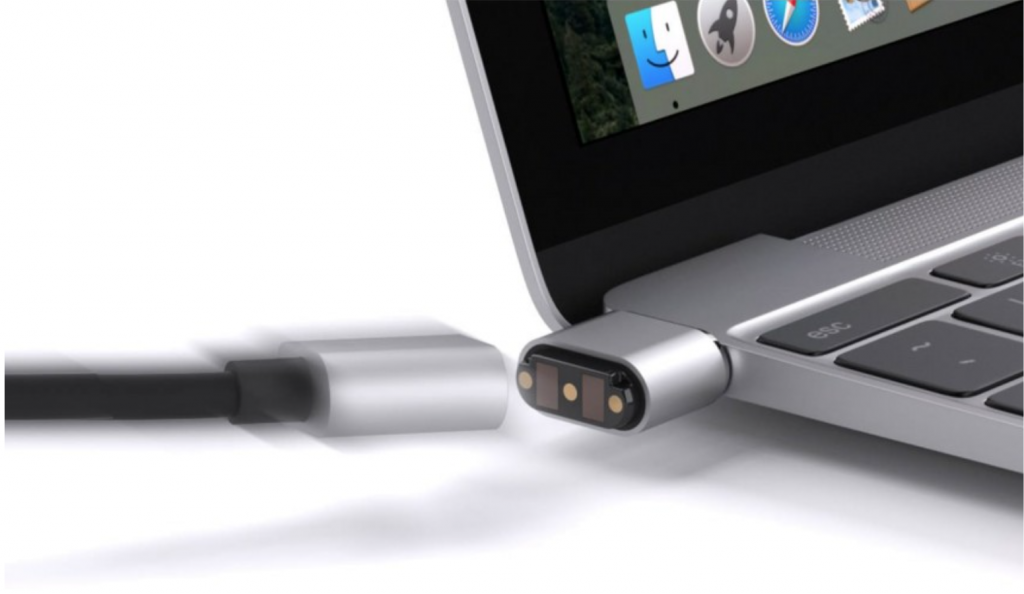
breaksafe

Why is that thing not built into the new generation of Macbooks? If you need adapters anyway, why not also adapt to USB C from Magsafe? Provide four Magsafe Thunderbolt 3 ports, and provide adapters to USB C, USB A and Thunderbolt 2. You have elegance, you keep the brilliant Magsafe thing, on all ports, and you can spin the adapters by saying that you made all ports detachable and universal, compatible with all existing port standards. I would actually find this more plausible than the USB C.

About Apple, USB C and standards

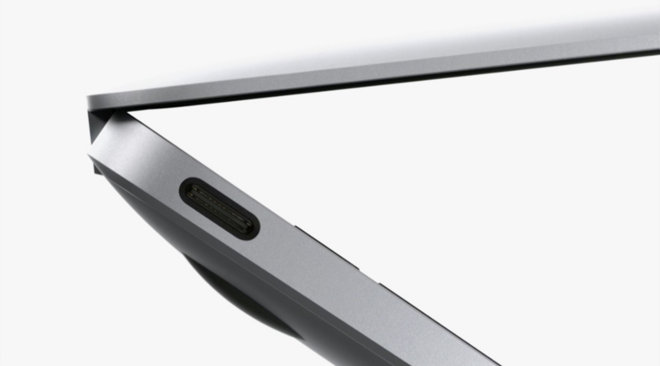
I’ve been thinking about the recent, apparently insane product releases from Apple – an iPhone that doesn’t have a headphone jack although a significant usage case for an iPhone is to play music from iTunes, a Macbook that has only one port, for both charging and data, and that port is basically incompatible with the rest of IT industry unless you use adapters, and a Macbook Pro that has only those incompatible ports, has less battery capacity, doesn’t have an SD card slot although its supposedly main target user group are the creative professionals, like photographers and videographers, who use SD cards to transfer images and video from their cameras when they are in the field and don’t have a cable with them.

To add insult to injury, all those products are more expensive than the previous, more functional generation.

I tried to think of an explanation, and I came up with several possible ones. For instance, although Apple pays formal lip service to the creative professionals, they don’t really make that much money from those. When Apple actually did make most of its money from creative professionals, somewhere in the 1990s, they were almost bankrupt and Microsoft had to rescue them by buying half a billion dollars of non-voting shares, and Steve Jobs was re-instated as iCEO (interim-CEO, which is the likely cause of him deciding to i-prefix all the product names). They then started to market to a wider audience of young hipsters, students and wealthy douchebags (as well as those who wanted to be perceived as such), and soon they started to drown in green. Yes, they continued to make products intended for the professionals, but those brought them increasingly smaller proportion of their overall earnings, and were deprioritized by the board, which is basically interested only in the bottom line. And it is only logical – if hipsters who buy iPhones bring you 99% of your money, you will try your best to make them happy and come back for more. The 1% earnings you get from the professional photographers and video editors are, essentially, a rounding error. You could lose them and not even notice. As a result, the Mac Pro got updated with ever decreasing frequency and was eventually abandoned by the professional market which is highly competitive and doesn’t have the time to waste on half a decade obsolete underperforming and overpriced products.

Keeping the hipsters happy, however, is a problem, because they want “innovation”, they want “style”, they basically want the aura of specialness they will appropriate from their gadget, since their own personality is a bland facsimile of the current trends. They are not special, they are not innovative, they are not interesting and they are not cool, but they want things that are supposed to be all that, so that they can adorn themselves with those things and live in the illusion that their existence has meaning.

So, how do you make a special smartphone, when every company out there has something that has all kinds of perfectly functional devices, within the constraint of modern technology? They have CPU and GPU that are slammed right against the wall of the thermal design, they have superfluous amounts of memory and storage, excellent screens… and there’s nothing else you can add to such a device, essentially, unless there’s a serious breakthrough in AI, and those gadgets become actually smart, in which case they will tell you what to do, instead of the other way around. So, facing the desperate need to appear innovative, and at the time facing the constraints of modern technology which defines what you can actually do, you start “inventing” gimmicky “features” such as the removal of the headphone jack and USB A sockets, and you make a second screen on the keyboard that draws a custom row of touch-sensitive icons.

And apparently, it works, as far as the corporate bottom line is concerned. The professionals noise their displeasure on YouTube, but the hipsters are apparently gobbling it all up, this stuff is selling like hot cakes. The problem is, the aura of coolness of Apple products stems from the fact that the professionals and the really cool people used them, and the hipsters wanted to emulate the cool people by appropriating their appearance, if not the essence. If the cool people migrate to something else, and it becomes a pattern for the hipsters to emulate, Apple will experience the fate of IBM. Remember PS/2? IBM decided it’s the market leader and everybody will gobble up whatever they make, so they made a PS/2 series of computers with a closed, proprietary “microchannel” bus, trying to discourage 3rd party clones. What happened is that people said “screw you”, and IBM lost all significance in the PC market, had to close huge parts of its business and eventually went out of the retail PC business altogether. And it’s not that PS/2 machines were bad. Huge parts of the PC industry standard were adopted from it – the VGA graphics, the mouse and keyboard ports, the keyboard layout, the 3.5” floppy standard, plus all kinds of stuff I probably forgot about. None of it helped it avoid the fate of the dinosaurs, because it attempted to blackmail and corner the marketplace, and the marketplace took notice and reacted accordingly.

People like standardized equipment. They like having only one standard for the power socket, so that you can plug any electrical appliance and it will work. The fact that the power socket can probably be designed as better, smaller and cooler is irrelevant. The most important thing about it is that it is standard, and you can plug everything everywhere. USB type A is the digital equivalent of a power socket. It replaced removable media, such as floppy and CD discs, with USB thumb drives, which can be plugged into any computer. Also, keyboards, mice, printers, cameras, phones, tablets, they all plug into the USB socket, and are universally recognized, so that everything works everywhere. Today, a device without a USB port is a device that cannot exchange massive amounts of data via thumb drives. It exists on an island, unable to function effectively in a modern IT environment. It doesn’t matter that the USB socket is too big, or that it’s not reversible. Nobody cares. What’s important is that you can count on the fact that everybody has it. Had Apple only replaced the Thunderbolt 2 sockets with USB C sockets, and kept the USB A sockets in place, it would be a non-issue. However, this has a very good chance of becoming their microchannel. Yes, people are saying that the USB C is the future, and it’s only a matter of time before it’s adopted by everyone, but I disagree. The same was said before about FireWire and about Thunderbolt. Neither standard was widely adopted, because it proved more easy to just make the USB faster, than to mess with another standard which basically tries to introduce yet another port that will not work anywhere else. There’s a reason why it’s so difficult for the Anglo-Saxon countries to migrate from Imperial units to the SI. Once everybody uses a certain standard, the fact that it is universally intelligible is much more important than its elegance.

Recognize those ports? Yeah, me neither.

Recognize those ports? Yeah, me neither.

Yes, we once used the 5.25” and 3.5” floppy drives and we no longer do. We once used the CD and DVD drives and we no longer do. We once used the Centronics and RS-323 ports for printers and mice. We once used MFM, RLL, ESDI and SCSI hard disk controllers. We once used the ISA system bus and the AGP graphics slot. What used to be a standard no longer is. However, there are standards that are genuinely different, such as the UTP Ethernet connector, or the USB connector, or the headphone jack, or the Schuko power socket. USB and Ethernet and PDF and JPEG and HTML are some of the universal standards that make it possible for a person to own a Mac, because you can plug it into the same peripherals as any other computer. It makes the operating differences unimportant, because you can exchange files, you can use the same keyboard and mouse, you can use the same printer, you can plug into the same network. By removing those standard connections and ways to exchange data with the rest of the world, a Mac becomes an isolated device, a useless curiosity, like the very old computers you can’t really use today because you can no longer connect them to anything. Imagine what would have happened if Apple removed the USB when they first introduced FireWire, or Thunderbolt – “this new port is the future, you no longer need that old one”. Yeah. Do you think an Ethernet port is used because it’s elegant? It’s crap. The plastic latch is prone to failure or breakage, the connection isn’t always solid, the dust can get in and create problems – it’s basically crap. You know why everybody still uses it? Because everybody uses it.

Pot calling the kettle black

I cannot believe that the main stream media, CNN, MSNBC and others, who have been manufacturing lies and propaganda continuously for the last several years, have the nerve to call out “fake news” sites. And no, they’re not targeting The Onion, they are targeting Breitbart and Alex Jones, who’ve been the only trustworthy sources of information so far – they’ve been spot on in both their facts and their analysis thereof.

And they are calling out RT, which is the most trustworthy source of information on everything regarding world politics, because everybody else is controlled by America and writes propaganda.

I can’t be the only one who’s pissed off at that, so I expect two things will happen. The assholes who control the media will introduce some sort of dictatorial censorship laws and try to suppress the actual news sources. And then I expect them to lose the elections to the “extreme right”. And then all sorts of shit will hit the fan.

Just to make it clear, I’m disgusted by RT’s attempts to implement the official Russian policy of appeasing Islam, I’m disgusted by their open praise of Fidel Castro, who is one of the greatest political idiots of the 20th century, and had his mother aborted him it would be the greatest day in the history of his country and they wouldn’t even know it. I am also annoyed by Alex Jones frequently going off on a tangent, raving about some crazy bullshit, and advertising his nutra supplements. Yeah. The problem is, CNN, BBC, MSNBC and others are completely unwatchable due to propaganda. They are not news sites, they are enemies of truth, freedom and justice.

About compassion

I have a long-term issue with compassion.

Every time some manipulative asshole wants to emotionally blackmail me into doing something that’s useless, harmful, evil or which I don’t care for, they appeal to my compassion.

“Don’t you have a heart? Allow the Islamic refugees in.”

“Don’t you like animals?”

“Would you rather have a doughnut or save a child?”

“You have things and I don’t. It’s not fair!”

“Rich people should pay their fair share in society.”

It’s not that I oppose helping people. In fact, I strongly support it. However, there seem to be several forms of helping people, and I have a hugely different emotional feedback to both. The first kind is when you help someone who’s having a problem. You help solve the problem, and things are better. You feel good about it. The second kind is when you’re emotionally manipulated, or, should I say heartfucked, into giving your resources to someone who is the problem, who just squanders it away, and you get to feel like you’ve been pissed on.

The problem is, the word “compassion” is used for both, indiscriminately.

I recently helped a financially not well off kid by donating my old computer; a Q8200 quad core thing with 4 GB RAM and a 15” LCD monitor, so don’t get me wrong, it wasn’t a piece of junk, it’s more powerful than the one my wife uses for browsing the web. She asked me, why are you doing this, you already know how that’s going to end? I answered that I’m testing a hypothesis. So, I installed the whole system with every kind of educational thing I could think of – Ubuntu Lucid, Netbeans IDE with support for Java, C++ and PHP, Python IDLE, and all the command-line programming languages, and I made sure my son told him what he had there, and I told his father that it’s an educational system he can use to learn how to code.

The first thing the kid did was to try some Linux games, got bored with them, and then installed Windows 10 so that he can play all games. He got a graphics card from someone and now has a gaming PC. He never even touched anything educational. Yes, he has barely passing grades in school, and yes, since he’s poor the people will tend to attribute his poor results in school to his situation at home.

But no, that’s not how it works, because there’s another kid who’s friends with my son, whose parents are also financially not well off, and who also struggles with money. He’s one of the smartest kids in the whole school, has top grades in everything, and he, my son and one other kid spend their time after school arguing about politics and economy. Yes, they’re 12, and they argue about political and economic systems.

So, essentially, whom should I feel compassion for? Whom should I try to help? The kid who will convert all resources into fuel for perpetuating his situation, or the kid who apparently doesn’t need much help because he’s doing great despite his apparent circumstances?

So, how do you help people? It’s very simple. Just do your job well, do the things you feel good about, and let the free market sort things out. Don’t try to help the poor people. Buy whatever you like having and using, and someone will have to manufacture more of that. They will have to open factories and create jobs, and poor people will then have jobs, and if they are motivated enough, they will use that as a stepping-stone towards a better job, and higher qualifications. Buy the shoes that were manufactured in a sweat shop in Thailand, where the workers are supposedly “exploited”, because you see, that’s communist propaganda. They are not exploited, they are given a great opportunity to get out of abject misery they lived in before, trying to catch rats on rice fields as a source of protein, or taking part in the sex industry. Making shoes for you for 2 dollars a day is a way out for them. It’s what makes the local economy going, and then other functionality will arise from that, the same way it did in Japan, Korea and China. They all started on a similar level of poverty, and look at them now. So, help people by buying stuff from the factories that “exploit” them. That’s the best thing you could possibly do. Don’t donate to humanitarian aid; instead, buy stuff that’s produced by “exploiting” the poor in some African shithole. If people there are exploited by someone, that means they are worth more alive than dead, and they are worth more healthy than sick. This means someone will be motivated to make the area secure from violence, and to implement health care. It also means there will be need for some literate locals in administration, so schools will be opened. Basically, when you create an economic need for someone by exploiting them, you included that person into the global economy, and when someone is useful, when he creates profit for someone, someone influential will care if this profit is compromised by some machete-wielding gang. Paramilitary security contractors with guns will go there and take care of the problem.

Capitalism. That’s essentially how you solve the issue of poverty. You can’t solve it altogether, because there will always be those who are part of the problem and who can’t be part of any kind of solution, and they will have to live in abject misery and die as a warning to others, but allowing that is absolutely necessary, and if you try to prevent it out of “compassion”, you will destroy the entire social structure and produce universal misery, as was always the case when any kind of communism was attempted.

If you want to make a train move, you pull. Bill Gates did more good to the world when he created Microsoft, than with all his “humanitarian” efforts, which will all prove to be counterproductive, because trying to help the poor is essentially paying people to be poor. You need to pay them to be useful. You don’t get a good economy by improving healthcare, you get healthcare by improving the economy. You need to create an economic incentive for healthcare, and for that, people who live there must be worth more alive than dead, they must be worth more healthy than sick. And honestly, if they’re not worth more alive than dead, if they don’t contribute anything of value to the world, so that someone would be motivated to protect them, just let them die.

Another lever used by the manipulative in order to pressure the emotional is the assumption that all people are equal, and that you should identify with everybody’s situation because it could be you. Well, no, it couldn’t, you see. I just described those kids who go to the same school, have similar financial difficulties, but hugely different outcomes, because all people are not equal. Some are just just better. That’s what free market and capitalism are for, to show who’s better without being judgmental. It allows the least useful ones to die, and it directs the flow of resources to those who are the most useful. And don’t tell me that capitalism will eventually make everyone but the few on top poor. That’s bullshit. Capitalism “wants” everybody to be able to afford a car and an iPhone and a 1000 EUR gaming PC, and a house and a lawn mower and a fridge and a microwave, and a vacation in some fancy expensive place. You know why that is? Because when people can afford things, they spend money, and that makes the entire machine of capitalism going. If only the top few have money, nobody can buy the products manufactured in their factories. The factories will then go bankrupt, the stock market will collapse and you will get the great depression of the 1930s. So, it’s in the best interest of the manufacturers to pay people well, because those people will then be able to afford the products on the marketplace, and increase the consumer base. Increased consumer base means more consumption, ergo more profit for the shareholders. Everybody wins, except that kid who decided it’s not fun to learn how to code and plays games instead. He will have to lose, and guess what, fuck him and fuck everybody who’s sorry for him.

Me, I’ll rather have a doughnut than “save a child”, because by buying a doughnut I’m keeping the woman who sells them employed. She will then have money to support her children, so, basically, by being “selfish” I’m actually helping someone’s children. By buying an expensive computer I’m keeping the factory workers employed, I’m keeping the workers in retail sales employed, and all their children will have healthcare and education and food. And I will earn the money for buying those things by doing the best I can at the top of my qualification level, because then people will find me useful and give me money to keep me doing whatever I’m doing, instead of not caring whether I’m dead or alive.

So yes, be compassionate to the world by being incredibly good at your job and earning huge amounts of money, and then spend it on good stuff, stuff that will make you feel great. That’s how you make world a better place. And when someone asks you if you’d rather have another cup of coffee or help a child, go have the best cup of coffee you can get, because that’s how you really help a child. Donating to UNICEF just propagates misery in the world. It feeds the UN bureaucracy, it feeds the warlords who sell the humanitarian aid on the black market, and incentivizes poverty because that’s what attracts money into the system.

Compassion, that’s how the manipulative sucker the resources out of the gullible. Satan’s favorite emotion, because it can use good people as an instrument for increasing the amount of evil in the world. It drives the feedback loop of misery and suffering.